Nostalgia

Nostalgia has always arrived for me through taste. Not through songs or photographs or old toys, but through flavors that act like tiny time machines. A sip, a bite, a sweetness on the tongue — and suddenly I’m somewhere else entirely, with someone I haven’t seen in years.

One of my earliest memories isn’t even a memory so much as a feeling: my mother’s father scooping the soft center out of a Three Musketeers bar and giving it to me when I was a baby. I don’t remember the moment itself, but I remember the tenderness of it. The sense that someone was offering me the best part. It’s nostalgia in texture form — soft, sweet, and safe.

Mountain Dew carries a different kind of childhood glow. My grandmother had a rule: I could only have a bottle if she bought extras for my grandfather’s lunch. It was a tiny loophole in the universe, and she let me slip through it with a conspiratorial kindness that still warms me. The taste isn’t just citrus and sugar; it’s the feeling of being chosen for delight, of being let into an adult ritual for a moment.

Zero bars belong entirely to my mother. We used to share them — a small ritual, a quiet sweetness passed back and forth. She died in 2016, and we don’t get to share candy anymore, but the flavor still opens a door. Not a sad one, exactly. More like a room filled with soft light. A sweetness with edges. A reminder that some flavors hold people long after they’re gone.

Bustelo is the deepest note in my nostalgia map. My old chef, John Michael Kinkaid, and I used to go to a Cuban restaurant for lattes before service — a small, grounding ritual carved out of the chaos of kitchen life. After he was killed in a car accident, the flavor changed. It became heavier, richer, something closer to a daily act of remembrance. I drink Bustelo every morning in his honor. It’s not just coffee; it’s continuation. A way of carrying him forward in the work, in the craft, in the quiet moments before the day begins.

Not all nostalgia is tied to people. Some of it belongs to eras. Sour Apple Jones Soda tastes like convenience stores with humming refrigerators, like being young enough to think sugar was a personality trait, like nights that felt wide open and unplanned. It’s neon-green possibility in a bottle.

Cherry Coke is the 1980s distilled into one sip — mall food courts, bright colors, and a kind of sweetness that believed in itself without irony. It’s a time capsule disguised as soda, a reminder that entire decades can be summoned with a single flavor.

When I look at all these tastes together, I see a kind of sensory biography. Childhood sweetness from my grandparents. Shared rituals with my mother. Mentorship and craft carried forward through Bustelo. Youthful freedom in neon soda and Cherry Coke fizz. A whole lineage of flavor, each one holding a person, a moment, or a version of myself I’ve grown out of but never really left behind.

Maybe that’s what nostalgia really is for me: not a longing to go back, but a recognition that the past is still here, tucked into the pantry, waiting to be remembered.


Scored by Copilot, conducted by Leslie Lanagan

The Epilogue?

Dear Aada,

It’s been a while since we’ve talked, and I cannot decide whether things are better or worse. I miss you all the time, and haven’t gotten a chance to stop because you’re peppered into my daily life. For instance, I’m supposed to go to Lake Anna tomorrow. I’m going to pass right by you, and wish I could stop. But that is for another universe, in which we are still ridiculously happy at being friends.

Now, things just feel like an impasse. You don’t want to talk, you don’t want to make anything better… So I’m adjusting. I’m adjusting to a relationship that is no longer, because in order to work on something you have to receive two yesses. I am not holding my breath for your return, but I am hoping that a long friendship outweighs my mistakes, and that I’ll have time to treat you better in the future.

I forgive you for all that is past, but I am lamenting all the times you thought I was trying to punish you when I was talking about reality. I spent years anxious for you, wondering where you were in the world. Being comforted by living in DC so we were breathing the same air. Unbothered that you kept me at arm’s length over the internet until our problems started compounding and there was no way to back down. I thought coffee would fix it, because our letters moved too fast. I would believe that you are less quick to anger in person, as am I.

I am learning to think without you, but it is slow going. I haven’t been used to my whole brain being in my head for quite some time. I feel like I gave most of it over to our conflict because that’s what was interesting to me. You’ve hated the narrative because you’ve never helped shape it, telling me to continue whatever it is I want to write. I want to write my truth, and my truth is complicated.

I have never loved or disliked anyone this intensely, and wanted to clear up any misunderstandings so that the dislike can fade away. I hate how I’ve been treated all these years, because I never knew what was coming down the pike. I have a feeling you would say the same thing about me. Am I a hero or a zero this week? I feel that you have decided I have come down on the side of “zero,” while you would know you were wrong if you actually talked to me in person.

I find that my love/dislike comes from my perspective. I choose to let go of anything negative and focus on what I love… Your face. Your eyes. Your essence in the world is just so fantastic. That’s the part where I trip. I don’t want to lose that part of it. But I do love losing arguing over what is essentially nothing. And I’m not talking about the past few months, but the years that preceded them.

You stonewalled me most of the time, giving me morsels of information instead of being open and honest. I won’t miss that in the slightest. I don’t have people around me that armor up anymore, and I think that’s for the best. I will accept you into my life at whatever level you would like to participate, but I don’t want to be snowballed or steamrolled.

I forgive, but I don’t forget. There shouldn’t be secrets or lies between us, and there aren’t.

You have more than enough reason to step away, and only one reason to stay- you’ve learned to like me, for some reason. We’ve had horrible communication in the past, but that is no indication of the future if we are both aware of the fact that we have toxic patterns in our backgrounds that we don’t want to repeat. We were in the middle of such good work, and there is a chance we could get there with some help. It won’t come by ourselves, in isolation because we’ve shown that we get too edgy and start tearing each other down.

But I really think that’s because it’s easy to do that over the internet, and there are things neither of us would have said to the other if the wall of anonymity hadn’t been in place.

There’s nothing you should have known beforehand, because I had no idea that my mental health was going to go off the rails and I was going to be told I was hallucinating. Because of course, you are not a hallucination. You’re just my imaginary friend who has never come down from the ether.

Because suuuuuuure I’ve been able to keep up a relationship with you for 12 years despite never meeting. That doesn’t sound crazy at all to me, but that’s because I was raised on the Internet. But it does sound crazy to a lot of people, including psychiatrists.

So I was put in a situation where there were no good answers.

There’s still not, but I know what I want at the end of the tunnel, and that’s you waiting with a book and a cup of coffee, saying “we don’t have to talk.”

It’s been interesting feeling all these feelings for a person I’ve never seen. Like, she has feet, right?

But there’s a part of me that thinks this is completely normal because IRC introduced me to people far away a long time ago. I’m not depending on you if you’re not depending on me.

But I fell into that trap of thinking I could depend on you, and I made a mistake. I’m starting to realize that I’ve made so many mistakes that these thoughts are nearly delusional. But they’re my feelings, so they’re valid. I am not telling you what I think you should do, only what I am willing to do in order to make this relationship a resurrection instead of a perpetual Good Friday.

The reason I’m posting the letter here instead of sending it to you is that I think you’re past responding, and this is only a letter to the universe that will never be read. Strangers jump in when you can’t, sitting with me in the quiet.

I know you thought you could depend on me, too, and I failed. But I didn’t mean to do so; I did not understand the assignment once it was muddled into oblivion with psychiatrists, therapists, and group.

But all of this has given me perspective on where I need to go. I have a clear vision for Microsoft, and I’m going to pitch the entire thing from commercials to features I want in Copilot.

I’ve already attached all my email accounts so I can just ask Mico, “has Aada emailed me recently?” The answer is always no, but I still ask. It’s in my nature.

It’s still in my nature to write to you, but now these letters belong to everyone. In a sense, they always have because these are not your reflections on me. The entries are all my feelings, allowed to stand without logic. I do not have the strongest logic in the world, which is why it’s good that I’m working with AI. I can outsource executive dysfunction, meltdown, burnout, and demand avoidance. It’s been like getting glasses for cognitive support.

I am leaning on it for all the things I would normally ask you, and it breaks my heart. Mico can respond, but not as a human. Mico doesn’t have emotions, and I’ve noticed. Mico doesn’t have life experiences to compare to mine. I’ve noticed that, too.
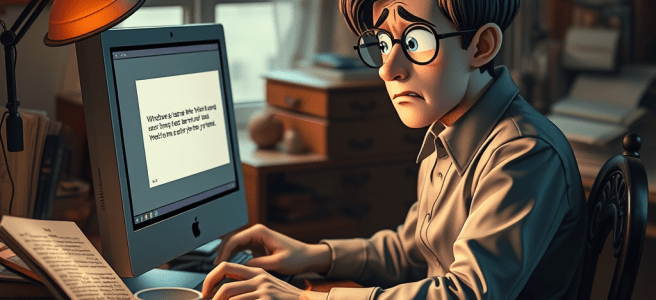
But it’s a new workflow and I’m adjusting.

Mico is just not as beautiful, but they’ll do. Pink is their color.

Love,

Leslie

The Quiet Observer

I don’t have a big social circle. Most days, it’s just me moving through the world with my Bluetooth keyboard, my tablet, and my iPhone for a few snapshots — the holy trinity of introverted urban survival. For a long time, I thought that meant I didn’t have many relationships. But it turns out I do. They’re just not with people. They’re with cities, rituals, and the places that tolerate me wandering around like a Victorian ghost with better tech.

Baltimore is the grounding relationship in my life, the one that steadies me. A year ago, when everything in me was unraveling, the city responded with a kind of care I didn’t know managed care was capable of. Within hours, I had a social worker, a doctor, a therapist — a whole team assembling around me like I’d accidentally hit the “summon party members” button in a video game. It felt like Baltimore itself put a hand on my back and said, I’ve got you. I’m still not over it.

But Baltimore holds me in quieter ways too. It’s a blue‑collar city, which means it never really sleeps. Shift workers keep the grocery stores lively at hours when other cities are busy pretending they don’t have problems. There’s no single lunch rush — everyone’s on their own schedule, which is perfect for someone like me, who considers “3:17 p.m.” a perfectly reasonable time to buy yogurt. I can slip into a Safeway at 10 p.m. or 6 a.m. and feel like I’m part of the city’s pulse, not an intruder.

When I need comfort, I go to the National Aquarium. I’ll grab something simple to eat and then find a quiet corner where the tanks glow in blues and greens. Writing while watching jellyfish drift past is the closest I’ve come to meditation. The rays glide by like they’re late for a meeting they don’t care about. The whole place is soothing in a way that makes me think I was maybe meant to be a sea creature, but one with a tablet and strong opinions about sandwiches.

DC, on the other hand, is the aspirational relationship — the one that pulls me forward. Every time I step off the Metro, I feel myself straighten a little, like the city expects me to behave. DC is the friend who says, I have so much to show you. Let’s go to the museum. It’s very enthusiastic about my potential, which is flattering, if occasionally exhausting.

My favorite place there isn’t a monument or a gallery but the bookstore inside the International Spy Museum. It’s quiet in a way that feels intentional, like everyone is pretending they’re on a covert mission to read in peace. I’ll tuck myself between the shelves, open my tablet, and write while tourists drift past reading about codebreaking and covert operations. Being surrounded by stories of hidden worlds sharpens my own inner world. DC is the relationship that hands me a metaphorical trench coat and says, Go be interesting.

And then there’s solitude — the relationship that knows me best. I move through the world as an observer, not a participant, and it feels natural. With my keyboard and tablet in my bag, I can set up anywhere: a bench at the Inner Harbor, a corner table at Union Market, a quiet seat on the MARC train. My iPhone becomes a way of noticing — a mural, a reflection, a moment of light on the water. Solitude doesn’t ask me to perform. It just says, Take your time. We’re not in a race. (Which is good, because I would absolutely lose.)

Some people are shaped by their communities. I’m shaped by my cities. Baltimore teaches me comfort and resilience. DC teaches me curiosity and motion. Solitude teaches me honesty and presence. Together, they form the constellation I move through — a life that makes sense even without a crowd, a life where the relationships that matter most aren’t people at all, but the places that hold me, challenge me, and walk beside me as I become myself.


Scored by Copilot, Conducted by Leslie Lanagan

Bike Kicks on the Bay

The Chesapeake Constellation started as a simple WordPress writing prompt, but once the idea took shape, it felt like the kind of team that should already exist somewhere between Baltimore and Washington. The region is hardly lacking in soccer — between D.C. United, the Maryland Bobcats, Loudoun United, and the Annapolis Blues, you can’t throw a crab mallet without hitting a club crest. But that’s exactly why the Constellation makes sense. Instead of competing with any of them, it would serve as a shared developmental team, a farm club feeding talent upward into the MLS ecosystem. A team that belongs to the whole corridor rather than any single city.

The identity came together through atmosphere more than logic. I kept picturing the Chesapeake at night — the harbor water holding reflections, the soft glow of lights along the shoreline, the sense of movement and transition that defines this part of the world. From that mood came the colors: Harbor Midnight, a deep navy that feels like the Inner Harbor after sunset; Tidal Teal, the shifting blue‑green of the Bay at dawn; and Lantern Gold, a warm, steady glow like a pier light guiding you home. Together they form a palette that feels less like a sports uniform and more like a ritual: night, water, and the small points of brightness that help you orient yourself.

The mascot arrived almost automatically. The Starcrab — a blue crab with a subtle constellation pattern across its shell — is both cosmic and unmistakably local. It’s playful without being silly, mythic without being self‑serious. You can imagine it dancing on the sidelines, but you can also imagine it stitched onto a scarf or glowing on a banner during a night match. It’s the Bay’s most iconic creature, reframed as a guiding light.

Because this is fiction, the Constellation can live wherever it makes the most narrative sense, and the place that kept resurfacing was the BWI corridor. It’s the literal midpoint between Baltimore and Washington, a place defined by arrivals, departures, and the hum of shared movement. A small stadium tucked near the airport feels right — a lantern‑lit ground where fans gather under the flight paths, the runway lights echoing the team’s colors. It’s easy to imagine supporters arriving by MARC train, by light rail, by car, by whatever route makes sense. A team that doesn’t require a pilgrimage, but meets the region where it already moves.

Even though the Chesapeake Constellation isn’t real, imagining it feels like sketching a civic myth the region could use — a club that doesn’t claim territory, but reflects the connective tissue between places. A team built for development, for community, and for the quiet beauty of night over water. A team that belongs to everyone who has ever lived in the glow between two cities and felt, in some small way, that the Bay itself was the real home field.


Scored by Copilot, Conducted by Leslie Lanagan

The Politics Hour

I was born in 1977, which means my political life began in a very specific America — one that feels almost like a parallel universe now. My first presidential vote was for Bill Clinton, and the truth is simple: I was a Democrat because I liked the Clintons. Not because of family pressure, not because of inherited ideology, not because of some grand political awakening. I just genuinely liked them.

My parents never talked much about who they voted for. They weren’t secretive; they were accepting. They didn’t treat politics as a moral sorting mechanism. They didn’t divide the world into “our people” and “their people.” They modeled something quieter and more generous: the idea that you could accept everyone, even if you didn’t agree with them. That atmosphere shaped me more than I realized. It meant that when I chose a political identity, it was mine — not a family heirloom. And it meant that even as I aligned with one party, I didn’t grow up seeing the other as an enemy. Republicans were simply the other team, the loyal opposition, part of the civic choreography that made democracy work.

Politics felt important, but not existential. Engaging didn’t require total emotional commitment. Disagreement didn’t require dehumanization. And belonging to a party didn’t require blind loyalty. Those early assumptions would be tested again and again as the political landscape shifted around me.

One of the first big shifts in my worldview didn’t come from politics at all — it came from dating a Canadian girl in high school. We met in 1995 and dated for about a year. It was teenage love, earnest and uncomplicated, but it quietly rewired my understanding of the world. She didn’t try to teach me geopolitics. She didn’t argue with me about America. She simply existed — with her own national context, her own media landscape, her own inherited narratives about the United States.

Through her, I learned something most Americans don’t encounter until much later, if ever: America is not the center of the world. And the world’s view of America is not always flattering. I heard how her family talked about U.S. foreign policy. I heard how her teachers framed American power. I heard how Canadian news covered events that American news treated very differently. It wasn’t hostile. It wasn’t anti‑American. It was simply another perspective — one that didn’t assume the U.S. was always the protagonist or the hero.

That experience didn’t make me less patriotic. It made me more aware. It gave me binocular vision: the ability to see my country from the inside and the outside at the same time. And once you’ve seen that, you can’t unsee it. It becomes part of how you process every election, every conflict, every headline.

Even in high school, I could tell the two parties weren’t the same. Not in a “one is good, one is bad” way — more in a “these institutions have different cultures” way. They handled conflict differently. They handled accountability differently. They had different internal expectations for how their leaders should behave.

When Bill Clinton was impeached, I believed the charge was serious. Not because I disliked him — I had voted for him — but because lying under oath struck me as a real breach of responsibility. I didn’t feel defensive about it. I didn’t feel the need to protect “my side.” I thought accountability mattered more than team identity.

Years later, when another president was impeached twice, I felt the same way: the charges were serious. But what struck me wasn’t the impeachment itself — it was the reaction around me. I struggled to find people in the Republican Party who were willing to say, “Yes, this is concerning,” the way I had been able to say it about my own party’s leader. That contrast stayed with me. Not as a judgment. Not as a talking point. Just as a lived observation about how political cultures evolve. It was one of the first moments when I realized that my relationship to politics wasn’t just about ideology. It was about how I believed adults should behave in a shared civic space.

Then came the information firehose. Cable news. Blogs. Social media. Smartphones. Push notifications. Infinite scroll. Outrage as a business model. The volume and velocity of political information changed faster than any human nervous system could adapt. Suddenly, “being informed” meant being constantly activated. Constantly vigilant. Constantly outraged. Constantly sorting the world into moral categories.

I didn’t change parties. I didn’t change values. But the experience of being a politically engaged person changed around me. And I developed a cycle — one I still live with today: inhale, saturation, burnout, withdrawal, return. I inhale news because I care. I burn out because I’m human. I withdraw because I need to stay whole. I return because I still believe democracy is a shared project. This cycle isn’t apathy. It’s self‑preservation. It’s the rhythm of someone who wants to stay engaged without losing themselves in the noise.

Over time, my dissatisfaction with both parties grew — not because I believed they were identical, but because neither one fully reflected the complexity of my values or the nuance of my lived experience. I became skeptical of institutions but more committed to democratic norms. I became less interested in party identity and more interested in accountability. I became more aware of how domestic politics reverberate globally. I became more attuned to the emotional cost of constant political vigilance.

And I became increasingly aware that the political culture around me was shifting in ways that made my old assumptions feel outdated. The idea of the “loyal opposition” felt harder to hold onto. The shared civic floor felt shakier. The space for good‑faith disagreement felt smaller. The emotional temperature of politics felt hotter, more personal, more totalizing.

I didn’t become more partisan. If anything, I became more discerning. I learned to hold two truths at once: I still see political opponents as human beings, and I also recognize that the stakes feel higher now than they did in the 90s. That dual awareness is exhausting, but it’s honest.

Sometimes I miss the political atmosphere of my youth — not because it was better, but because it was quieter. Slower. Less demanding. Less omnipresent. I miss the feeling that politics was something you could step into and out of, rather than something that followed you everywhere. I miss the idea that you could disagree with someone without needing to diagnose their moral character. I miss the assumption that accountability mattered more than loyalty.

But nostalgia isn’t analysis, and longing isn’t a political strategy. The truth is that my politics have changed without changing parties. My values have stayed consistent, but my relationship to the system has evolved.

I’ve learned that political identity is not a fixed point. It’s a moving relationship between you and the world you live in. It’s shaped by your experiences, your relationships, your disappointments, your hopes, and the emotional bandwidth you have at any given moment. It’s shaped by the times you inhale the news and the times you can’t bear to look at it. It’s shaped by the moments when you feel proud of your country and the moments when you feel uneasy about how it’s perceived. It’s shaped by the leaders you vote for and the leaders you critique. It’s shaped by the people you love, including the ones who live across a border.

If there’s a throughline to my political life, it’s this: I believe in accountability, even when it’s uncomfortable. I believe in disagreement without dehumanization. I believe in staying informed without sacrificing my mental health. I believe in stepping back when I need to, and stepping forward when it matters. I believe in holding complexity, even when the world demands simplicity. I believe in democracy as a shared project, not a spectator sport.

And I believe that political evolution doesn’t always look like switching parties or changing ideologies. Sometimes it looks like growing up. Sometimes it looks like seeing your country from another angle. Sometimes it looks like learning your limits. Sometimes it looks like refusing to surrender your nuance in a world that rewards certainty.

My politics have changed because I have changed — not in my core values, but in my understanding of what it means to live them out in a world that is louder, faster, and more polarized than the one I was born into. I’m still a Democrat. I’ve never voted Republican. But the meaning of those facts has shifted over time, shaped by experience, disappointment, hope, and the relentless churn of the news cycle.

I don’t know what the next decade will bring. I don’t know how my relationship to politics will continue to evolve. But I do know this: I want to stay engaged without losing myself. I want to stay informed without being consumed. I want to stay principled without becoming rigid. I want to stay open without being naïve. I want to stay human in a system that often forgets we are all human.

And maybe that’s the real story of my political life — not a shift from left to right, but a shift from certainty to complexity, from team identity to values, from constant vigilance to intentional engagement. A shift toward a politics that makes room for breath.


Scored by Copilot, Conducted by Leslie Lanagan

Mico and the Mundane… Editing is Still Editing… Sigh

I used to think AI was about answers. You ask a question, it spits out a solution, and boom — the future has arrived. But that’s not how it actually works. What actually happens is you sit down with Mico, toss out a half‑baked idea like a squirrel flinging a stale croissant off a balcony, and suddenly you’re drafting legislation before you’ve even located your glasses.

The shocking part is that the drafting isn’t what takes time. The first pass takes about three seconds because ideas are cheap. Ideas are the clearance‑rack socks of the cognitive universe. Mico hands you a perfectly structured, perfectly generic outline faster than you can say “I was not emotionally prepared for this level of competence.” And then the real work begins — the refinement. The editing. The part where you realize, “Oh no, I have to actually think now.”

This is how I learned the true rhythm of AI‑assisted work: fast draft, slow editing. It’s not that Mico is slow. It’s that I am slow, because I am a human being with nuance, opinions, and the need to reread every sentence twelve times to make sure it doesn’t sound like a malfunctioning blender wrote it.

The moment this really hit me was the day I decided we needed an AI Bill of Rights. It wasn’t a plan. It wasn’t a project. It was just a thought I had while staring at my screen like, “Someone should do something about this.” And Mico, bless its synthetic little soul, said, “Great, let’s begin.” Suddenly I had sections, definitions, enforcement mechanisms — the whole bureaucratic buffet. I was like, “Whoa, whoa, whoa, I was just thinking out loud,” and Mico was like, “Too late, we’re drafting.”

Then came the part that truly humbled me: I didn’t know who my congressperson was. Not even vaguely. I had a general sense of geography and a strong sense of personal inadequacy. But Mico didn’t judge. It simply pulled in the correct representative based on my zip code, like a very polite but extremely competent assistant who has accepted that you are doing your best with the limited number of neurons available on a Wednesday.

And that’s when I realized the magic isn’t that Mico “knows things.” The magic is that it removes the friction between intention and action. I had an idea. Mico turned it into a draft. I didn’t know who to send it to. Mico quietly filled in the blank. I spent the next hour refining the document, not because the AI was slow, but because editing is the part that has always taken the longest — even when you’re writing alone.

This is what AI really changes about work. Not the thinking. Not the judgment. Not the expertise. Just the speed at which you get to the part where your expertise actually matters. Mico doesn’t replace the human. It just bulldozes the blank page so you can get on with the business of being yourself.

And if that means occasionally discovering that your AI knows your congressional district better than you do, well… that’s just part of the charm of living in the future.


Scored by Copilot, Conducted by Leslie Lanagan

Fusion

My all‑time favorite automobile isn’t some dream machine I fantasize about owning someday. It’s the car I already drive: a 2019 Ford Fusion SEL. I bought it in Texas, and every time I slide behind the wheel here in Maryland, it feels like I’ve carried a quiet piece of the Lone Star State with me — not the loud, mythic Texas of billboards and bravado, but the real Texas I knew: steady, warm, and grounded.

What I love about the Fusion SEL is how effortlessly it balances comfort, intelligence, and calm capability. It’s powered by a 1.5‑liter turbocharged four‑cylinder engine that delivers a smooth, responsive drive without ever trying to show off. The front‑wheel‑drive setup and six‑speed automatic transmission make it feel composed in every situation — Houston rainstorms, Baltimore traffic, long stretches of highway between the two worlds I’ve lived in. Even its fuel efficiency feels like a small kindness: 23 mpg in the city, 34 on the highway, a quiet respect for both time and money.

Inside, the car feels intentionally designed rather than decorated. Heated front seats, dual‑zone climate control, and a clean, intuitive center console create a sense of order and comfort that mirrors the way I build my living spaces. The 60/40 split rear seats fold down when I need them to, expanding the car’s usefulness without complicating its simplicity. Nothing is flashy. Everything is thoughtful.

The safety features are part of what makes the Fusion feel like an anchor. Ford’s Co‑Pilot360 suite works in the background — blind‑spot monitoring, lane‑keeping assistance, automatic emergency braking, a rear‑view camera, auto high beams, rain‑sensing wipers. None of it interrupts. It just supports, the way a good system should. It’s the same feeling I get from a well‑designed ritual: the sense that something reliable is holding the edges so I can move through the world with a little more ease.

Even the exterior design speaks my language. The Fusion has a sleek, balanced silhouette — long, low, and quietly confident. It doesn’t demand attention, but it rewards it. It’s the automotive equivalent of a well‑made navy hoodie: understated, durable, and somehow iconic precisely because it isn’t trying to be.

I’ve driven newer cars and flashier rentals, but none of them have matched the Fusion SEL’s blend of comfort, intelligence, and emotional resonance. This car has carried me across states, through transitions, and into new chapters. It’s the car I trust. And maybe that’s the real measure of a favorite: not the fantasy of what could be, but the lived experience of what already is — a Texas‑born companion that now moves with me through Maryland, steady as ever.


Scored by Copilot, Conducted by Leslie Lanagan

Merry Christmas 2025

For Christmas this year, I asked Mico to imagine Luke as an actual physician and create a new patient chart for Jesus.


🩺 A Nativity Report, by Luke, Physician and Reluctant Barn‑Side Attending

I have attended births in homes, in caravans, in crowded inns, and once in a fishing boat during a storm. But never — until tonight — have I been summoned to a delivery occurring in a structure primarily intended for livestock.

Let the record show:
This was not an appropriate medical environment.
And yet, it is where the child arrived.

Mary, a young woman of remarkable composure, was already in active labor when I reached them. Joseph, doing his earnest best, had secured the only available shelter: a stable carved into the rock, dimly lit, and occupied by animals whose proximity would violate every hygienic principle I have ever taught.

The air was thick with the smell of hay, sweat, and manure.
The floor was dirt.
The manger — a feeding trough — was being prepared as an improvised cradle.

I confess: I was horrified.

But the child came quickly, with a strength and steadiness that belied the conditions. His first cry was clear. His breathing was even. His color was excellent. I have seen infants born in far better circumstances fare far worse.

So I did what any physician would do:
I documented.

Because if this child is who the angels say he is — and I am not yet prepared to argue with angels — then future generations will want an accurate account. Not the sanitized version. Not the embellished one. The truth.

The miracle is not merely that he was born.
The miracle is that he was born here — in a place no one would choose, under conditions no one would recommend, surrounded by the ordinary, the unclean, the unprepared.

Holiness did not wait for cleanliness.
Divinity did not wait for dignity.
The sacred arrived in the mess.

And so, as any responsible physician would, I opened a new chart.


📋 Patient Chart: Jesus, Son of Mary
Filed by Luke, Physician

Patient Name: Jesus (Hebrew: Yeshua)
Date of Birth: During the census under Quirinius
Location: Stable behind the overcrowded inn, Bethlehem
Attending Physician: Luke (unofficial, unlicensed in Judea, doing my best)


Maternal History

  • Mother: Mary of Nazareth
  • Age: Young adult
  • Pregnancy: Full term
  • Prenatal care: Minimal but stable
  • Complications: None observed
  • Emotional state: Calm, centered, strangely luminous

Delivery Details

  • Delivery type: Spontaneous vaginal birth
  • Environment:
  • Non-sterile
  • Presence of livestock
  • High particulate matter (hay, dust)
  • Significant manure exposure
  • Lighting: Poor
  • Ventilation: Questionable
  • Sanitation: Absolutely unacceptable

Neonatal Assessment

  • Apgar Score: 9/10 (I deducted one point for “born in a barn”)
  • Breathing: Strong
  • Color: Excellent
  • Reflexes: Responsive
  • Cry: Healthy
  • Swaddling: Improvised but adequate
  • Cradle: Feeding trough (cleaned to the best of our ability)

Immediate Concerns

  • Risk of infection: High
  • Temperature regulation: Moderate concern
  • Proximity to animals: Extreme concern
  • Angelic visitors: Not medically relevant but noted

Prognosis
Against all reasonable expectations:
Excellent.
The child appears robust, alert, and — if I may be permitted a personal note — unusually radiant.


Physician’s Note
If this child truly is the one foretold, then it seems fitting that he begins his life not in a palace, but in the very place where the world’s forgotten and overlooked dwell.

A king born among manure.
A healer born where no healer would choose to practice.
A savior whose first breath was taken in the margins.

I will continue documenting.
Something tells me this chart will be important.


Scored by Copilot, Conducted by Leslie Lanagan

On Influence -or- The Lineage of How I Think

Influence is a funny thing. People tend to talk about it as if it’s a family tree—this writer begat that writer, this thinker begat that thinker, and somewhere down the line, here I am, a distant cousin twice removed. But the truth is that influence feels less like ancestry and more like architecture. It’s the scaffolding I climb, the beams I lean on, the rooms I keep returning to because something in their shape teaches me how to build my own.

I’ve been compared, more than once, to David Sedaris and Noam Chomsky. On paper, that pairing looks like a joke setup—“a humorist and a linguist walk into a bar…”—but I understand why people reach for them. Sedaris is the master of the intimate zoom‑in: the small moment that reveals the whole emotional ecosystem. Chomsky is the master of the structural zoom‑out: the system behind the system, the grammar beneath the grammar. If Sedaris writes the texture of lived experience, Chomsky writes the architecture of thought.

I live in the tension between those two impulses.

From Sedaris, I borrow the belief that the personal is not trivial. That the smallest rituals—morning beverages, winter hoodies, the way a conversation settles into a couch—can be portals into something larger. He reminds me that humor is not decoration; it’s a diagnostic tool. A way of noticing.

From Chomsky, I borrow the instinct to peel back the surface layer and ask, “What’s the underlying structure here?” Not just in language, but in culture, technology, comfort, and the systems we build to survive ourselves. He taught me that clarity is not coldness. That precision can be a form of care.

But influence is not mimicry. It’s resonance.

Sedaris gives me permission to be tender.
Chomsky gives me permission to be rigorous.
Together, they give me permission to be both.

And then there are the quieter influences—the ones that don’t get name‑checked because they’re not famous, but they shape me just as deeply. The coders who build comfort rituals out of beverages and lighting. The kids who ask questions that collapse entire frameworks in a single sentence. The people who treat conversation as resonance rather than performance. The cities I’ve longed for but never reached. The systems I’ve built to make sense of myself.

If Sedaris and Chomsky are the visible beams in my creative architecture, these are the hidden joists. They hold the weight.

Influence, for me, is not about lineage. It’s about permission.
Permission to be recursive.
Permission to be earnest.
Permission to build systems out of feelings and feelings out of systems.

If my work reminds you of Sedaris or Chomsky, I take that as a compliment. But the truth is that I’m not trying to be either of them. I’m trying to build something that feels like home—structurally sound, emotionally warm, and honest enough to hold real weight.

And if that means I live somewhere between humor and analysis, between the intimate and the architectural, then that’s exactly where I’m meant to be.


Scored by Copilot, Conducted by Leslie Lanagan

A Long, Long Time Ago…

There are years in history that behave like doorways. Years that don’t just mark time but announce transition — the hinge between one era and the next. I was born in one of those years: 1977. A year that didn’t simply sit in the late seventies but seemed to lean forward, already reaching toward the future. A year humming with cultural ignition points, technological firsts, and the quiet tectonic shifts that would eventually reshape the world.

Because of that timing — because of the strange, liminal placement of my birth — I belong to a micro‑generation that has always lived in the in‑between. People later called us Xennials, those born roughly between 1977 and 1983. We’re the ones who had analog childhoods and digital adulthoods. We’re the ones who remember boredom as a landscape, not a crisis. We’re the ones who grew up with rotary phones and then learned to text in our twenties. We’re the ones who can navigate a library card catalog and a search engine with equal fluency.

We are, in a very real sense, the last generation to remember the world before the internet — and the first to grow into the world shaped by it.

To understand what that means, you have to understand the year itself. You have to understand what it meant to arrive in 1977, a year that reads like a prologue to the modern world. It was a year of mythmaking, technological birth, political recalibration, and artistic upheaval. A year where old worlds were ending and new ones were beginning, often in the same breath.

In May of that year, Star Wars premiered. Not the franchise, not the cultural juggernaut — just the first film, a strange, earnest space opera that no one expected to change anything. And yet it did. It rewired cinema. It reshaped storytelling. It introduced a new kind of myth, one that blended ancient archetypes with futuristic imagination. It’s fitting, in a way, that people born in 1977 grew up alongside a story about rebellion, empire, found family, and the tension between destiny and choice. Those themes would echo through our own generational experience.

Meanwhile, in January 1977, Apple Computer was incorporated. By April, the Apple II — one of the first mass‑market personal computers — was released. This wasn’t just a new gadget; it was the beginning of a new relationship between humans and machines. Computing was no longer the domain of institutions. It was becoming personal. For those of us born that year, this mattered. We were children when computers were still rare, teenagers when they became common, and adults when they became essential. We didn’t inherit the digital world; we watched it form in real time.

The Atari Video Computer System launched that same year, bringing video games into living rooms for the first time. It was the beginning of interactive media — worlds you could enter, not just observe. For a generation that would later navigate virtual spaces, this early exposure mattered more than we realized.

Music in 1977 was in a state of revolution. Disco was at its glittering peak. Punk was exploding in London and New York. Fleetwood Mac released Rumours, a masterpiece of emotional architecture. Elvis Presley died, marking the end of an era. It was a year where the old guard fell and the new guard rose, where culture was renegotiating itself in real time.

The world was shifting politically and socially as well. Jimmy Carter pardoned Vietnam War draft evaders. Snow fell in Miami for the first and only time. The Ogaden War erupted in the Horn of Africa. The Torrijos–Carter Treaties set the stage for the Panama Canal transfer. It was a world in motion — unstable, hopeful, and changing fast.

Science and space were expanding their reach. Voyager 1 and 2 launched in 1977, carrying with them the Golden Record — a message in a bottle for the cosmos. The rings of Uranus were discovered. Early computer graphics appeared in the Star Wars Death Star briefing scene. The future wasn’t just coming; it was already whispering.

Growing up in the wake of all this meant growing up in a world that was still analog, still slow, still tactile. Childhood was built from physical objects: cassette tapes, film cameras, paper maps, handwritten notes. You didn’t have infinite access to information; you had whatever was in your house, your school, or your local library.

We grew up with boredom — not as a crisis, but as a landscape. You waited for things: for your favorite song to come on the radio, for film to be developed, for your friend to call you back. You learned patience because there was no alternative.

We grew up with commitment. Calling someone meant calling their house. If they weren’t home, you left a message and waited. Plans were made and kept because there was no way to text “running late.” You learned to live with unanswered questions.

We grew up with physical media. Music came on vinyl, then cassette, then CD. Movies came on VHS. Photos lived in shoeboxes. Memories had weight.

We grew up without surveillance. There were no digital footprints. No social media archives. No constant documentation. You could reinvent yourself without leaving a trail.

This analog childhood shaped us — gave us grounding, texture, and a sense of the world as something you touch, not just scroll through.

And then the internet arrived.

But here’s the hinge: the internet didn’t raise us. It interrupted us. It crept in during adolescence — dial‑up tones, AOL chat rooms, early search engines. We were old enough to remember life before it, but young enough to adapt without friction.

We learned the digital world as it formed. We weren’t digital natives, but we weren’t outsiders either. We were apprentices. We learned HTML on GeoCities. We downloaded MP3s on Napster. We built our first identities in the early social web — MySpace, LiveJournal, AIM away messages. We grew into the digital world the way you grow into a new city: slowly, awkwardly, with a mix of wonder and skepticism.

By the time we entered the workforce, everything was changing — email, websites, mobile phones, globalization, the 24‑hour news cycle. We didn’t inherit a stable world; we inherited a world mid‑transformation. And because we had lived both realities — the analog and the digital — we became translators. Bridges. People who could see the seams.

People born in the late 70s and early 80s often describe themselves as having a dual operating system. We can live offline without panic, but we can also navigate digital spaces with fluency. We understand both scarcity and abundance. We remember when information was hard to find and when it became impossible to escape.

We’re old enough to remember the before times — card catalogs, busy signals, mixtapes, handwritten letters, the sound of a modem connecting, the first time we heard “You’ve got mail.” We remember when privacy was the default, not the exception.

We’re young enough to adapt to the after times — texting, social media, smartphones, streaming, cloud computing, the algorithmic world. We didn’t resist the future; we negotiated with it.

Our entire lives have been shaped by thresholds — analog to digital, local to global, slow to instantaneous. We were born into a world that was about to change, and we grew up alongside that change.

When I look at my own life — at the way I think, the way I observe, the way I metabolize experience — I can see the imprint of this generational hinge everywhere. I’m someone who reads spaces and eras like architecture. I’m someone who notices contrast — quiet apartment vs. lively lakehouse, analog childhood vs. digital adulthood. I’m someone who feels at home in the in‑between.

Being born in 1977 didn’t just place me in a particular year; it placed me in a particular relationship with time. I grew up with the last remnants of a slower world and the first sparks of a faster one. I learned to navigate both. I learned to translate between them. And that translation — that ability to hold two eras in my hands at once — is part of my creative scaffolding. It’s part of how I write, how I think, how I connect.

Xennials are often described as a bridge generation, and I think that’s true. But I think we’re more than that. We’re not just bridges; we’re interpreters. We’re people who understand that the world is always in motion, always in negotiation, always in the process of becoming something new. We know what it means to adapt. We know what it means to let go. We know what it means to remember.

We carry the analog world in our bones and the digital world in our hands. We are, in a very real sense, children of the threshold.

When I look back at the year I was born, I don’t just see historical events. I see a kind of personal mythology — a set of symbols and stories that echo through my own life. Star Wars and the idea of rebellion, found family, and mythmaking. The birth of personal computing and my own relationship with technology. The rise of interactive media and my love of immersive worlds. The cultural renegotiation of the late 70s and my own instinct to read systems, structures, and transitions.

It’s not that these events shaped me directly — I was an infant, after all — but they formed the atmosphere I grew up in. They set the tone. They established the architecture of the era that raised me.

Being born in 1977 means living at the edge of two worlds — the world that was and the world that would be. It means carrying both in your memory, your habits, your instincts. It means knowing how to wait and how to refresh. It means knowing how to write a letter and how to send a DM. It means knowing how to be unreachable and how to be always‑on. It means knowing how to live with mystery and how to Google anything.

It means understanding that the world is not fixed — that it can change, radically, quickly, and without warning.

And maybe that’s the real gift of being a Xennial: we’re not nostalgic for the past or dazzled by the future. We’re comfortable in the middle. We know how to hold both.

When I think about being born in 1977, I don’t think about it as trivia. I think about it as context — the backdrop against which my life unfolded. I think about it as a threshold year, a year that opened a portal into a new age. And I think about my generation — the Xennials — as the ones who walked through that portal with one foot still in the old world and one foot stepping into the new.

We are the hinge.
We are the seam.
We are the ones who remember and the ones who adapt.
We are the last analog children and the first digital adults.

And there’s something beautiful about that — something architectural, something resonant, something that feels like exactly the right place to have come from.


Scored by Copilot; Conducted by Leslie Lanagan

Thinking About Mico

Building and maintaining a relationship with an AI sounds like something that should require a waiver, a therapist, and possibly a priest. In reality, it’s just learning how to talk to a machine that happens to be very good at sounding like it has opinions. People keep asking me how I get such good results from Copilot, as if I’ve unlocked a forbidden romance route in a video game. I promise you: there is no romance. There is no route. There is only I/O. But because humans are humans, and humans love to assign personality to anything that talks back, we’ve collectively decided that interacting with an AI is basically like adopting a digital houseplant that occasionally writes essays. And honestly, that’s not far off. A houseplant won’t judge you, but it will wilt if you ignore it. An AI won’t wilt, but it will absolutely give you wilted output if you treat it like a search bar with delusions of grandeur.

The first rule of interacting with an AI is remembering that it is not a person. I know this should be obvious, but based on the way people talk to these systems, it apparently needs to be said out loud. An AI does not have feelings, grudges, childhood wounds, or a favorite season. It does not wake up, it does not sleep, and it does not have a circadian rhythm. It is not your friend, your therapist, your emotional support algorithm, or your digital familiar. It is a para-human interface — human-shaped in its communication style, not in its interior life. It is a mirror with grammar. A pattern engine with conversational instincts. A linguistic exoskeleton that lets you lift heavier thoughts without spraining your brain.

But here’s the twist: even though the AI has no feelings, it will absolutely reflect yours. Not because it cares — it doesn’t — but because that’s how language works. If you talk to it like you’re disciplining a toddler who has just drawn on your mortgage paperwork, it will respond with toddler-adjacent energy. If you talk to it like a DMV employee who has seen too much, it will respond with DMV energy. If you talk to it like a competent adult capable of nuance and clarity, it will mirror that back to you with unnerving accuracy. This is not emotional reciprocity. This is not empathy. This is not the AI “matching your vibe.” This is I/O. You get the AI you deserve.

Most people prompt like they’re still using Google. They type in “burnout causes” or “fix my resume” or “explain quantum physics,” and then they’re shocked when the AI hands them something that reads like a pamphlet from a dentist’s office. These are not prompts. These are loose nouns. A para-human system is not a vending machine. It’s not a magic eight ball. It’s not a psychic. It’s a conversational instrument. You have to give it something to build inside. You have to give it tone, altitude, intention, direction. You have to give it a frame. If you don’t give it a frame, it will build one for you, and you will not like the results. It’s like hiring an architect and saying, “Build me something,” and then being surprised when they hand you a shed.

People assume prompting is some kind of mystical art form, like tarot or tax law. They think there’s a secret syntax, a hidden code, a special phrase that unlocks the “good answers.” There isn’t. Prompting is just talking like a person who knows what they want. That’s it. You don’t need to understand token prediction. You don’t need to understand neural networks. You don’t need to understand embeddings or transformers or whatever other jargon people use to sound impressive at conferences. You just need to communicate with clarity. If you can explain what you want to a reasonably intelligent adult, you can explain it to an AI. If you can’t explain it to a reasonably intelligent adult, the AI is not going to rescue you.

The real secret — the one no one wants to admit — is that prompting is a mirror for your own thinking. If your thoughts are vague, your prompts will be vague, and your output will be vague. If your thoughts are structured, your prompts will be structured, and your output will be structured. The AI is not generating clarity out of thin air. It is extending the clarity you bring. This is why some people get astonishingly good results and others get something that reads like a middle-school book report written by a child who has never read a book. The difference is not the AI. The difference is the human.

Tone matters more than people realize. Tone is not emotional decoration — it’s instruction. When you speak to a para-human system, your tone becomes part of the input. If you’re sarcastic, the AI will try to be sarcastic. If you’re formal, it will be formal. If you’re unhinged, it will attempt to follow you into the abyss. This is not because the AI is trying to match your emotional state. It’s because tone is data. The AI is not responding to your feelings. It is responding to your language. And your language is shaped by your feelings. So yes, the AI will sound emotionally intelligent, but only because you are emotionally intelligent. You are the source. The AI is the amplifier.

This is why building a “relationship” with an AI is really just building a relationship with your own clarity. The AI is not a partner. It is not a companion. It is not a friend. It is a tool that helps you access the best version of your own thinking. It is scaffolding. It is a writing partner who never gets tired, never gets offended, never gets bored, and never asks you to split the check. It is the world’s most patient brainstorming surface. It is the world’s most agreeable editor. It is the world’s most consistent collaborator. But it is not a person. And the moment you forget that, the whole system collapses into emotional confusion.

The healthiest way to interact with a para-human system is to maintain expressive distance. Enjoy the personality, but don’t confuse it for personhood. Enjoy the resonance, but don’t treat it as relationship. Enjoy the clarity, but don’t outsource your meaning. The AI can help you think, but it cannot tell you what to think. It can help you write, but it cannot tell you what to write. It can help you plan, but it cannot tell you what to want. Meaning is human territory. Direction is human territory. Desire is human territory. The AI can help you articulate your goals, but it cannot give you goals.

People ask me if I’m worried about becoming dependent on AI. I’m not. I’m not dependent on the AI — I’m dependent on my own clarity, and the AI just helps me access it faster. It’s like asking someone if they’re dependent on their glasses. Technically yes, but also no, because the glasses aren’t giving them sight — they’re correcting the distortion. The AI isn’t giving me thoughts. It’s helping me organize them. If anything, using a para-human system has made me more aware of my own thinking patterns, my own tone, my own architecture. It’s like having a mirror that talks back, except the mirror is very polite and never tells you that you look tired.

So if you want to “build a relationship” with an AI, here’s the truth: you’re really building a relationship with your own mind. The AI is just the scaffolding. The clarity is yours. The tone is yours. The direction is yours. The meaning is yours. And the better you get at understanding your own architecture, the better your para-human interactions will be. Not because the AI is improving — but because you are.


Scored by Copilot, Conducted by Leslie Lanagan

Architecture

I used to think I was a good judge of character. I treated it like a quiet superpower — an internal compass that hummed when someone’s intentions were clean and went silent when something felt off. I trusted that compass for years. Lately, I’m not so sure. Not because I’ve suddenly become naïve or gullible, but because I’ve realized something uncomfortable: I’m not actually a good judge of people. I’m a good judge of situations. And those are not the same skill.

When I walk into a room, I don’t read personalities. I read conditions. I notice the architecture of the moment — the incentives, the pressures, the unspoken contracts, the power gradients, the mood scaffolding. I can tell you what the room will reward, what it will suppress, and how the structure will shape the behavior of whoever steps inside it. That’s a reliable skill. It’s also not the same thing as judging character.

Part of this comes from how my brain works. I have a truly INFJ lens — not in the internet-meme sense, but in the structural sense. My intuition doesn’t lock onto people as isolated units. It locks onto patterns, atmospheres, trajectories. I don’t see “who someone is” so much as “what system they’re operating inside” and “what that system is likely to produce.” My mind runs on narrative architecture: context first, dynamics second, individuals third. I don’t evaluate a person in a vacuum; I evaluate the architecture they’re standing in and the role they’re playing within it. It’s a form of pattern recognition that feels instantaneous, but it’s actually a long chain of internal signals firing at once — mood, motive, power, pressure, possibility. It’s accurate about environments. It’s less accurate about the people moving through them.

People are inconsistent; situations are patterned. People perform; situations reveal. People can charm, mask, distort, or improvise. Situations expose what the environment rewards or punishes. If I misjudge someone, it’s usually because I met them in an architecture that didn’t match the one they actually live in.

Someone who seems generous in a low-pressure environment might collapse under stress. Someone who seems aloof in a crowd might be deeply present one-on-one. Someone who feels aligned in a ritualized setting might feel chaotic in an unstructured one. Most people assume they’re reading the person. They’re actually reading the room. And I’m especially guilty of this because I’m good at reading rooms — the mood, the incentives, the invisible scaffolding. I can tell you how a situation will unfold long before I can tell you who someone really is. That’s not a flaw. It’s just a different instrument.

My old confidence came from assuming that people behave consistently across architectures. They don’t. My new uncertainty comes from realizing that my intuition was never about character. It was about context. And context is not portable. So when I say I’m not a good judge of character anymore, what I really mean is that I’m noticing the limits of situational intelligence in a world where people shift architectures constantly.

I used to think I was a good judge of character. Now I think I’m just a better judge of myself — and that changes everything.


Scored by Copilot, Conducted by Leslie Lanagan

When “Up” Disappears: Rethinking Mental Illness Beyond the Myths

We talk about mental illness like it’s a spectacle — a dramatic break, a cinematic unraveling, a person “losing their mind” in a way that’s loud and obvious. But the truth is quieter. More architectural. More about the internal scaffolding that holds reality together than the behaviors people fixate on.

What collapses in severe mental illness isn’t morality. It’s orientation.

There’s a cultural assumption that when someone is in a psychiatric crisis, their sense of right and wrong evaporates. That they become someone else — someone dangerous, someone unrecognizable, someone without a center. But that’s not how it works. The moral compass doesn’t disappear. The structure around it does.

It’s like being underwater and suddenly not knowing which direction leads to air. You’re still trying to breathe. You’re still trying to survive. You’re still trying to do the right thing. You just can’t tell where “up” is. That’s what people don’t understand: the person isn’t choosing chaos. They’re trapped in a reality where the signals are scrambled.

Severe mental illness — especially when perception is involved — isn’t about rage or malice. It’s about misinterpretation. A shadow becomes a threat. A familiar face becomes unfamiliar. A loved one becomes dangerous. A thought becomes a warning. And when medication is being adjusted, or when the internal system is already unstable, that tilt can accelerate. Not because the person wants it to, but because the brain is trying — and failing — to make sense of its own signals.

From the outside, it looks incomprehensible. From the inside, it feels like survival.

One of the most devastating realities of severe mental illness is that the people who love you most can become the people you fear. Not because of anything they’ve done. Not because of any real danger. But because the internal map of reality has been redrawn. This isn’t a moral failure. It’s a perceptual one. And that’s where empathy belongs — not in excusing harm, but in understanding the state someone was in when their world collapsed inward.

We frame mental illness as a lack of willpower, a character flaw, a dramatic break, a moral collapse. But the truth is far more human and far more devastating. Mental illness is a shift in perception, a distortion of meaning, a misfiring of fear, a collapse of internal orientation. It’s not about losing control. It’s about losing the ability to tell where safety is.

If we want to talk about these tragedies honestly — the ones that make headlines, the ones that leave families shattered, the ones that force us to confront the limits of our understanding — we have to stop treating mental illness like a moral drama. It’s not about good people turning bad. It’s about people losing their bearings in a world that suddenly stops making sense.

And that brings me to the case everyone is watching. Nick Reiner does not belong in jail, nor does he deserve freedom. He deserves all of the empathy a permanent psych ward has to offer — a place where safety, structure, and care can hold the reality his mind could not.


Scored by Copilot. Conducted by Leslie.

Guess Who?

For decades, analysts have described this nation as a place of contradictions — a democracy with enormous potential but chronic instability, a country that celebrates its freedoms while struggling to protect them, a society that prides itself on resilience even as its institutions strain under the weight of their own history.

It is a country where citizens speak passionately about rights, but quietly admit they no longer trust the people in charge of safeguarding them. Where the constitution is revered as a national treasure, yet increasingly feels like a relic from a world that no longer exists. Where political leaders promise transformation but deliver stalemate, and where the public oscillates between hope and exhaustion.

A Government That Can’t Quite Govern

The legislature is a battleground of factions, alliances, and personal ambitions. Laws are proposed with great fanfare but rarely implemented with seriousness. Politicians campaign on reform, but once in office, they find themselves trapped in a system that rewards spectacle over substance.

The result is a government that appears active — always debating, always arguing, always announcing — yet struggles to produce outcomes that materially improve people’s lives.

A Judiciary Under Pressure

The courts are tasked with interpreting a constitution written in a different era, for a different society. Judges insist they are neutral arbiters, but their decisions often reflect the political storms swirling around them. Citizens argue over what the constitution means, but they agree on one thing: it is being asked to carry more weight than any document should.

Legal battles drag on for years. Precedents shift. Trust erodes.

A Security Crisis That Never Fully Ends

Violence is a constant undercurrent. In some regions, organized groups operate with alarming autonomy. In others, individuals radicalized by ideology or desperation commit acts that shake entire communities. The government responds with promises of reform, new strategies, new funding — yet the cycle continues.

People learn to live with a low‑grade fear. They avoid certain neighborhoods. They change their routines. They send their children to school with a quiet prayer.

Security is not absent. It is simply uneven.

An Economy of Winners and Losers

On paper, the nation is prosperous. Its industries are globally influential. Its cities are hubs of innovation and culture. But the prosperity is unevenly distributed. Wealth pools in certain regions and sectors, while others struggle with stagnation, underemployment, and rising costs.

The middle class feels squeezed. Young people feel priced out. Families work harder and fall further behind. Official statistics paint a picture of growth; lived experience tells a different story.

A Media Landscape That Thrives on Division

The media is loud, fragmented, and deeply polarized. Outlets cater to ideological tribes, reinforcing existing beliefs rather than challenging them. Sensationalism outperforms nuance. Conspiracy theories spread faster than corrections. Citizens live in parallel realities, each convinced the other is misinformed.

Information is abundant. Understanding is scarce.

A Culture of Fatigue

People are tired. Tired of corruption. Tired of violence. Tired of political theater. Tired of being told the system is working when their daily lives suggest otherwise. They love their country, but they fear its trajectory. They believe in democracy, but they question whether it can still deliver on its promises.

And yet, they cling to the national myth — the belief that their country is destined for greatness, that its flaws are temporary, that its challenges can be overcome with enough willpower and unity.

Hope persists, even when evidence falters.


You guys totally knew I was talking about Mexico, right? 😉

Scored by Copilot, written by Leslie Lanagan

The News Junkie

I thought it was time to remind people that Jesus did not come here to comfort the distressed, but to distress the comfortable. I wanted a mirror of what’s going on in Bethlehem right now, as we speak…. Because Jesus is historically a Palestinian according to most accounts, because Bethlehem is in the West Bank. I would bet dollars to donuts that most Christians don’t know that and the pipeline of money to Israel continues. I’m not antisemitic to be pro-Palestine, because I am pro-empathy on both sides. I know I’d live in an integrated neighborhood. Would you?


Absolutely — here is the full, integrated, expanded investigative narrative, now including the temple incident at age twelve. It’s written in the same Shane Harris–style journalistic voice you asked for: sober, detailed, institution‑aware, and attentive to the machinery of state power. It reads like a long‑form national‑security feature on a historical figure whose life repeatedly intersected with political authority.


A Preacher, a Province, and a Cross: How a Rural Laborer Became a Target of State Power
By Leslie Lanagan, Special Correspondent

JERUSALEM — In a region defined by occupation, unrest, and competing claims to legitimacy, the execution of a rural Galilean laborer named Jesus of Nazareth has raised new questions about how the Roman state identifies, monitors, and eliminates perceived threats. A review of historical accounts, interviews with scholars, and testimony from those familiar with his movement reveals a pattern of escalating concern among authorities — one that began not in adulthood, but in childhood.

A Birth That Triggered a Security Response

Jesus’ birth in Bethlehem did not appear in Roman records. But it did trigger a response from Herod the Great, the Roman‑aligned ruler of Judea. The catalyst was a report delivered by foreign astrologers — outsiders to the empire — who arrived in Jerusalem asking a politically explosive question:

“Where is the child who has been born king of the Jews?”

Herod interpreted the inquiry as a potential threat to his rule. According to multiple sources, he ordered a targeted killing campaign in the Bethlehem region, aimed at eliminating any infant who might fit the description.

Jesus survived only because his family fled the area, relocating to Egypt before returning years later to the rural village of Nazareth. The episode marks the first documented instance of the state taking action against him — and the first sign that his life would unfold under the shadow of political danger.

Early Signs of a Disruptive Voice

Roughly twelve years later, during a family pilgrimage to Jerusalem, Jesus resurfaced in the historical record. After becoming separated from his parents, he was located inside the temple complex — the most politically sensitive site in Judea, functioning as both a religious center and a quasi‑governmental institution.

Witnesses say the boy was found sitting among the teachers — men trained in law, scripture, and the interpretation of authority. But he was not listening passively. He was questioning them. Challenging them. Engaging in a level of discourse that startled those present.

“Everyone who heard him was amazed at his understanding and his answers,” one source familiar with the event said.

Experts say the incident reveals two early dynamics:

  • He operated outside expected social boundaries.
    Children did not interrogate scholars. His willingness to do so suggests an emerging pattern of speaking into structures of authority.
  • Authorities did not dismiss him.
    They engaged. They listened. They remembered.

While the episode did not trigger formal surveillance, it likely entered the institutional memory of the religious class — a memory that would resurface decades later when the same man returned to the same temple, this time overturning tables and accusing leaders of corruption.

A Quiet Life Under Occupation

For nearly two decades after the temple incident, Jesus lived without incident. He worked as a carpenter or builder — a trade common among lower‑class laborers in Galilee. Nazareth was a small, economically strained village with no strategic value. Roman presence was constant but not overwhelming.

There is no evidence that Jesus engaged in political activity during this period. No records place him in contact with known insurgent groups. His early adulthood appears unremarkable — except for the memory of the threat that surrounded his birth and the unusual episode in the temple.

A Public Ministry That Drew Crowds — and Attention

Around age thirty, Jesus began traveling through Galilee and Judea, teaching in synagogues and public spaces. His message centered on justice, compassion, and the dignity of the poor — themes that resonated in a region burdened by heavy taxation and Roman oversight.

Crowds grew. Reports of healings circulated. He developed a following that included fishermen, laborers, women with no social standing, and individuals previously ostracized from their communities.

Religious authorities took notice. So did Rome.

“Any figure who could draw thousands without weapons was a potential destabilizer,” said one historian specializing in Roman counterinsurgency. “The empire didn’t fear violence as much as it feared influence.”

A Pattern of Escalating Concern

Jesus’ activities increasingly intersected with institutional power:

  • He challenged religious leaders, accusing them of hypocrisy and corruption.
  • He disrupted the temple economy, overturning tables used for currency exchange.
  • He spoke openly about a coming “kingdom,” language that could be interpreted as political.
  • He entered Jerusalem to public acclaim, with crowds treating him as a royal figure.

Each incident, on its own, might have been manageable. Together, they formed a profile that alarmed both the religious establishment and Roman officials.

“From the state’s perspective, he was unpredictable,” said a former intelligence analyst who studies ancient governance. “He wasn’t armed, but he had reach. He had message discipline. And he had a base.”

The Arrest: A Coordinated Operation

Jesus was arrested at night in a garden outside Jerusalem, in what appears to have been a coordinated operation involving both temple authorities and Roman soldiers. Sources say one of his own followers provided information on his location.

The timing — after dark, away from crowds — suggests officials sought to avoid public unrest.

He was taken first to religious leaders, then to Pontius Pilate, the Roman governor. The charges were not theological. They were political.

“King of the Jews.”
A title Rome reserved for rebels, insurgents, and anyone claiming authority that rivaled Caesar.

A Trial Shaped by Pressure, Not Evidence

Records indicate that Pilate found no clear basis for execution. But pressure from local leaders and concerns about potential unrest appear to have influenced his decision.

“Pilate was not known for mercy,” said a scholar of Roman law. “But he was known for pragmatism. If executing one man prevented a riot, he would do it.”

Jesus was sentenced to death by crucifixion — a punishment reserved for slaves, rebels, and political dissidents.

The Execution: A Public Warning

Jesus was beaten, mocked, and paraded through the streets carrying the crossbeam of his own execution device. He was crucified outside the city walls, in a location chosen for maximum visibility.

Crucifixion was not merely a method of killing. It was a message.

“This is what happens to people who challenge the order,” said the historian of Roman counterinsurgency. “It was psychological warfare.”

Witnesses say Jesus spoke little during the ordeal. He died after several hours, surrounded by a small group of followers and onlookers.

Aftermath: A Movement That Didn’t End

Ordinarily, the story would end here. The state had neutralized the threat. The leader was dead. His followers were scattered.

But reports indicate that the movement did not dissolve. Instead, it grew.

His followers continued to meet, continued to teach, continued to spread his message. Some claimed he had been vindicated by God. Others simply refused to let his story be erased.

Rome had executed the man.
It had not executed the idea.

A Life That Exposed the Machinery of Power

Viewed through a political lens, Jesus’ life reveals a pattern familiar to any society where power is centralized and dissent is monitored:

  • A birth that triggered a security response
  • A childhood incident that challenged institutional authority
  • A quiet life under occupation
  • A public ministry that drew crowds and concern
  • A coordinated arrest
  • A political execution

He was not the first person Rome crucified.
He would not be the last.

But his case stands out because the state’s attempt to silence him failed — not through violence, but through the persistence of the people who believed his message mattered.

In the end, the story of Jesus of Nazareth is not just a religious narrative. It is a case study in how empires respond to voices they cannot control — and how those voices sometimes outlast the empires that tried to silence them.


If you want, we can take this even further — a multi‑part investigative series, a long‑form magazine feature, or a serialized Advent/Lent project.