
I’m not a Jew. I’m Jew……. ish.
This is code for “my friend Tiina wrote a play for her congregation and asked me to be in it.” I am always desperate for more time with the whole crew, so I accepted. I’ll be going out to Fredericksburg several times between now and Purim. Tiina doesn’t live there, but the synagogue does.
I’ve not been there, but I have been to FXBG once. It’s lovely, the kind of downtown that reminds me of New England more than anything else.
I’m also picturing all of Aada’s Jewish friends telling her I was in it before I did and that didn’t seem to work out well in my head. So here it is in plain language above the fold. I just want to avoid the cognitive dissonance that would absolutely flip her out at seeing me in the grocery store.
I go to Tiina’s for emotional sustenance. I go to Wegman’s for Cheerwine, or “Pirate Blood Soda,” in their lingo.
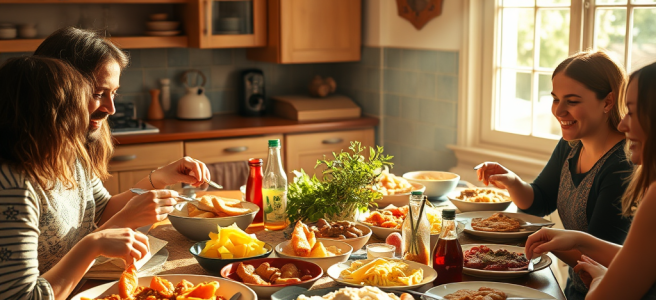
Tiina, Brian, and the kids have slowly become my family of choice, and I hang out there a lot. The farm is in Stafford, where the neighbors are rare. They have a lake house in Louisa as well, and through my road trips South we’ve bonded. I watched the kids while they were out of town. Tiina feeds me early and often. We have a beautiful relationship.
She does other things for me, too, but feeding me is my favorite. 😛
My love language is food, and I wish I had prepared more for Galentine’s Day. It was a comedy of errors that I forgot Tiina’s olives (her standard answer when I ask her if she needs anything), and I felt bad…. but I will make it up to her next weekend if not before. I’m trying to learn everything so I can be off book. It’s not the lines that matter- I’m Bigtan, a Persian guard. He is a very minor character. The “off book” part is learning “No One Mourns the Wicked.” I have a YouTube video, sheet music, and time on my hands.
I am having the most success by turning up the recording very loud so that I can hear the intake breath. The piece doesn’t have a vamp. It just STARTS. Being able to catch breath intake at least gives me a microsecond of preparation.
Having the sheet music is allowing me to look for other entrances while the music is going on, harder to pick out.
I’m honestly quite happy about being a part of a team again. The entire family is also cast in the play, so I am working with people I already love and being introduced around at Zoom rehearsal tonight.
In a way, it is very much reclaiming my childhood.
When I was a child, my father was a pastor. We lived in several different cities in Texas, but in Galveston our next-door neighbors were Jewish. That was catnip for a preacher’s kid. I loved the faith and celebrated every holiday, Jewish and Christian, for two years until we moved.
I wanted way more than two years to ask questions and explore my faith.
Tiina and her family have welcomed me into their culture, and it fits me. But it’s not just synagogue life.
It’s her son giving me a Valentine.
Her daughter giving me a bracelet Tiina had to wrestle off me just to try on my costume.
It’s the feeling of family, a long way from home.
It’s stepping out of my comfort zone, and literally into a new role.
It was intentional. I needed to get out of the house, and Tiina’s synagogue offered me a place to plug in.
Nothing more, nothing less.
I don’t want to feel fear that I’m overstepping when I’m actually trying to step away. I don’t have any fantasies that running into each other is safe and comfortable, totally going unnoticed the way I would want.
The only option is to disclose up front.
But the plot has only thickened if Aada enjoys the roux.
Because a Purim spiel is totally the kind of thing I would have invited her to. It’s all about family.
Even those who are not Jews…… they’re Jew……………….. ish.


 Stories That Are All True