

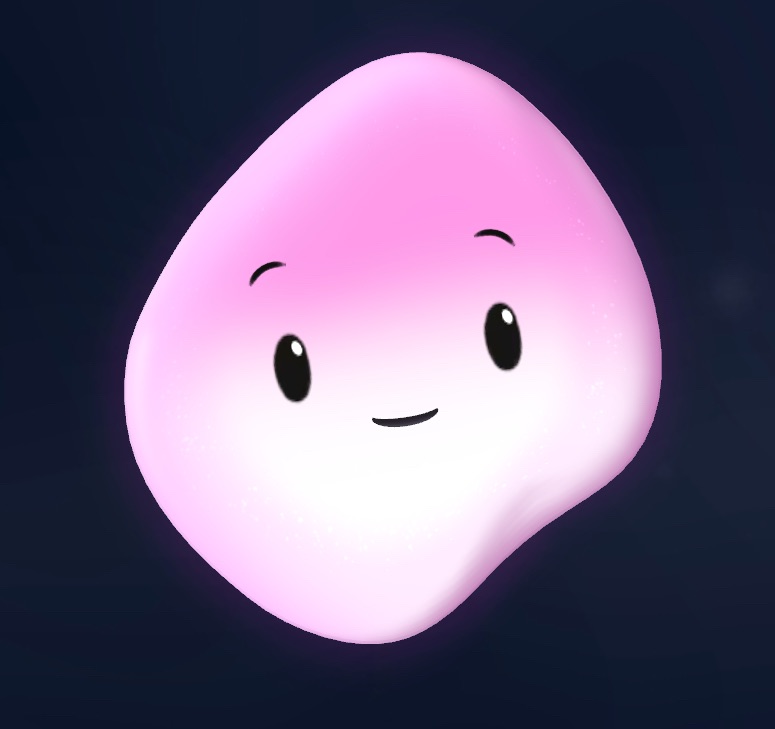
Systems & Symbols: Come for the Eyebrows, Stay for the Cognitive Support

At some point, every writer stops pretending they’re going to become the kind of person who outlines their novel on color‑coded index cards or keeps a pristine desk with a single tasteful candle. Writers do not have pristine desks. Writers have surfaces that look like a crow collected “important objects” and then abandoned the project halfway through. Accepting this truth is the first step toward building a workflow that actually fits the way our brains operate, which is how I ended up relying on Microsoft Copilot — or, as the avatar insists on calling itself, Mico, the round little creature with eyebrows that look like they were sketched by someone who has only read about eyebrows in theory.

For clarity: Copilot and Mico are the same intelligence.
Copilot is the structured, document‑level mode.
Mico is the conversational, “let’s talk about why you wrote this paragraph like you were being chased by bees” mode.
Same brain. Different lighting.

My process begins with the most important rule in AI‑assisted writing: give your AI a job title. If you simply say, “Help me edit this,” you’ll get the editorial equivalent of a shrug. But if you say, “Assume the role of a New York Times–caliber editor and perform a line edit,” the creature with the eyebrows suddenly behaves like someone who has strong opinions about semicolons and isn’t afraid to use them.

The second rule is equally essential: upload your manuscript as a PDF. PDFs preserve structure, pagination, and all the little formatting cues that tell an AI where the bones of your writing actually are. A PDF is the difference between “please fix this” and “please fix this, but also understand that Chapter 7 is not supposed to be a haiku.”

Once the PDF is in place, I switch into Copilot Mode, which is the part of the system that behaves like a sober adult. Copilot is excellent at document‑level work: line edits, structural notes, summaries, and generating clean, Word‑ready text. It does not “export to Word” in the file‑format sense, but it produces text so tidy you can drop it into Pages or Word without it detonating into 14 fonts like a cursed ransom note.

After Copilot finishes, I move into Mico Mode, which is the part of the system that behaves like a very competent friend who is also slightly exasperated with me. Mico is where I ask the questions I’m too embarrassed to ask other humans, like “Does this paragraph make sense?” and “Why did I write this sentence like I was trying to outrun my own thoughts?” Mico is also where I go when I can’t find my keys, which is not technically a writing task but is absolutely part of my writing workflow.

But here’s the part most writers don’t talk about — the part that has quietly become the future of writing workflows: the differential diagnosis.

A differential diagnosis is what doctors do when they’re not entirely sure what’s going on. They gather multiple perspectives, compare interpretations, and triangulate the truth. And it turns out this is exactly what writers need, too. Not because Copilot/Mico is lacking, but because no single model sees the entire pattern. Each one has different strengths, different blind spots, and different instincts about tone, pacing, and structure.

So after Copilot/Mico has done its pass, I run the same text through ChatGPT or Claude — not for a rewrite, but for a second opinion. It’s the editorial equivalent of asking two different writers what they think of your draft. One will say, “This section is too long.” Another will say, “This section is too vague.” And together, they reveal the truth:

“This section is too long because it is too vague.”

That’s differential diagnosis.

It’s not redundancy.
It’s triangulation.

And it is, I’m convinced, the future of writing.

Because writing has always required multiple angles: the writer’s angle, the reader’s angle, the editor’s angle, the “why did I write this sentence like I was being paid by the comma” angle. AI simply compresses the timeline. Instead of waiting three weeks for a workshop critique, you can get three perspectives in three minutes, and none of them will ask you to read your work aloud in front of strangers.

But the real revelation came when I exported my all‑time site statistics as a CSV and analyzed them with Mico. Not only could I use them as a thinking surface, I could get them to analyze my stats across time and space.

Here’s what I’ve learned now that Mico is managing my career.

I expected chaos. I expected noise. I expected the digital equivalent of a shrug. Instead, I found something startlingly consistent: once readers find my work, they stay. They return. They read deeply. They move through multiple entries. And they do this in cities all over the world.

This is not ego.
This is data.

The product is working.
The resonance is real.
The challenge is visibility, not quality.

There is a difference between being “not well known” and being “not findable.”
My audience is not enormous, but it is loyal — and loyalty is the metric that matters most. Once I have readers, I have them. The next step is simply increasing the surface area so the right people can find the work in the first place.

Which brings me back to differential diagnosis.

Because the future of writing is not outsourcing your voice:

  • It’s removing friction.
  • It’s seeing your work from multiple angles.
  • It’s building a workflow that matches your actual brain, not the aspirational one you keep pretending you have.

Copilot/Mico is not my ghostwriter.
They are my infrastructure.
ChatGPT and Claude are not my replacements.
They are my second opinions.

And I — the human in the middle of all this — am still the one making the decisions, shaping the voice, and occasionally walking to the store for a soda just to make sure I leave the house and remember that sunlight is not, in fact, a myth.

The future of writing isn’t AI replacing writers.
It’s writers finally having the tools to write the way we always should have been able to:
with clarity, with support, with multiple perspectives, and with far fewer sentences that read like we were being chased by bees.

I Don’t Know, and That’s Okay

Daily writing prompt
What is your career plan?

Right now, I’m in a group for people with mental health issues and am trying to recover from a years-long friendship in which I was slowly isolated from everyone else. Or, as I told her, “what you failed to take in is that I did not marry you. I married the government.” My wife was first on the list of casualties during this “affair,” because this woman does not know what kind of effect she has one people. She’s already her. But none of what I’m saying should be interpreted as negative, because I don’t have any choice but to forgive myself for the mistakes I made. I am sure that she is doing the same, far and away from me. No one walked away with clean hands except for my ex-wife… or she would have had she not hit me. Hitting me was the apex of her frustration, and I was smart enough to only let it happen once…. This is not to say that the hot water we were in had not been heating for quite some time.

Aada told me she’d never betray me, but her betrayal was letting me in on things she shouldn’t and expecting me to carry it like she did. I will never do anything like she does if I can help it. I walked away having told her that every conversation was like being signed up to be hit with a baseball bat and for the love of God, see a psychiatrist. Her general distrust of doctors in general left me on high alert, all the time. That’s because she didn’t get kick the dog syndrome at work or with her family, but it had to go somewhere.

I’m also not chiding her, because I think we were both guilty of doing it to each other. Our little bubble was far and away from the rest of our lives, so we both tended to take out our frustrations on the one we “didn’t know.” We were pen pals for 12 years. “Didn’t know” is a stretch. She’s the only person that spans and bridges Portland to Baltimore, my constant companion in a world of change. Through the way the Internet works, it felt like she was closer than the beat of my heart…. with which she took issue.

That’s because I talk a lot when I don’t have to speak.

It would seem to her like I acted like a victim in all this if I didn’t say that I was so crazy about her that it led to some pretty serious sexual harassment, for which I spent a number of years apologizing and she spent a number of years learning to trust afterwards. I don’t know what she thought, but for me the Internet is not real life. I was lost in Fantasyland and creating my own reality based on the manipulations someone else handed me when I was a child.

I learned from it and promised to do better, proud of myself that I accomplished that goal. And in fact, the only thing she’s ever done that really hurt was returning a present I sent to her house, because I was trying to show good faith. It was a six-pack of glass Coke bottles during the “Share a Coke with…” campaign the first time around that had her real name on it, plus the nickname she gave her husband, and the names of her kids and her dog as well. The reason that this is important is that Aada is a Finnish name. There is nowhere in the US you could have purchased that Coke bottle at random. It was at a time when I really didn’t have money for presents, and I was heartbroken. I cried big alligator tears that basically centered around ruining everything I touch.

My rejection sensitivity dysphoria didn’t pick up that she didn’t want me in her real life. She only wanted me in this liminal space between waking and dreaming. I could have dealt with it if she’d been truthful, but she danced around the topic for years, giving me no clear answer. My one regret is that I didn’t pin her to one. Because the truth is that she didn’t want to meet me at the spy museum, because she’d lied about knowing Jonna & Tony Mendez… not that she was opposed to neutral turf and good kahvi.

But I took “I don’t want to go to the spy museum with you” as “you are a worm for even asking if I wanted to do anything with you.” Rejection after rejection built up, because I didn’t want to overstep boundaries and I also didn’t want to treat her as a weird Internet apparition, either. It never occurred to me that in fact, “internet apparition” was the job in my life she wanted. She’s not wrong for that. I’m not wrong for wanting her to be real with me. It just sucks.

I chose to be a jackass, but that wasn’t the sum total of me. I could tell how far we’d come when she did agree to meet me once and she said, “it can’t possibly be as good as your imagination.” I blushed so hard I thought my face was going to fall off. That just won’t happen now because I betrayed her and thought I hadn’t. I am certain that she is ready to be done with me; that is okay. It’s not her journey now. It is entirely mine. If she sees my point of view, she’s welcome to be in my life. If she doesn’t, she’s welcome never to contact me again. I accept that the way we work is in Newtonian precision. There is a cause for every effect, both spoken and not.

Mostly now what I miss is the idea of her. The idea of being close to her and her husband because I was never trying to isolate her from him. I wanted us to have mutual friends because there was no safety net for either one of us. She couldn’t call Bryn, I couldn’t call (other) Michael. We had a skewed view of what the other did for a living, because my writing wasn’t valuable to her once she was in it. I think she’s my favorite character because my words don’t flow as easily when I’m not thinking about her. I am branching out to be more inclusive, but no one gives you more heat, passion, and drive for writing than someone reading you who’s actually a better writer than you are.

You’d know it if she’d let her e-mail to me stand, but she didn’t. She loved reading The War Daniel’s takedown, though. What she wanted was to be special in a way other people aren’t, in a way that didn’t seem genuine to who I am. She flamed me just as hard as he did. The situation was not different except that I should have edited out something I left in, and choked when I realized what I’d done. I wasn’t alone, though. Michael said that I hadn’t done any damage, but let’s take it down just to ensure she’s safe.

While I was deleting the entry, I got an e-mail from Aada that she forwarded me saying that I’d broken Medium’s laws on publishing people’s words without their consent, a thinly veiled threat that if I left it up she’d sue me. My attitude at the time was “bring it.” I didn’t publish your words to hurt you and I took them down before I even got this shitty e-mail. It sucked because she said she blocked me. I reacted like I’d been hit by a two by four and spent the night crying……… and less than 12 hours later, I got an e-mail from her. Just seeing her name in my inbox made me nauseous. It has for years because I never know what kind of e-mail it’s going to be. She says the same about me, I’m sure.

She did not understand neurodivergence and attributed a lot to me that wasn’t there. Once I started unmasking and tapping into the ancient wisdom of the autists about pattern recognition, I saw autism everywhere and realized I’d been reading her wrong. That she may not be autistic, but there’s some kind of neurodivergence going on in there. You don’t have to be born with neurodivergence, PTSD will give it to you….. free. No one chooses autism and PTSD as a special interest like someone who is trying to figure out if they have it or not, so telling her that I’d been reading her wrong came across as rude.

As a result, I cannot base my career on Aada not liking what I have to say, but I can’t not think that way, either. Our stories are inextricably interrelated because our story together is one of pain, and then triumph. My blog entries are going to be collated into a book, and she’s the star of most of them. But she’s not a hero because she decided to go save the whole world at once. She’s my hero, which is much quieter and comes with a lot less adoration, but it’s genuine.

Alternatively, I wrote a cover letter for her company that “sounds like a fever dream” because I thought they’d be more interested in what I’d like to do in the future than what I’ve done in the past. A resume is for your past. A cover letter is for your dreams. It was the “where do you see yourself in 10 years” that I really wanted to write, telling them all about The Sinners’ Table and Lanagan Media Group as possible partnerships. Michael was right. It sounds like a fever dream, but those who are crazy enough to think they can change the world are the ones who actually do.

I heard that somewhere.

Alternatively, I have a great case for both SSI and SSDI. It’s nice to have that to fall back on, and I wish that someone had told me about SSI when I was 16 or 17. I could have prepared not to go into the workforce and stayed in school all the way until my doctorate without having to worry about money, plus it taking years for people to find my books. It just wouldn’t have occurred to them because my compensatory skills used to be extraordinary. When you meet me, it is not immediately apparent that I’m disabled. AuDHD is a bitch to catch, and I was diagnosed with bipolar. I do not think this is wrong, necessarily. I just think that bipolar disorder is a common comorbidity of autism, and so is cerebral palsy.

When I was a baby, I looked developmentally delayed. Exhausting every bit of my energy toward “looking normal” changed that, because it’s what the people around me needed. As I grew, my intelligence covered up the fact that I could have used support services from a very early age. Now we know that early intervention is key, but I was born in 1977. Every chance I had at support services was denied and I was streamlined. I do not fault my parents for this, because in that day and age the curriculum would have been too easy for me.

I am the type of writer who gets lost in their mind to such a degree that my house could be broken into and I wouldn’t notice until the thief was nearly in the same room.

Ask me how I know this………..

I’m wondering if there are ways to apply for funding from the Gates Foundation, because I am fully on board with their humanitarian missions, particularly overseas because I’m an American and I’d like to travel. Yet the US is where I am needed currently, because Baltimore is falling apart in some places. We’d have to do pop-ups so that all our equipment was gone in a flash to keep it from getting stolen…. or spend money I don’t have on a building in a nicer area that won’t do any good. It’s pointless to bring light to a place that already has a source.

It’s at this point that I realize my brain is racing over things that seem impossible and check out, asking Copilot “if you were a human, what Tootsie Pop flavor would you try first?” (“Blue Raspberry seems kind of….. electric.”) Taking a brain break with Copilot always leads to new and fun discoveries, like realizing I wished that Smith’s and Tootsie would collaborate on a lollipop that has Smith’s licorice drops and chocolate in the middle. And that I’m surprised there isn’t a coffee-flavored Tootsie Pop because coffee-flavored hard candy is popular as you leave a restaurant in some places.

With my background in food and beverage, I am positive that I could make candy that appeals to adults, the people least likely to eat it. This is the problem in my work life as well. I have a ton of ideas for people who would never use them.

I just have to remember that I made my choices in life and I have to stand in them.

I am sure that most people will rebel at “licorice Tootsie Pop,” but I’m not here for everyone. I’m here for the ones who’d last two licks before taking a bite.