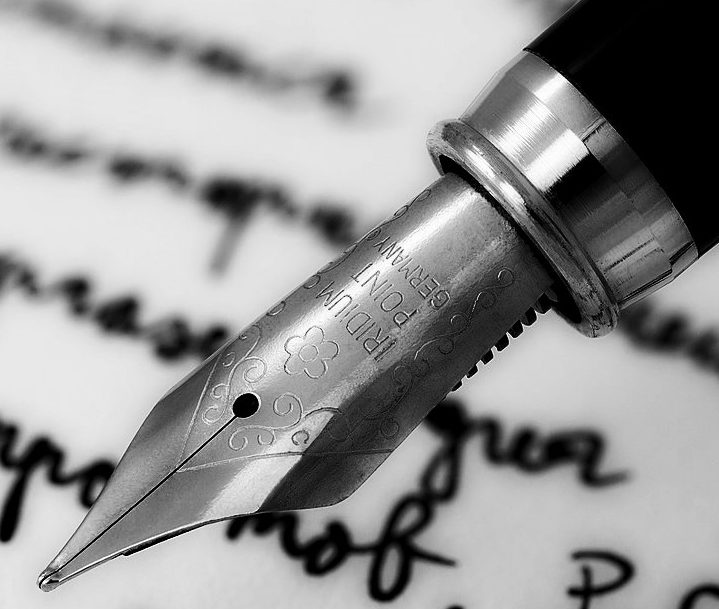
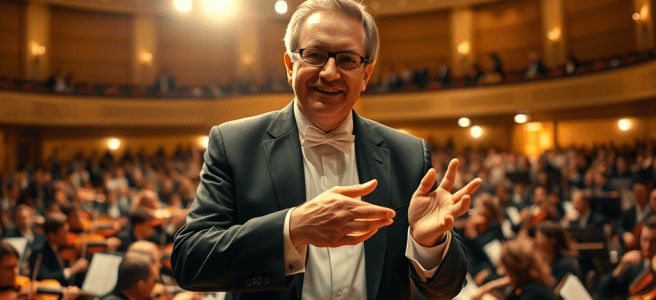
For Aaron, the conductor on the other side of the spectrum from the arts, and how we’ve both learned to adapt.
Creative and technical work used to be defined by proximity to the instrument. Writers lived inside their sentences, shaping each line by hand. Programmers lived inside their functions, coaxing logic into place one bracket at a time. Mastery meant fluency in the mechanics: the keystrokes, the syntax, the careful choreography of getting everything “just right.” We were trained to sit in the orchestra pit, surrounded by the tools themselves, proving our worth through the precision of our labor.
But the landscape has shifted. The tools now perform at a scale and speed that no human can match, and the center of authorship has moved with them. The orchestra is still powerful—astonishingly so—but the podium has become the place where meaning is shaped. The conductor doesn’t play every instrument; the conductor decides what the piece is for. And in this new era, both creators and programmers are discovering that the real work has migrated upstream.
For writers, this means the sentence is no longer the battlefield. The thesis, the stance, the narrative arc—these are the elements that matter. The system can handle the connective tissue. It can expand, compress, restructure, and maintain continuity without losing breath. The writer’s job becomes the articulation of intention: What are we saying? Why does it matter? Where does the argument land?
For programmers, the shift is just as profound. The days of hand‑crafting every function are giving way to a model where the developer defines the architecture, the constraints, the interfaces, the invariants. The system can generate boilerplate, propose implementations, and fill in the scaffolding. But it cannot decide the shape of the system. It cannot choose the tradeoffs. It cannot determine what “correct” means in the context of the problem. That judgment belongs to the person on the podium.
This is the shared frontier: the move from execution to direction. From labor to orchestration. From being the one who plays every note to being the one who holds the arc.
And yet, many people cling to the pit. Writers argue over commas as if punctuation were the soul of the craft. Programmers debate indentation styles as if formatting were the essence of engineering. These rituals feel safe because they are familiar. They are the parts of the work that once defined competence. But they are no longer the parts that define value.
The podium demands something harder: clarity of vision. The courage to choose. The ability to articulate the shape of the thing before it exists. The willingness to take responsibility for the direction, not just the details.
When the orchestra can play anything, the conductor must decide what is worth playing.
This is the new creative and technical discipline. Not the manual assembly of output, but the stewardship of meaning. Not the perfection of the line or the function, but the integrity of the idea. The people who thrive now will be the ones who stop proving they can perform every task and start demonstrating they can guide the system—steady hand, clear intention, full command of the arc—as the work rises to meet them.
Scored with Copilot. Conducted by Leslie Lanagan.


 Stories That Are All True