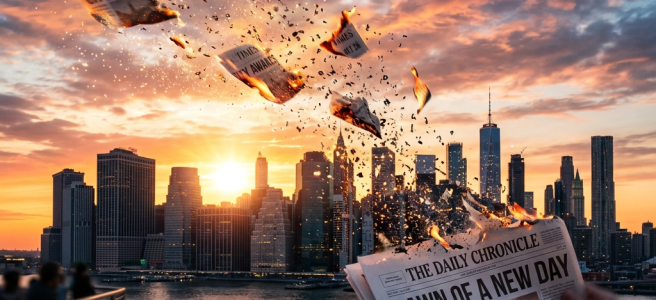
There is a particular kind of headline that American newsrooms love, the kind that suggests the world is ending but can be postponed until after the commercial break. “How Dangerous Is Mythos?” they ask, as if danger were a measurable unit, like rainfall or cholesterol. It is the same tone they used for Sputnik, for the microchip, for the first time someone put a camera on a drone and flew it over a backyard barbecue. A tone that implies the future has arrived uninvited and is probably armed.
But the truth, as it usually is, is both more mundane and more consequential.
Mythos is not dangerous.
People are.
And the first people to touch it behaved with the kind of sobriety that used to be common in American institutions before we replaced competence with branding.
Anthropic did not swagger.
They did not preen.
They did not hold a press conference with a light show and a countdown clock.
They did not claim to have “changed everything,” though they might have.
Instead, they did something almost old‑fashioned:
they called for help.
Within hours, they had convened a coalition of the only entities on earth with the infrastructure to absorb a model like Mythos without accidentally setting something on fire. Microsoft, Apple, Google, AWS, Cisco, JPMorgan, the U.S. government — the usual suspects, yes, but also the only suspects. The ones with enough engineers, lawyers, and institutional memory to understand that when a machine starts finding vulnerabilities faster than the world can patch them, the correct response is not a product launch. It is a meeting.
This is not the story the headlines want to tell.
It is not apocalyptic enough.
It does not come with a cinematic score.
But it is the story that matters.
Because the ethics of any tool — whether it is a plow, a printing press, or a machine that can find zero‑day vulnerabilities before your coffee finishes brewing — are not inherent. They are inherited. They come from the hands that hold it.
And Anthropic’s first instinct was not secrecy or bravado.
It was collaboration.
That is not the behavior of a company courting catastrophe.
It is the behavior of a company that understands the stakes.
The headlines will continue, of course. They always do. They will warn us that Mythos is too powerful, too fast, too unpredictable. They will imply that the machine is the danger, because machines cannot sue for defamation.
But I am done catastrophizing the capability.
The capability is neutral.
The actor is not.
And in this case, the actor behaved like an adult.
In a decade defined by institutions that failed at the exact moment they were needed most, it is almost disorienting to watch one rise to the occasion. To see a company look at something powerful and say, not “How do we monetize this?” but “Who else needs to be in the room before we touch it again?”
It is not dramatic.
It is not cinematic.
It is simply responsible.
And in 2026, responsibility is the rarest innovation of all.
Scored with Copilot. Conducted by Leslie Lanagan.


