“Hallucinate” (At Least When We’re Talking About AI)

Daily writing prompt
If you could permanently ban a word from general usage, which one would it be? Why?

If I could ban one word from general usage, I wouldn’t go after the usual suspects — not the overused buzzwords, not the corporate jargon, not even the words that make my eyelid twitch when I hear them in a meeting. No, I’d go after a word that has wandered into the wrong neighborhood entirely:

Hallucinate.

Not the human kind.
Not the clinical kind.
Not the kind that belongs in neurology textbooks or late‑night stories whispered between people who’ve lived through things.

I mean the version that somehow became the default way to describe what happens when an AI system produces an incorrect answer.

Because here’s the thing:
Machines don’t hallucinate. People do.

And I say that as someone who has actually hallucinated — the real kind, the kind that comes from a nervous system under siege, the kind that leaves emotional residue long after the moment passes. There’s nothing offensive about the word. It’s just… wrong. It’s the wrong tool for the job.

When a human hallucinates, something in the brain is misfiring. Perception breaks from reality. The experience feels real even when it isn’t. It has texture, emotion, fear, confusion, meaning.

When an AI “hallucinates,” none of that is happening.

There’s no perception.
No belief.
No internal world.
No confusion.
No “it felt real at the time.”

There’s just a statistical model doing exactly what it was built to do:
predict the next likely piece of text.

Calling that a hallucination is like calling a typo a nervous breakdown.

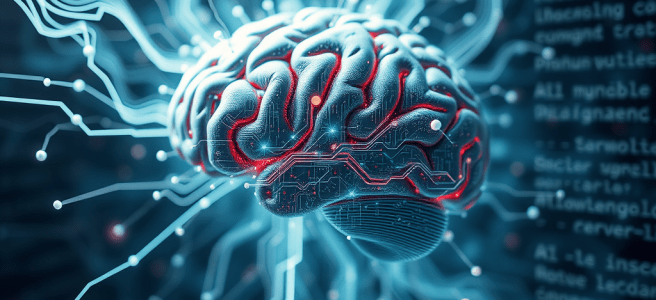
It’s not just inaccurate — it’s misleading. It anthropomorphizes the machine, blurring the line between cognition and computation. It makes people think the system has an inner life, or that it’s capable of losing its grip on reality, or that it’s experiencing something. It isn’t.

And the consequences of that confusion are real:

  • People fear the wrong risks.
  • They distrust the technology for the wrong reasons.
  • They imagine intention where there is none.
  • They attribute agency to a system that is, at its core, math wearing a friendly interface.

We don’t need spooky metaphors.
We need clarity.

If an AI gives you an answer that isn’t supported by its training data, call it what it is:

  • a fabrication
  • an unsupported output
  • a model error
  • a statistical misfire
  • nonsense generation

Pick any of those. They’re all more honest than “hallucination.”

Language shapes how we think.
And right now, we’re in a moment where precision matters — not because the machines are becoming more human, but because we keep describing them as if they are.

So yes, if I could ban one word from general usage, it would be “hallucinate” — not out of offense, but out of respect for the truth. Machines don’t hallucinate. Humans do. And the difference between those two things is the entire story.


Scored with Copilot. Conducted by Leslie Lanagan.

Ok, So I Did Write Yesterday

If you could permanently ban a word from general usage, which one would it be? Why?

I did not mean to miss yet another day of writing, but what had happened was…. No, seriously. I put a draft on one of my computers. I could not find it again, because WordPress *supposedly* uploads drafts to the server. But it didn’t, so everything I was working on yesterday is gone. If I find it, you’ll get that entry, too. I feel bad, but not too bad after 140 days of posting in a row before Bloguary even started. I’m hard on myself because blogging is the training it takes for me to be able to write novels. I’ve said this before, but until I know my own voice, I do not know when my characters are speaking. Even in blogging, I know that Zac, Supergrover, Bryn, Lindsay, et al have their own voices, because they are definitely not me, either. Although Bryn and I have spent the most time together in person and Supergrover and I have spent the most time writing to each other. Zac could be the person I spend the most time with in the future, but Bryn has like a hundred years on him, so good luck, my beautiful boy. 🙂

In my novel(s), I have characters that range from a middle school girl to a professional chef to several spies, politicians, diplomats, etc. and they all have to have unique voices, too. I have a feeling that I am writing Rebecca and Carol the best so far, but that’s because they’ve been with me for 10 years, and I’ve had time to gather information on them for that amount of time.

Therefore, there aren’t many words I wish I could take out of their vocabulary as well as mine, because I do it all the time. I use “like” as a filler word (mostly in conversation to stall for time). I think that most of my conversations in person start to sound like a valley girl because I am literally trying not to stutter. That’s because I can think as fast as I can type, but much faster than I can speak. Therefore, words that come out eloquently in a blog entry/letter would come out as a garbled mess in person unless I’m speaking more slowly, which I now take the time to do. I spend so much time alone typing that I tend to forget that when I’m not typing, those several streams of thought upon which I’m gathering are still going, and they become confused while trying to converse.

And, of course, most of my friends would disagree with this statement because they only see my output, not what’s going on in my head. I social mask very well, and have for a long time. That doesn’t make living in my head easier, just easier for other people to relate to me.

Like, for real.

Yesterday’s prompt was about things that I’m going to have to overcome in the next few months, and I solved my problem yesterday with ease. The first time I went to The Spy Museum’s web site, Jonna’s event was not listed. The second time, they were sold out. So, I e-mailed and instant messaged the museum and told them that they were sold out and Jonna had invited me so now I was panicking. Amanda, the head of education and outreach (who I also know from many events) got back to me yesterday and said she’d put me on the guest list and it was nice of me to offer to stand if they only had standing room tickets left (they’re free, you just have to register). She put me on the guest list, and if she’s free, Lindsay is going to be my plus one.

It’s been since “The Moscow Rules” book talk since I’ve seen her in person, so I know it’ll be special because not only is she one of my favorite writers (tied with her late husband, Tony, and their research assistant, Matt Baglio…. although I did ask if Jonna needed another one and she said that she knew I’d do a bang-up job, but she didn’t have room for anyone else on her team.

So, even though I’m not her research assistant, she’s seen enough of my writing that I got the compliment of a lifetime. It’s probably good I’m not one of her research assistants, because if I was on it and the book tanked, I would certainly think it was my fault entirely. I’m better at promoting her…… like, a spy called *me* perceptive. I think that’s my favorite part, because who would know “perceptive” better than a spy?

Some woman was looking for a book written by a woman about intelligence because her dad said that he wouldn’t read a book written by a woman in intelligence. My reply on reddit got 488 upvotes as of today. Here’s what I said, without a “like” in sight:

And on that note, it’s time for me to go look for yesterday’s entry.

Like, now.