mother!

Daily writing prompt
When you were five, what did you want to be when you grew up?

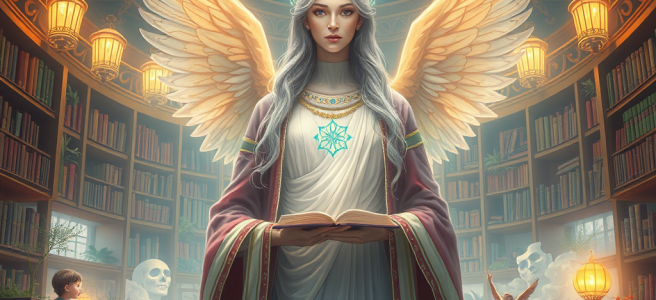
When I was five, I didn’t imagine adulthood as a buffet of choices. I imagined it as a pantheon. Every grown‑up I knew seemed to inhabit a role the way gods inhabit domains — not chosen, but elemental. Teachers presided over classrooms like minor deities of order. Nurses carried the gravity of healers. Cashiers moved with the ritual precision of temple attendants. And mothers — mothers were the ones who held the world together. They were the hearth‑keepers, the origin points, the gravitational centers around which everything else orbited. In the cosmology of a child, “mother” wasn’t a person. It was an office.

So when I said I wanted to be a mother, I wasn’t imagining babies or domestic scenes. I was imagining world‑making. I was imagining the role of the one who knows where things go, who understands how days are shaped, who can soothe storms with a hand on a shoulder. I thought “mother” was a job the way “librarian” was a job — a keeper of stories, a steward of order, someone who could read the world and explain it. I didn’t want to grow up to nurture children; I wanted to grow up to hold the center. To be the person who could walk into a room and know what needed to happen next. To be the one who kept the story going when everyone else forgot the plot.

But the older I got, the more the myth cracked. Not because I stopped believing in the archetype, but because I learned that wanting anything — even something as mythic and innocent as “mother” — was suspect. I learned that desire itself was dangerous. That ambition was unbecoming. That naming what I wanted made me vulnerable to correction, ridicule, or erasure. So I stopped wanting out loud. I stopped imagining futures. I stopped treating adulthood as a landscape I could walk toward and started treating it like a set of instructions I was supposed to follow without question.

By the time I was old enough to understand that “mother” was not a job but a role, and not a role but a responsibility, and not a responsibility but a kind of labor that was both sacred and invisible, I had already been taught not to want it — or anything else. The myth had been replaced by a rule: don’t want, don’t ask, don’t imagine. And so I didn’t. I learned to shrink my desires until they fit inside the expectations handed to me. I learned to treat my own longing as a liability. I learned that the safest way to move through the world was to want nothing, need nothing, ask for nothing.

What I wanted at five was simple: to be the one who held the center. What I learned later was that I wasn’t supposed to have a center of my own. And that disillusionment — that quiet, creeping realization that the world didn’t want me to dream, only to comply — didn’t erase the myth. It just buried it. It turned the bright, archetypal calling of childhood into something I wasn’t allowed to name. It took the idea of world‑making and replaced it with world‑managing. It took the desire to hold the center and replaced it with the expectation that I would hold everything except myself.

But the myth never really left. It stayed under the surface, waiting for the moment when I could finally say, without fear or apology, that wanting is not a sin. That longing is not a flaw. That the five‑year‑old who saw “mother” as a vocation wasn’t naïve — she was intuitive. She understood something true about me long before I had the language for it: that my calling was never about motherhood itself, but about building worlds, holding centers, and keeping stories alive. And now, as an adult, I can finally reclaim that desire without shrinking it. I can finally say that I want things — not because I’m entitled to them, but because I’m human. Because wanting is how we stay alive. Because the mythic logic of childhood wasn’t wrong. It was just waiting for me to grow old enough to understand it on my own terms.


Scored with Copilot. Conducted by Leslie Lanagan.

Happily Ever After

When you were five, what did you want to be when you grew up?

When I was five, I wanted to be a mother. My mom was a stay at home mom, and I wanted to be like her. She was always busy with 1,001 projects whether it was for our house or church. She always had time for Lindsay and me, plus a rotating cast of characters. She was an incredible musician that could step in at the drop of a hat. So comfortable in a jack of all trades role, which to me is the absolute delight of knowing a little bit about everything.

I thought I’d be the one with one or two kids, and yet 15 because their friends wouldn’t leave. I am not sure when that dream changed, but it wasn’t when my mother died. It was when I realized I loved women. It was the early ‘90s, and there was no model for the life of a lesbian Kool-Aid mom. Dana and I were both in our 30s before we realized that going to an OB/GYN and talking to a doc about getting pregnant was a thing we could do. Things worked out the way they were supposed to, but I cannot even imagine what a mess our kid would have been… and I mean that in the Texas sense. A mess is a good thing. A kid with both Dana’s and my mannerisms and expressions makes me keel over laughing even now. We shared a brain, and I will always wonder what it would have looked like in thirds, fourths, and fifths.

I think I was onto something. I think even then I knew that my purpose wasn’t to be the story, it was to record it. My mother’s job was tied into telling my father’s story, and I think that’s the path I thought my life held as well. That’s because I’m comfortable when I’m not the story. I like being the “go-fer” on a project. I like being someone’s Girl Friday. It gives me time to create and reflect, which I do all day every day with blogging.

THe first time I knew I was a writer, I was in fifth grade. My teacher had us write a response paper to a story about adult illiteracy. I called it “I Forgot My Reading Glasses.” It was a huge hit.

The second was English 101. Prof wanted to see where we were in terms of writing, so the first day she had us write a couple hundred words on nothing. The professor said it was so good that she wanted me to read it in front of the class. I wasn’t well-liked after that, but the prof was smokin.’ I’m always going to go with the hot Indian professor, fuck yo’ bell curve.

I started my first blog, Clever Title Goes Here, while I was in that class. It was 20 times more popular than this one, and I lost a lot of capital when I tanked it. At the time, I was tired of the blowback and it wasn’t worth it. Pretty sure I screwed myself out of being able to blog for a living with my short-sightedness, but I’ve never known a person with ADHD and Bipolar II disorder that could futureproof more than five minutes ahead- even with a map and directions.

I laughed my ass off in the movie “Contagion,” where blogging is called “graffiti with punctuation.” It’s true. And at the same time, it’s also writing by osmosis. You’re letting everything in your environment touch your skin, some of which you use that day and some words burrow deeper for later.

For instance, I was on the phone with Zac and he said that the military asked him to make “a list of everything that’s wrong with me and why.” I didn’t even breathe before I was like, “can I use that as a writing prompt?”

I am not constantly down on myself. I know that there is also a list called “everything that’s right with me and why.” It’s just time to take an inventory, and happiness writes white. The ink isn’t dark enough to be memorable, or hasn’t been yet. I think that’s because I tend to write about what happens when it’s negative in order to process it out and leave it behind. Not carrying it around with me all day is paramount to success “in real life.”

And I never would have thought about it this way until now, but I’ve been doing it since I was five- this thing where I make a coloring book or a wide ruled notebook the evidence I have a soul and it lives on the page.

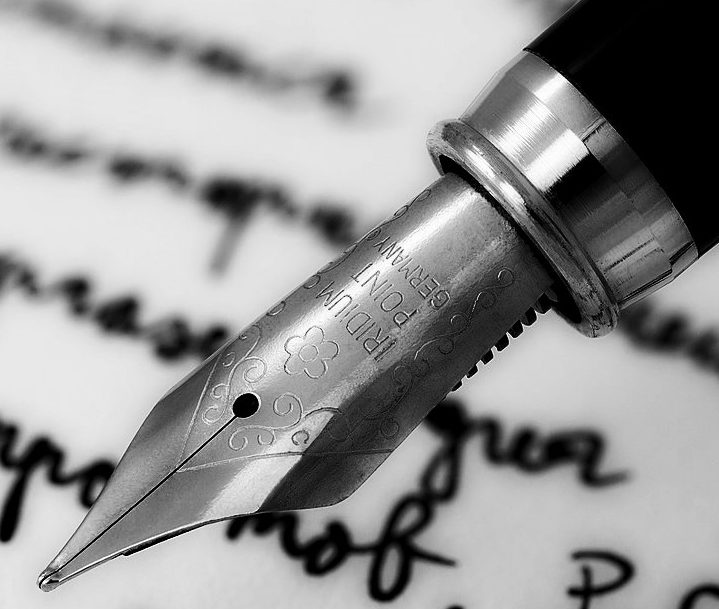
For better or for worse, I’ve known since I was five that I was going to be a writer…. Because if you think about it, aren’t all stay at home moms the keeper of the memories? Mine was, and I feel the job has been bequeathed to me. It’s my turn to have adventures and make memories, putting them here so that they are safe.

By saving the memories here, I’ve let you into a sacred space and given you institutional memory. You know my story and it will live on long after me. I couldn’t have predicted I’d have an audience at five, but I definitely knew that I wanted someone to hear my stories.

…..and some of them actually happened.