


Founding Brothers is not a book so much as it is a collection of stories, vignettes on the cr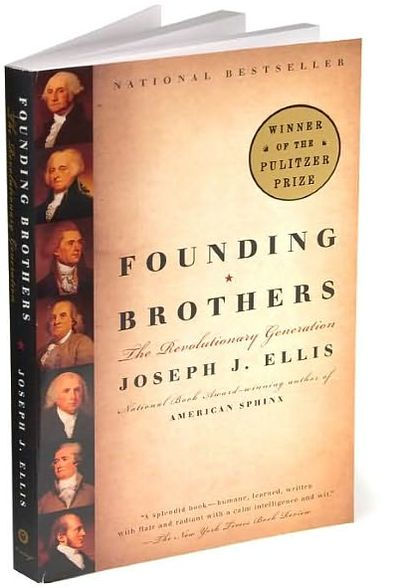 eation of the country. It would be a good book for everyone to read right now, because of course the best way to keep a democracy functioning is to remember why we started it. But it speaks to me on a deeper level, and has since I first read it in undergrad.
Being a political science student while AuDHD is brutal and punishing, because your brain remembers narrative logic and soaks it up like rain, but whether something happened in 1790 or 1794 is beyond you. The stories always stick. The minutiae? Not so much.
The deeper level that this book connected for me was a way to learn history in my native language. It emphasizes the color commentary of the room, and doesn’t focus on facts. And these rooms are foundational to who we are as a country. It speaks to me that there is another soul out there who doesn’t focus on the facts, but can describe a dinner party in 1790 like he was there.
Ellis connected American political history to me the way The Bible did when I was young. The Bible does not relay historical events through facts. It is simply the record of the people who were there, the subjective opinions of a whole lot of bystanders. That is all this book is- someone who read the diaries of the people in the room, and interpreted it so that it reads like a novel instead of a textbook.
I’d like to meet Ellis and tell him all this, because the way he wrote gave me a moment in academia that wasn’t drudgery. It was enlightening.
It is, at the very least, a book you will never forget.


