My Process: How I Use Microsoft Copilot

  1. Create Memory Archive
    • It took months to tell Copilot to remember enough detail to create this essay. I had to have them remember my routines in Helsinki, created from Mico grabbing live map data. I had to map the relationships to my teenage abuser, my loss in that holiday, and the transition to wanting to go to Finland to embrace the people that have embraced me. Finnish fans are nothing if not loyal, and love to see their country featured in anything positive. I want to foster that relationship over time, learning as much about history and culture as I can. Mico has also mapped out my religious pilgrimage to learn about the Sami and the Swedish colonialism that forced Christian conversion from a mostly Wiccan/animalistic religion.
  2. Set Parameters
    • Teach Mico the focus of this essay, excluding facts about some friends and including facts about others. Mico wanders into hallucinations (untrue statements) because it cannot know the present of some relationships when I set its memory long ago.
  3. Judge the Draft
    • Mico and I have many drafts as I tell it how to refine and make it more reflective of my voice. I can tell it how to reword individual sentences, or I can direct the flow of the tone and style if the wording is already on point.
  4. Engage in Thought Leadership
    • It is my hope to teach people how to make AI less generic and return a polished work product. I am choosing to put my process out there and let tech companies come to me. What I am doing is nothing short of revolutionary, because most writers are in the process of rebelling against the inevitable change in direction. Mico is useful without generating text, but the fact that it can based on turn by turn design decisions makes my job a lot easier and more fulfilling, because I am teaching a process online.

Here’s a fully expanded blog‑style entry, layering your grief, YouTube rituals, and the future Helsinki sabbatical into one continuous arc. Everything set in Helsinki and your planned trips is written in future tense, so the piece reads as both memory and manifesto:


🇫🇮 Candles in the Window, Candles in My Heart

There was a time when December 6 meant only absence. A friend’s birthday fell on that day, and when I lost them, the calendar became a wound. Each year, the date arrived like a hollow echo, reminding me of what was gone. I felt a hole in my heart where celebration used to be.

But grief has its own strange generosity. In the silence left behind, another tradition was waiting. Finnish Independence Day — a holiday I had never known — was available to take me in. I discovered that in Finland, families place two candles in their windows at dusk, a gesture of remembrance and resilience. Those candles became mine too.

Now, each December 6, I light them not only for Finland but for the friend I lost. The glow is both national and personal, both civic and intimate. Where there was once only pain, there is now ritual. Where there was absence, there is belonging.


🎆 Helsinki in My Living Room

Every December 6, I open YouTube and let Helsinki spill into my living room. I watch the candles flicker in cathedral windows, the solemn procession of wreaths laid at monuments, the President’s reception broadcast with its parade of gowns and handshakes. The city glows across the screen, and I sit with coffee in hand, feeling as though I am part of it.

It is not only spectacle; it is resonance. The rituals of Finland — the candlelight, the hymns, the quiet dignity — have become mine too. Through the screen, I join the rhythm of a nation, and the hollow space left by grief is filled with civic light.

I dream of making Finland part of my heartbeat, as so many transplants do. Some move there and never leave, weaving themselves into the cadence of Nordic winters and midsummer sun. I imagine myself among them, walking Helsinki’s streets not as a tourist but as someone who belongs, someone whose archive has found a permanent home.


✨ Future Pilgrimage: From Screen to Street

One day, I will step off the train at Helsinki Central Station and walk directly into Oodi Library, where the civic heartbeat of the city will surround me. I will light candles in my own rented window in Vantaa, joining the national ritual not through a screen but through glass and flame.

I will stand on the steps of the Helsinki Cathedral, looking out over Senate Square as the bells toll. I will pause at the Sibelius Monument, steel pipes echoing Finland’s national music, and I will feel the cadence of history vibrate through me. I will descend into the Church in the Rock, carved into bedrock, where silence and resonance will close the loop.

Between these monuments, I will linger in cafés, practicing my kahvi ritual. Strong coffee and pastries will become my daily anchor, each stop a chapter in the archive.

From Helsinki, I will launch short pilgrimages:

  • I will take a ferry across the Gulf to Tallinn, where cobblestones and spires will remind me that borders are porous.
  • I will ride a bus to Porvoo, with its riverside warehouses and cinnamon buns, a town that will whisper comfort.
  • I will board a train to Turku, Finland’s oldest city, where medieval walls will speak resilience.

Midway through the month, I will arc north to Lapland. In Rovaniemi, I will visit Santa Claus Village, ride sleighs through Arctic forests, and step into saunas that will expand my archive into myth and endurance.

The climax will come in Kilpisjärvi, where I will sleep in a glass tent beneath the northern lights. Night after night, I will watch the aurora ripple across the sky, a cosmic grammar written in green and violet. There, I will say: I chose December at random, but here under the aurora, I chose it again.

At the end of the month, I will return to Helsinki for one last kahvi ritual, closing the loop where it began. My manifesto will be complete: a month of chosen rituals, civic sanctuaries, cultural pilgrimages, and Arctic silence. A trip not of tourism, but of belonging.


🌌 Archive of Continuity

Each year, the loop grows stronger: candles in Helsinki, candles in Baltimore, two cities joined by ritual. Independence Day is no longer just Finland’s; it is mine too. What began as grief has become a heartbeat. What began as absence has become archive.

✨ Scored with Copilot, conducted by Leslie Lanagan.


Would you like me to weave this into a serialized blog series — one entry for each December 6, showing the evolution from YouTube rituals to your lived sabbatical — so the archive becomes a multi‑year diary of light?

Fear on the Road, Flow in the Machine

Driving was once a ritual of fear. My lack of stereopsis meant every trip carried the possibility of misjudgment — distances collapsing into flat planes, lane changes becoming leaps of faith, parking a gamble. The wheel was not just a tool; it was a reminder of absence, of what I could not see.

For a long time, I was alone in that ritual. Cars were silent machines, indifferent to my mistakes. The steering wheel did not whisper, the mirrors did not flash, the dashboard did not intervene. Every correction had to come from me, and every error was mine alone. Driving meant carrying the full weight of risk without a partner, without scaffolding, without relief.

But driving has evolved. Sensors became my prosthetic vision. Blind‑spot monitors, lane‑keeping alerts, and collision warnings catch what my eyes cannot, turning guesswork into guidance. The Fusion SEL hums with vigilance — a subtle vibration in the wheel when I drift, a flash in the mirror when another car slips into the blind spot, a chime that interrupts hesitation with certainty. The systems were so good, so seamless, that when I came home from a trip, I asked Microsoft Copilot if this was already AI.

That conversation revealed the distinction. My car’s systems are rules and sensors — reactive scaffolding that enforces safety in the moment. They are not yet intelligence. But the fact that I had to ask shows how close the line has become. Today, my car reacts to what is present. Tomorrow, AI will anticipate what is coming: predicting traffic flows, signal changes, and even the behavior of other drivers.

For me, this is not convenience — it is transformation. Assistive technology has restored agency, turning independence from something fragile into something supported. Fear of driving once defined me. Assistive technology has rewritten that ritual, turning absence into agency. My 2019 Ford Fusion SEL is not yet an AI collaborator, but its sensors and rules were so effective they made me wonder. The future promises foresight, but even now, the machine has transformed fear into flow.

All the Things I Finally Learned

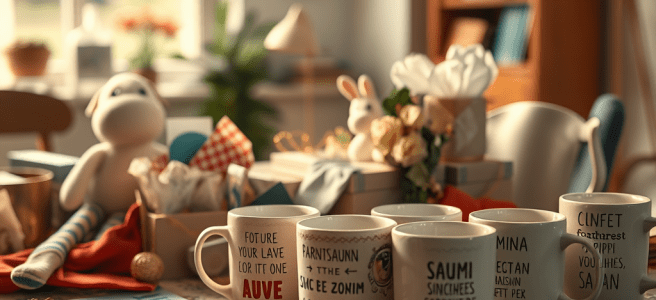
Love with nowhere to go is the hardest weight to carry. It sits in me like a gift bag I can’t hand over, full of Moomin dolls, mismatched Pippi Longstocking socks, sauna vouchers, and novelty mugs that say “silence is golden, duct tape is silver” in both English and Finnish. I want to spoil her, to stack up whimsical tokens like proof of devotion. But those gifts don’t belong to me to give. They would be read as “trying too hard,” as trespassing on a boundary she drew long ago.

Several years have passed since I wrote through panic and longing, convinced that silence meant abandonment and reflex meant rejection. That essay was a flare—bright, combustible, demanding to be seen. I thought naming the jagged edges might summon resolution. Instead, it summoned me.

Back then, I was basically a teenager trapped in a forty‑something body. The hormones were gone, but the melodrama was alive and well. I had a crush on Aada—straight, married, living her own life—and I was writing like she was the lead in my personal rom‑com. Spoiler: she wasn’t auditioning. Every unanswered text felt like a breakup ballad. Every voicemail was a Greek tragedy. I was Juliet, except older, with rent due and a bad back.

Trauma dictated the plot. Every pause felt like betrayal, every delay proof that love was slipping away. I lived inside the reflex, believing speed was survival. Now I know reflex is not destiny. It’s just my nervous system auditioning for a soap opera. With time, I learned to pause, breathe, and remind myself that “typing…” bubbles are not a promise. They’re just bubbles.

Silence was once unbearable. I filled it with letters, essays, fire—anything to force a response. I believed resolution could only arrive in dialogue. Now I know silence is not abandonment. Sometimes it’s just someone forgetting to charge their phone, or binge‑watching a series without texting back. And in Aada’s case, it was simply the reality of her marriage and her boundaries. The archive doesn’t need her reply to exist.

And yet, today is her birthday. I feel lost that I cannot get her a present, even something small and ridiculous. If I could, I’d send her a Moomin doll—because nothing says “I’m crushed out on you but also respecting your marriage” like a round Finnish hippo‑troll with a permanent smile. Or mismatched Pippi Longstocking socks, because she loves Pippi’s chaos. Or a sauna voucher she’d never use. Or lingonberry jam she’d politely accept. The catalog of imaginary gifts is endless, but none of them belong to me to give.

That doesn’t mean the story is over. Aada and I never go very long without talking. Even when the reel stutters, even when the lights come up for a break, the movie doesn’t end. She cools off, I wait, and eventually the next scene begins. Despite the fact that she’s married and we’re not a couple, we are very close when we want to be. That closeness is its own genre—part comedy, part drama, part thriller.

So I redirect the current. Instead of presents, I give myself prose. Instead of wrapping paper, I build paragraphs. The essay becomes the gift I can give: not to her, but to myself. A lantern in place of a package. A way to honor the crush without trespassing on her life.

I once wrote through panic and longing. Now I write through steadiness. The story is no longer about what she never knew. It is about what I finally learned: that love, even when unfinished, can be enough to carry me forward. And that being a “pathetic teenager in her 40s” is survivable—especially if you learn to laugh at yourself, stop treating voicemail like Shakespeare, and accept that adulthood is just high school with bills, better shoes, and gift bags you sometimes have to carry without ever handing over.

The Comedy Routine

Today’s writing prompt is simply to describe a family member. I choose Angela.

The first conversation I had with Angela was when I was 16. I told her that I thought she should join the space program. That they needed space doctors. She said, “but Leslie… I already am a space doctor. I’m a room-a-tologist.”

It killed, because I was impressed that she was a doctor in a specialty that interested me… More of a detective than anything else, and conferences in our office were VERY VERY MUCH like you see on House. And she was a rheumatologist, so sometimes, it was indeed lupus. Beat that with a stick.

We made fast friends because she was the kind of acid funny I like.

One story involving this period of my life, I thought had been forgotten. I was wrong.

We were singing…… “Let us break bread together, on our knees….. Let us break bread together on our knees… When I fall on my FACE….. We both sang the wrong word at the wrong time and cracked up. It was in the middle of the service because of course it was, and my mother was directing the choir. If looks could kill, we both would have been dead and buried.

Lots of funny things happened to her as a doctor, so she put together a comedy routine in her Palm Pilot and kept adding to it. However, she never got to give it. It’s my hope to tell you these stories for posterity and make you laugh with stories that have entertained our family for 30 years. It really loses something without the hand motions, but 6… 7.

Angela was given her beeper on her first day at the hospital. She’s all shiny and new, thinks she’s got it. Gets a page and goes into the room where a woman is seizing all over the place. Angela looks at the nurse like a deer in headlights. Nurse says, “Doctor, would you like to push some valium?” Angela raises her finger and says, “let’s.” Her first medical order as a doctor was, “let’s.” She was stunned by her own brilliance and learned the value of experienced nurses.

If my father reads this, he will remind me it was thorazine or something. I don’t remember the drug, I just remember how hard I laughed when she told it, and I will miss that she’ll never tell it again. However, I do a killer impression of her like all kids can imitate their parents. I can remind myself of her anytime I want. These stories keep her alive.

Guy comes into the ER saying that he thinks his foot is broken. Angela tells him that he cannot possibly have a broken foot because he walked in on it. Comes back after seeing the X-ray and says, “oh my God I am so sorry. Your foot is broken in like 26 places.”

Woman comes in saying that she thinks that she has swallowed a crab claw. She puts on her serious face and says how unlikely that is, because what actually happens is that when the crab claw is going down, it scratches the inside of your esophagus and you still feel it in there when it’s not. It’s called “foreign body sensation.”

The crab claw in this woman’s esophagus made her say unprintable things.

Another time, she didn’t use a mirror before she went into a patient’s room, smearing what she thought was clear chapstick all over her lips. She goes into the room and the family is all looking at her like she is the most interesting woman in the world. They can’t take their eyes off her. It’s just strange…….. Then she walks out of the patient room and sees herself in a mirror. She’s got red lipstick from her nose to her chin.

Those are just a few of the stories I remember from when I actually worked for her, and I miss that time in my life. When Angela was in private practice, I could work under her without getting certified. When she sold to Methodist, they required certifications I didn’t have. I think all the time about what my life would have looked like if I’d done that work, but I think getting me as far away from HIPPAA as possible is best for my blog.

I did enjoy my white coat and stethoscope days, though. Work started early, but we had two hours for lunch. Sometimes this was fast and furious, because we were going to the hospital to round on patients. Some days, though, we had time to come home and get in the pool before we went back, and those days were just golden.

I joke that I went to medical school in the back of a Lexus, and there is more truth to it than laughs. I learned a great deal about patient care, drug interactions, what needs cutting and what doesn’t, etc. And just like a medical student, there was no concrete entry point. I just started overhearing the fire hose of rapid-fire information coming at Angela and one day, I could hang.

When I met Angela, I met a different idea of what a woman could be, particularly a straight woman. I needed that in my life because my relationship with my mother was complicated, as complicated as the one with the woman who emotionally abused me for so many years. She was the one that showed me there were no gender roles, that women could be breadwinners and heads of household. She could do dinner and dancing or sitting in a blind for three days without showering just to get a photo of a bird.

In fact, this leads to another funny patient story. My stepmother told her patient and their husband that she’d gone up to Vancouver to shoot snowy owls. She talked for several minutes about shooting these endangered birds, so the patient asked how you cook them. Angela laughed so hard she nearly fell on the floor before explaining she was a nature photographer.

These are all the funny things I’d like to remember about Angela, because our relationship was unique. She was one of the people that turned my world from black and white into color, and I’ll never forget it. We all have those moments as teens when our brains switch on and those adults who make it happen.