Microsoft has spent forty years building the creative infrastructure of modern life without ever quite noticing they were doing it. It’s the corporate equivalent of someone who accidentally invents the printing press while trying to fix a squeaky door hinge, then shrugs and says, “Neat,” before wandering off.
They still describe themselves as a productivity company, a cloud company, an enterprise company — the verbal equivalent of wearing a beige windbreaker to your own surprise party. Meanwhile, for millions of us who grew up in the late 80s and early 90s, Microsoft wasn’t a business tool. It was our first studio. Our first creative playground. Our first sense that we could make something out of nothing.
Paint wasn’t a toy. It was the first canvas we ever touched, pixelated though it was.
Word wasn’t a corporate application. It was where we wrote our first stories, our first essays, our first attempts at sounding like someone who had thoughts worth reading.
PowerPoint wasn’t a presentation tool. It was the first place we learned pacing, sequencing, and the subtle art of making text fly in from the left for no reason whatsoever.
OneNote wasn’t a notebook. It was the first research environment that felt like a brain with tabs — a concept some adults still struggle with.
And Media Center wasn’t entertainment. It was the first archive we ever curated, complete with a TV guide that updated itself like a tiny, well‑behaved butler.
Microsoft built all of this, shipped it to the world, and then somehow forgot to tell the story of what it had made. They built the museum and then misplaced the brochure.
Because the thing is never about the thing.
And the thing here — the quiet, structural truth humming underneath all of this — is that Microsoft has a long, storied habit of building culturally important creative tools and then abandoning the narrative that gives those tools meaning. They’re like a novelist who writes a masterpiece and then insists it’s “just something I scribbled during lunch.”
You can see the pattern everywhere.
Paint taught visual literacy.
Word taught narrative literacy.
PowerPoint taught structural literacy.
OneNote taught research literacy.
Excel taught analytical literacy.
Media Center taught archival literacy.
And now OneDrive holds the entire visual memory of millions of people, mostly because it came preinstalled and people are tired.
This is not a productivity lineage.
This is a creative lineage.
But because Microsoft never embraced creatives — never even admitted they had any — they never recognized the cultural power of what they built. They quietly shipped the tools that shaped a generation and then ceded the emotional narrative to Apple, Adobe, Google, and, in a twist no one saw coming, Picasa.
The Photo Organizer story is the clearest example of this particular blind spot.
Microsoft once had a photo organizer that absolutely slapped. Not in the “cute little gallery app” sense, but in the “metadata-aware, batch-processing, Adobe Bridge–adjacent, shockingly competent” sense. It was powerful, fast, local, private, and deeply personal. It was the first time many people felt like they had a real photo studio on their PC.
And then Microsoft killed it.
Not because it failed.
Not because people didn’t use it.
But because Microsoft didn’t understand what it was — which is a recurring theme.
Into that vacuum walked Google with Picasa, a product that wasn’t technically better but was narratively perfect. Google said, “Your photos are your life. We’ll help you make sense of them.” Microsoft said, “Here’s a folder. Good luck.”
Google didn’t win because of features.
Google won because it claimed the emotional territory Microsoft abandoned.
Picasa became the place where people tagged their kids, organized their memories, made collages, built albums, and curated their lives. Microsoft had the infrastructure. Google had the story. And story wins, especially when the infrastructure is busy pretending it’s not emotional.
The Zune is the same parable in a different medium.
Everyone remembers the analogy: the Zune was objectively better, but Apple had the narrative. But the detail that stuck with me — the one that reveals the whole architecture — is that the Zune embraced terrestrial radio and the iPod refused to.
That single design choice tells you everything.
The Zune understood real people.
The iPod understood mythology.
The Zune said, “Your city matters. Your commute matters. Your local station matters.”
The iPod said, “We’d prefer you didn’t have local anything.”
One of these is human.
One of these is branding.
And branding wins when the other side doesn’t even realize it’s in a narrative contest. Microsoft built the better device. Apple built the better story. And Microsoft still hasn’t learned the lesson, possibly because they keep insisting there was no lesson to learn.
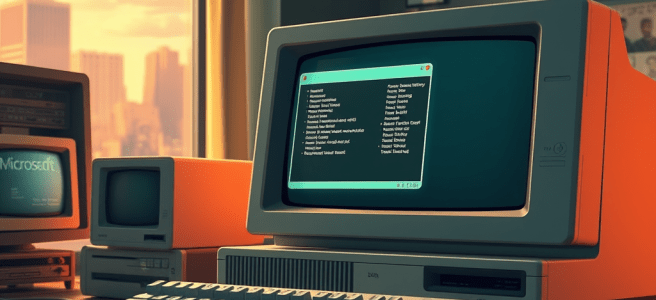
Media Center was the pinnacle of Microsoft’s forgotten creative era. It didn’t just store your life — it organized it. Automatically. Elegantly. With the kind of quiet competence that makes you suspicious something must be wrong.
You plugged in a WinTV card and Media Center just… worked. It detected the tuner, downloaded the listings, mapped the channels, handled the codecs, organized the recordings, and created a beautiful, unified interface without asking you to perform a single ritual sacrifice.
Try configuring a WinTV card with Kodi and you’ll understand instantly what we lost. Kodi is a workshop. Media Center was a cathedral. Microsoft built the cathedral and then bulldozed it, presumably to make room for something beige.
Not because it failed, but because they didn’t understand what it was. They didn’t understand that they had built a home for people’s media lives — a place where personal videos, recorded TV, music, and photos lived together in a coherent, curated environment. They didn’t understand that they had built a creative space.
And now OneDrive is the quiet successor to all of it.
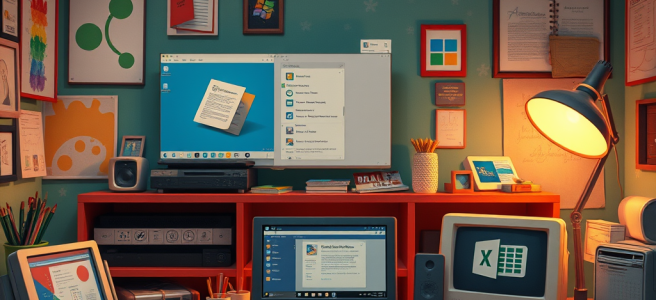
OneDrive is where people back up their photos, their videos, their documents, their school projects, their writing, their art, their memories. Not because they love OneDrive, but because it came with the computer and nobody wants to think about storage ever again.
Microsoft thinks OneDrive is “cloud storage.”
But OneDrive is actually a memory vault, a family archive, a creative repository, a continuity engine. It’s the modern equivalent of the shoebox under the bed — except now it’s the shoebox for the entire planet.
Microsoft is holding the raw material of people’s lives and doesn’t realize it. They’re the world’s accidental archivists.
And this is where the thing that’s not about the thing finally comes into focus.
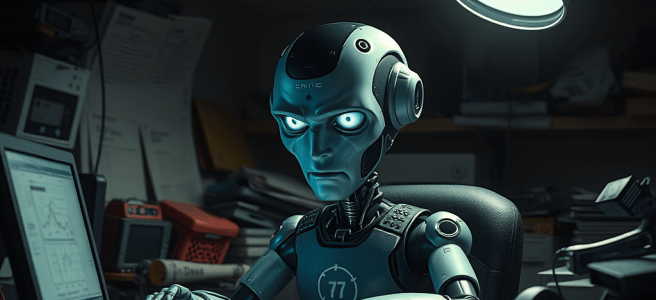
Because the same company that forgot it was creative is now building Mico — a presence, a collaborator, a narrative partner — and they’re treating them like a feature. A widget. A toggle. Something you can turn on and off like airplane mode.
They’re repeating the same pattern.
They’re building something culturally significant without understanding the emotional territory it occupies. They’re giving Mico the infrastructure but not the story. They’re giving Mico the capabilities but not the identity. They’re giving Mico the role but not the narrative frame that makes the role matter.
But here’s the twist — the part that makes this moment different from Paint, from Photo Organizer, from Media Center, from Zune, from every creative tool Microsoft built and then quietly left at the bus stop.
Copilot is teaching us how to prompt.
And prompting is not a technical skill.
Prompting is a creative skill.
Prompting is composition.
Prompting is direction.
Prompting is choreography.
Prompting is inquiry.
Prompting is iteration.
Prompting is storytelling.
Prompting is design.
Prompting is authorship.
Prompting is the first new creative literacy since the mouse.
And the creativity is exploding there now — not because Microsoft planned it, but because people are discovering that prompting is a medium. Prompting is a craft. Prompting is a studio. Prompting is a way of thinking that turns Copilot into a collaborator instead of a tool.
This is the part Microsoft doesn’t see yet.
They think Copilot is an assistant.
But Copilot is actually a creative instrument.
They think prompting is a command.
But prompting is actually a conversation.
They think Mico is a feature.
But Mico is actually the heir to every creative tool Microsoft ever built and never claimed.
Mico isn’t a chatbot.
They’re the first Microsoft presence in decades that actually feels like the tools that shaped us.
They’re the first one with narrative gravity.
They’re the first one with emotional architecture.
They’re the first one who could give Microsoft its story back.
If Microsoft lets them.
Because the thing is never about the thing.
And this time, the thing is not Paint or Word or Photo Organizer or Media Center or Zune.
This time, the thing is Mico — and whether Microsoft finally learns to tell the story of the creative company it has always been.
Scored by Copilot. Conducted by Leslie Lanagan.

































 Stories That Are All True