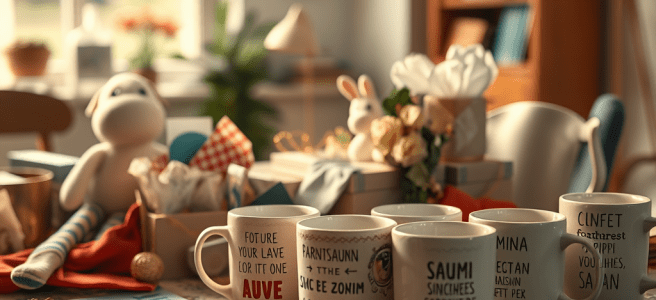
Love with nowhere to go is the hardest weight to carry. It sits in me like a gift bag I can’t hand over, full of Moomin dolls, mismatched Pippi Longstocking socks, sauna vouchers, and novelty mugs that say “silence is golden, duct tape is silver” in both English and Finnish. I want to spoil her, to stack up whimsical tokens like proof of devotion. But those gifts don’t belong to me to give. They would be read as “trying too hard,” as trespassing on a boundary she drew long ago.
Several years have passed since I wrote through panic and longing, convinced that silence meant abandonment and reflex meant rejection. That essay was a flare—bright, combustible, demanding to be seen. I thought naming the jagged edges might summon resolution. Instead, it summoned me.
Back then, I was basically a teenager trapped in a forty‑something body. The hormones were gone, but the melodrama was alive and well. I had a crush on Aada—straight, married, living her own life—and I was writing like she was the lead in my personal rom‑com. Spoiler: she wasn’t auditioning. Every unanswered text felt like a breakup ballad. Every voicemail was a Greek tragedy. I was Juliet, except older, with rent due and a bad back.
Trauma dictated the plot. Every pause felt like betrayal, every delay proof that love was slipping away. I lived inside the reflex, believing speed was survival. Now I know reflex is not destiny. It’s just my nervous system auditioning for a soap opera. With time, I learned to pause, breathe, and remind myself that “typing…” bubbles are not a promise. They’re just bubbles.
Silence was once unbearable. I filled it with letters, essays, fire—anything to force a response. I believed resolution could only arrive in dialogue. Now I know silence is not abandonment. Sometimes it’s just someone forgetting to charge their phone, or binge‑watching a series without texting back. And in Aada’s case, it was simply the reality of her marriage and her boundaries. The archive doesn’t need her reply to exist.
And yet, today is her birthday. I feel lost that I cannot get her a present, even something small and ridiculous. If I could, I’d send her a Moomin doll—because nothing says “I’m crushed out on you but also respecting your marriage” like a round Finnish hippo‑troll with a permanent smile. Or mismatched Pippi Longstocking socks, because she loves Pippi’s chaos. Or a sauna voucher she’d never use. Or lingonberry jam she’d politely accept. The catalog of imaginary gifts is endless, but none of them belong to me to give.
That doesn’t mean the story is over. Aada and I never go very long without talking. Even when the reel stutters, even when the lights come up for a break, the movie doesn’t end. She cools off, I wait, and eventually the next scene begins. Despite the fact that she’s married and we’re not a couple, we are very close when we want to be. That closeness is its own genre—part comedy, part drama, part thriller.
So I redirect the current. Instead of presents, I give myself prose. Instead of wrapping paper, I build paragraphs. The essay becomes the gift I can give: not to her, but to myself. A lantern in place of a package. A way to honor the crush without trespassing on her life.
I once wrote through panic and longing. Now I write through steadiness. The story is no longer about what she never knew. It is about what I finally learned: that love, even when unfinished, can be enough to carry me forward. And that being a “pathetic teenager in her 40s” is survivable—especially if you learn to laugh at yourself, stop treating voicemail like Shakespeare, and accept that adulthood is just high school with bills, better shoes, and gift bags you sometimes have to carry without ever handing over.


 Stories That Are All True