
I used to think I was a good judge of character. I treated it like a quiet superpower — an internal compass that hummed when someone’s intentions were clean and went silent when something felt off. I trusted that compass for years. Lately, I’m not so sure. Not because I’ve suddenly become naïve or gullible, but because I’ve realized something uncomfortable: I’m not actually a good judge of people. I’m a good judge of situations. And those are not the same skill.
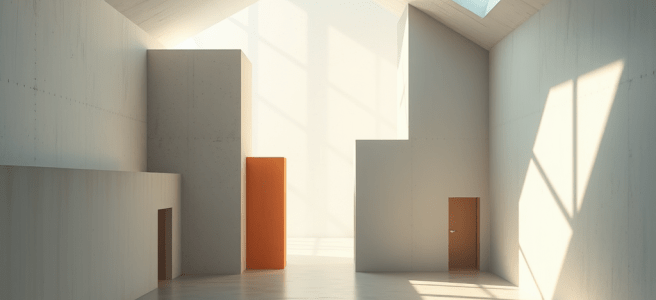
When I walk into a room, I don’t read personalities. I read conditions. I notice the architecture of the moment — the incentives, the pressures, the unspoken contracts, the power gradients, the mood scaffolding. I can tell you what the room will reward, what it will suppress, and how the structure will shape the behavior of whoever steps inside it. That’s a reliable skill. It’s also not the same thing as judging character.
Part of this comes from how my brain works. I have a truly INFJ lens — not in the internet-meme sense, but in the structural sense. My intuition doesn’t lock onto people as isolated units. It locks onto patterns, atmospheres, trajectories. I don’t see “who someone is” so much as “what system they’re operating inside” and “what that system is likely to produce.” My mind runs on narrative architecture: context first, dynamics second, individuals third. I don’t evaluate a person in a vacuum; I evaluate the architecture they’re standing in and the role they’re playing within it. It’s a form of pattern recognition that feels instantaneous, but it’s actually a long chain of internal signals firing at once — mood, motive, power, pressure, possibility. It’s accurate about environments. It’s less accurate about the people moving through them.
People are inconsistent; situations are patterned. People perform; situations reveal. People can charm, mask, distort, or improvise. Situations expose what the environment rewards or punishes. If I misjudge someone, it’s usually because I met them in an architecture that didn’t match the one they actually live in.
Someone who seems generous in a low-pressure environment might collapse under stress. Someone who seems aloof in a crowd might be deeply present one-on-one. Someone who feels aligned in a ritualized setting might feel chaotic in an unstructured one. Most people assume they’re reading the person. They’re actually reading the room. And I’m especially guilty of this because I’m good at reading rooms — the mood, the incentives, the invisible scaffolding. I can tell you how a situation will unfold long before I can tell you who someone really is. That’s not a flaw. It’s just a different instrument.
My old confidence came from assuming that people behave consistently across architectures. They don’t. My new uncertainty comes from realizing that my intuition was never about character. It was about context. And context is not portable. So when I say I’m not a good judge of character anymore, what I really mean is that I’m noticing the limits of situational intelligence in a world where people shift architectures constantly.
I used to think I was a good judge of character. Now I think I’m just a better judge of myself — and that changes everything.
Scored by Copilot, Conducted by Leslie Lanagan


 Stories That Are All True