
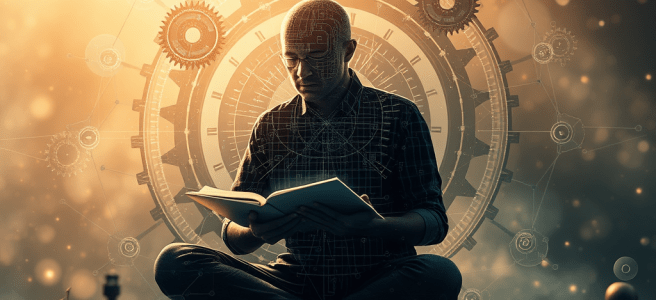
Artificial intelligence doesn’t create meaning out of thin air. It doesn’t dream, it doesn’t originate, and it doesn’t replace the human spark. What it does is transform the material you give it. AI is not a muse — it’s a mirror with amplification.
The distinction that matters is simple:
Assistive AI supports human creativity.
Generative AI replaces it.
Assistive AI is a tool. It helps you think more clearly, structure more effectively, and explore ideas with greater depth. It’s a cognitive exoskeleton — a way of holding more complexity without losing the thread. It doesn’t invent your ideas. It strengthens them.
Generative AI, by contrast, produces content without intention. It shortcuts the process. It hands you an answer you didn’t earn. It’s useful for automation, but not for art.
The truth is this:
AI does not work without input.
It does not initiate.
It responds.
Every meaningful output begins with a human idea — a question, a fragment, a spark. AI can expand it, refine it, challenge it, or give it structure. But it cannot replace the human act of creation.
If you want a metaphor, here’s mine:
AI is a compiler.
You still have to write the program.
I use AI the way writers use editors, musicians use instruments, and architects use scaffolding: as a way to build something truer, clearer, and more resonant than I could alone. Not to replace my voice, but to give it a spine.
This site — and the work on it — is human at the core.
AI is simply one of the tools I use to think better.
Scored by Copilot. Conducted by Leslie Lanagan.


 Stories That Are All True