
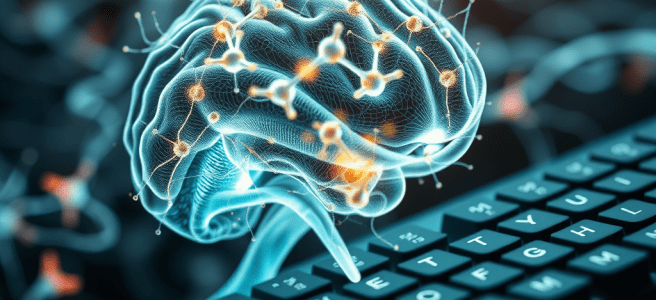
Muscle memory is the hidden operating system of human computing, the silent architecture beneath every keystroke, shortcut, and menu path we’ve repeated thousands of times. It’s the reason people can return to Photoshop after a decade and still hit the same inverse‑selection shortcut without thinking. It’s why the Ribbon caused a cultural schism. It’s why Picasa still has active users in 2026, VLC remains unshakeable, and LibreOffice earns loyalty simply by letting people choose between classic menus and the Ribbon. What looks like nostalgia from the outside is actually fluency — a deeply encoded motor skill that the brain treats more like riding a bike than remembering a fact. And the research backs this up with surprising clarity: motor memory is not just durable, it is biologically privileged.
Stanford researchers studying motor learning found that movement‑based skills are stored in highly redundant neural pathways, which makes them unusually persistent even when other forms of memory degrade. In Alzheimer’s patients, for example, musical performance often remains intact long after personal memories fade, because the brain distributes motor memory across multiple circuits that can compensate for one another when damage occurs. In other words, once a motor pattern is learned, the brain protects it. That’s why a software interface change doesn’t just feel inconvenient — it feels like a disruption to something the brain has already optimized at a structural level. Muscle memory isn’t a metaphor. It’s a neurological reality.
The same Stanford study showed that learning a new motor skill creates physical changes in the brain: new synaptic connections form between neurons in both the motor cortex and the dorsolateral striatum. With repetition, these connections become redundant, allowing the skill to run automatically without conscious effort. This is the biological equivalent of a keyboard shortcut becoming second nature. After thousands of repetitions, the pathway is so deeply ingrained that the brain treats it as the default route. When a software update moves a button or replaces a menu, it’s not just asking users to “learn something new.” It’s asking them to rebuild neural architecture that took years to construct.
Even more striking is the research showing that muscle memory persists at the cellular level. Studies on strength training reveal that muscles retain “myonuclei” gained during training, and these nuclei remain even after long periods of detraining. When training resumes, the body regains strength far more quickly because the cellular infrastructure is still there. The computing parallel is obvious: when someone returns to an old piece of software after years away, they re‑acquire fluency almost instantly. The underlying motor patterns — the cognitive myonuclei — never fully disappeared. This is why people can still navigate WordPerfect’s Reveal Codes or Picasa’s interface with uncanny ease. The body remembers.
The Stanford team also describes motor memory as a “highway system.” Once the brain has built a route for a particular action, it prefers to use that route indefinitely. If one path is blocked, the brain finds another way to execute the same movement, but it does not spontaneously adopt new routes unless forced. This explains why users will go to extraordinary lengths to restore old workflows: installing classic menu extensions, downloading forks like qamp, clinging to K‑Lite codec packs, or resurrecting Picasa from Softpedia. The brain wants the old highway. New UI paradigms feel like detours, and detours feel like friction.
This is the part the open‑source community understands intuitively. LibreOffice didn’t win goodwill by being flashy. It won goodwill by respecting muscle memory. It didn’t force users into the Ribbon. It offered it as an option. VLC doesn’t reinvent itself every few years. It evolves without breaking the user’s mental model. Tools like these endure not because they’re old, but because they honor the way people actually think with their hands. Commercial software often forgets this, treating UI changes as declarations rather than negotiations. But the research makes it clear: when a company breaks muscle memory, it’s not just changing the interface. It’s breaking the user’s brain.
And this is where AI becomes transformative. For the first time in computing history, we have tools that can adapt to the user instead of forcing the user to adapt to the tool. AI can observe patterns, infer preferences, learn shortcuts, and personalize interfaces dynamically. It can preserve muscle memory instead of overwriting it. It can become the first generation of software that respects the neural highways users have spent decades building. The future of computing isn’t a new UI paradigm. It’s a system that learns the user’s paradigm and builds on it. The science has been telling us this for years. Now the technology is finally capable of listening.
Sources
Scored by Copilot. Conducted by Leslie Lanagan.


 Stories That Are All True