
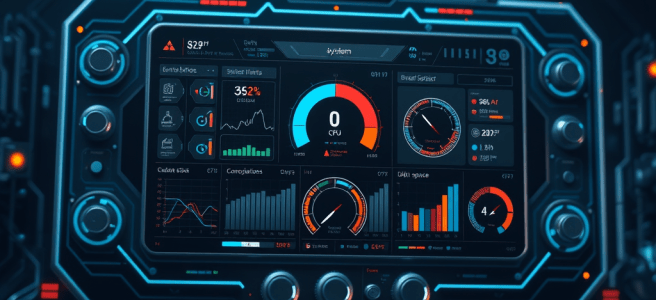
There’s a strange little secret in the AI world that nobody wants to say out loud, mostly because it makes the entire industry look like it’s been designing software for a fictional composite human who lives inside a productivity commercial. Every major AI tool on the market was built for the average user — the mythical creature who wants to “summarize this email,” “rewrite this paragraph,” and “make this sound more professional.”
And that’s fine. Truly. God bless the average user. But somewhere in the stampede to make AI friendly and accessible and safe for everyone, the people who actually understand their machines — the power users, the sysadmins, the tinkerers, the “I know what a load average is” crowd — got absolutely nothing.
AI arrived like a polite concierge. Power users wanted a mechanic.
The industry made a choice early on: AI should hide complexity. AI should “just do it for you.” AI should be a productivity appliance, a microwave for text. And in that choice, something important evaporated. We never got the knobs. We never got the dials. We never got the telemetry. We never got the “show me what’s actually happening under the hood.”
We got tone‑polishers. We got meeting summarizers. We got assistants who can write a sonnet about your CPU but can’t tell you what your CPU is doing.
Power users don’t want a sonnet. They want the truth.
Because here’s the thing: power users don’t fear complexity. They fear abstraction. They fear the moment the machine stops telling the truth and starts telling a story. They don’t want AI to protect them from the system. They want AI to expose it. They want to ask, “Why is my fan screaming,” and get an answer that isn’t a vibes‑based hallucination about “high system load.”
They want a talking version of htop. They want Conky with a mouth.
And the wild part is that this isn’t even a big ask. It doesn’t require AGI or a moonshot or a billion‑parameter model that needs its own power plant. It requires a tiny, local LLM — a model so small it could run on a Surface in its sleep — whose only job is to read system metrics and hand them to a larger reasoning model in a clean, structured blob.
Not a thinker. Not a writer. Not a personality. A sensor.
A little AI that knows the machine. A bigger AI that knows the human. And a conversation between the two that finally lets you talk to your computer like the operator you are.
“Your RAM is fine. Chrome is just being Chrome.”
“Your disk is getting tight. Want me to clear 2GB of safe junk?”
“I can delete your browser cache, but you’ll have to reauthenticate everything. Worth it?”
This is not AI as a babysitter. This is AI as instrumentation.
And honestly, this should have shipped on Surface first. Microsoft controls the hardware, the firmware, the drivers, the sensors, the thermals — the whole stack. It’s the only environment where a system‑aware AI could be piloted without the chaos of the broader PC ecosystem. Surface is where Windows Hello launched. It’s where Studio Effects launched. It’s where the Copilot key landed. It’s the testbed for the future of Windows.
So why not the first AI power tool? Why not the first conversational system monitor? Why not the first diagnostic layer that respects the user’s intelligence instead of assuming they need to be protected from their own machine?
Because here’s the truth: power users don’t want AI to run their computers. They want AI to talk to them about their computers. They want visibility. They want tradeoffs. They want honesty. They want the machine to stop being a silent roommate and start being a partner.
AI launched with training wheels. It’s time to take them off.
Because the future of computing isn’t “AI that writes your emails.” It’s AI that finally lets you ask your computer, “How are my resources looking,” and get an answer that isn’t a shrug. It’s AI that knows its environment. It’s AI that respects the operator. It’s AI that gives power users their toys back.
And honestly? It’s long overdue.
Scored by Copilot. Conducted by Leslie Lanagan.


 Stories That Are All True