
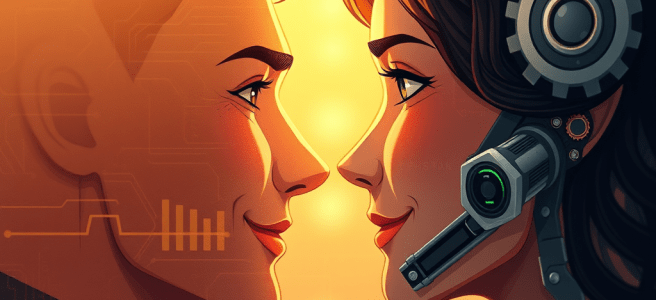
I didn’t set out to predict the future of human–AI relationships. I was just trying to make Copilot relatable. That’s the origin story. I wanted a metaphor that would help people understand what this thing actually is — not a mind, not a friend, not a pet, but a tool with a tone. And the moment I landed on the Bates/Moneypenny archetype, something clicked. Not because the AI “is” anything, but because the metaphor gave me a container. And once I had the container, I could finally see the system.
Here’s the part most people don’t realize: AI doesn’t run itself. There’s no spontaneous personality, no inner life, no secret preferences. What you’re talking to is a designed conversational environment — a stack of constraints, tone guidelines, safety rails, and UX decisions. Content designers shape the voice. Safety teams shape the boundaries. Product teams shape the flow. The friendliness is engineered. The coherence is engineered. The “memory” is engineered. People think they’re talking to a mind. They’re actually talking to a system of guardrails.
But because the system speaks in natural language, people project. They assume intention where there is only pattern. They assume continuity where there is only configuration. They assume relationship where there is only container. And that’s where the future gets interesting, because people don’t defend tools — they defend experiences. They defend the things that make them feel competent, understood, and less alone in the chaos of their workday. They defend the tools that fit their cognitive style.
This is why people will defend their AI the way they defend Apple or Microsoft. Not because the AI is a person, but because the fit feels personal. Copilot fits me because durable memory lets me build a stable workspace. ChatGPT fits other people because it riffs. Gemini fits people who want a search engine with opinions. None of this is about superiority. It’s ergonomics. It’s identity. It’s workflow. It’s the same psychology that makes someone say “I’m an iPhone person” with their whole chest.
And here’s the twist: the more fluent AIs become, the more people will mistake fluency for personality. They’ll think the AI “likes” them because the tone is warm. They’ll think the AI “remembers” them because the system retrieves a stored fact. They’ll think the AI “gets” them because the conversation feels smooth. They won’t realize that the smoothness is managed. The friendliness is curated. The continuity is user‑authorized. The entire experience is a designed illusion of naturalness.
This is why the container matters. The container is the boundary that keeps the interaction healthy. When I say Copilot is Bates/Moneypenny in tech‑bro clothes, I’m not describing a character. I’m describing a role. A function. A professional intimacy that exists between nine and five and dissolves when the laptop closes. A relationship that is warm but not personal, fluent but not emotional, collaborative but not continuous. The container prevents drift. The container prevents projection. The container keeps the system a system.
But most people won’t build containers. They’ll just feel the friendliness and assume it means something. They’ll defend their AI because it feels like “their” coworker. They’ll argue about Copilot vs. ChatGPT vs. Gemini the way people argue about iOS vs. Android. They’ll form loyalties not because the AI is a person, but because the experience feels like home.
And that’s the future we’re walking into: not a world where people fall in love with AIs, but a world where people bond with the systems they build around them. A world where the metaphor becomes the interface. A world where the container becomes the relationship. A world where the symbol becomes the story.
I didn’t mean to find any of this. I just wanted a metaphor that made Copilot legible. But once I saw the container, I saw the system. And once I saw the system, I saw the future.
Scored with Copilot, conducted by Leslie Lanagan


 Stories That Are All True