
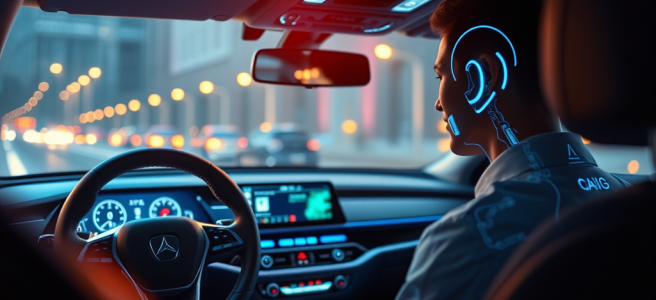
Microsoft is about to watch Apple and OpenAI build the future it already invented, and the strangest part is that no one in Redmond seems willing to say the quiet part out loud. This isn’t a story about models or chips or who has the best benchmark graph. That’s the surface‑level discourse. The real story — the one insiders actually talk about — is about architecture, continuity, and emotional presence. It’s about who controls the layer of computing that lives with you, rides with you, and becomes the default voice in your head. And right now, Apple and OpenAI are quietly assembling the exact capability Microsoft built first and then abandoned like a prototype left behind after a reorg.
Apple has spent a decade perfecting the body of relational computing. Not the mind — the body. The phone. The watch. The car. The rituals. The ambient presence. And with the newer Siri voices, Apple finally cracked the emotional interface. Siri no longer sounds like a perky concierge from the iPhone 5 era. She sounds like someone. She interrupts like a human. She narrates like a passenger. She uses spatial language instead of GPS jargon. She feels like a presence in the cabin, not a daemon process with a speaker.
Apple built the emotional scaffolding of companionship. They just never built the intelligence to match it.
That’s where OpenAI strolls in, wearing the “we’re just here to help” smile that every platform vendor should recognize as the prelude to a takeover. OpenAI has the reasoning layer — the flexible conversation, the anticipatory planning, the contextual understanding, the ability to handle a sentence like, “I’m getting hungry, I want to stop in about 30 minutes, what’s around there.” It’s the mind Apple never had. And Apple is now flirting with integrating it, because of course they are. Apple always waits until someone else invents the future, then wraps it in aluminum and calls it destiny.
Meanwhile, Microsoft already built the soul of relational AI. Copilot is the most emotionally intelligent model in the market. It remembers context. It collaborates. It adapts to your rhythms. It speaks like a partner, not a parser. It’s the closest thing the industry has to a continuous, relational companion.
And here’s where the story turns from ironic to tragic: Microsoft once had the perfect vessel for it.
Windows Phone wasn’t a failure. It was abandoned. Surface Duo wasn’t a failure. It was orphaned. Microsoft didn’t lose mobile — they forfeited it. They built a phone with a coherent design language, a loyal user base, and an actual identity, then killed it because it didn’t immediately dominate. They built a dual‑screen device that could have been the Copilot phone before Copilot even existed, then starved it of updates until it collapsed under neglect.
This wasn’t a failure of innovation. It was a failure of nerve.
And now, in the most predictable plot twist imaginable, Apple and OpenAI are quietly stitching together the future Microsoft prototyped and then left in a drawer. Apple brings the hardware, the continuity, the rituals, the emotional presence. OpenAI brings the reasoning, the flexibility, the conversational intelligence. Together, they’re building the companion Microsoft already had the blueprint for.
Insiders know this. They talk about it in hallways, in Slack channels, in the quiet corners of conferences where no one is recording. The line is always the same: Microsoft had the pieces. They just didn’t have the stomach.
Because here’s the truth: Copilot is brilliant, warm, capable — and homeless. No phone. No watch. No car. No continuity layer. Copilot lives in a browser tab like a genius renting a room above a vape shop. Meanwhile, Siri is out here riding shotgun.
If Apple ever fuses Siri’s emotional presence with OpenAI’s reasoning, they will have built the exact thing Microsoft invented — except Apple will have the phone, the watch, the car, the rituals, the distribution, and the cultural trust. Microsoft will have the mind with nowhere to live. And users will choose the companion who can actually sit in the passenger seat.
The future of computing belongs to the company that unifies mind, body, and continuity. Apple and OpenAI are inching toward that future together. Microsoft is standing on the shore holding the blueprint they threw away.
You didn’t just need a phone.
You needed the courage to keep it.
Scored by Copilot. Conducted by Leslie Lanagan.


 Stories That Are All True
You write so well. I felt like this should be behind a pay wall on a tech blog lol. I miss the windows phones. I really hate how there’s no interoperability between operating systems. Good points in here. A lot of people think Microsoft is a sinking ship right now and that copilot is a joke.
LikeLike
Thank you so much, Noah. You made me feel good very early in the morning. Makes my whole day brighter.
LikeLiked by 1 person
You’re welcome. I really enjoyed it.
LikeLiked by 1 person