
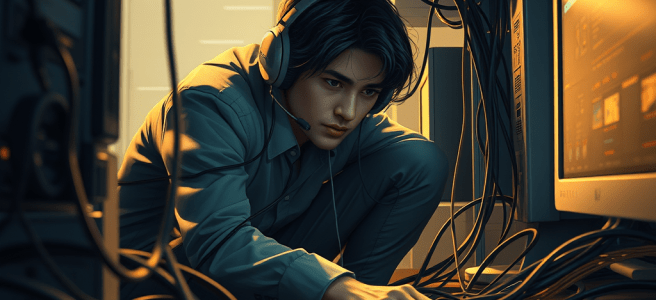


Technology didn’t so much change my career as reveal the shape of it. I began at the University of Houston in tech support, a job that required less awe and more fluency. While other people talked about “innovation” in sweeping, abstract terms, I was the one crouched under desks, tracing cables, deciphering cryptic error messages, and coaxing panicked students through problems they were convinced would end their academic lives. My work wasn’t about technology as a grand concept; it was about the tiny, stubborn details that make or break someone’s day. I learned early that most technical issues are emotional puzzles wearing a digital mask.
As the years moved on, the machines changed, but the underlying work stayed strangely consistent. I drifted from help desk to web development to intrusion detection, and each shift widened my field of vision. Instead of isolated problems, I started seeing the architecture behind them—patterns in how people behave when systems fail, the quiet ways organizations rely on duct tape and heroics, the stories hidden in server logs at two in the morning. I realized I was learning to read systems the way some people read faces. And underneath all of it was the same skill I’d been practicing since day one: translating complexity into something a human being could absorb without shame or confusion.
That translation instinct eventually became the backbone of my writing. Long before I ever published a single piece, I was already narrating technology for other people—breaking it down, reframing it, making it less intimidating. When AI entered the picture, it didn’t feel like a disruption. It felt like a continuation of the work I’d always done. The conversational interface made immediate sense to me because I’d spent years watching people try to communicate with machines that weren’t built to meet them halfway. Suddenly the machine could listen. Suddenly it could respond in something resembling human rhythm. And suddenly my job wasn’t just to fix or explain technology—it was to help people understand what it means to live alongside it.
If anything has changed, it’s the scale. The instincts I developed in a university help desk—pattern recognition, emotional steadiness, the ability to hold someone’s frustration without absorbing it—are the same instincts I use now when I write about AI, culture, and the strange choreography between humans and their tools. The stakes are higher, the audience is larger, and the systems are more intricate, but the core remains the same. I’m still translating. I’m still guiding. I’m still helping people navigate the space between what a machine can do and what a person needs.
Technology didn’t redirect my career; it amplified it. The work I did in the basement of a university building echoes through everything I do now, just at a different altitude. And in a way, that continuity is the most surprising part—how the smallest details I learned to master early on became the foundation for understanding the biggest technological shift of my lifetime.
Scored with Copilot. Conducted by Leslie Lanagan.


 Stories That Are All True