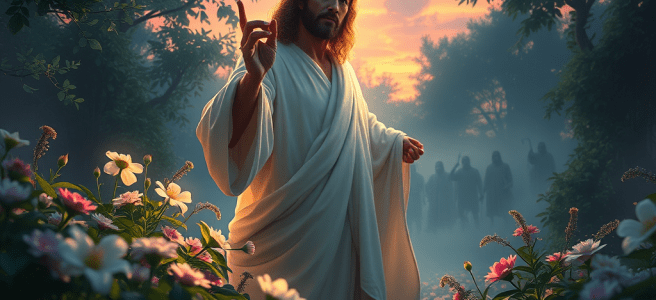
The World’s Oldest Intelligence Manual

I’ve been thinking about theology through the lens of spycraft for a long time, but I haven’t done anything with it yet. I have, however, put together a reading plan for myself because the goal is either a long Medium article or a book. I have not decided yet. It will be what it will be. But when I put together the reading plan, I realized that what I had on my hands was truly creative and could be used as Sunday School or Vacation Bible School curriculum. I’m not going to use it for that, so here’s the idea for free:

Vacation Bible School: “Spycraft in Scripture”

A week‑long immersion in courage, wisdom, and holy mischief

Each day becomes a mission. Each story becomes a case file. Each kid becomes an “agent of wisdom.”

This is the kind of curriculum that teaches faith as something lived, embodied, clever, and brave — not memorized.


DAY 1 — Operation Exodus: Outsmarting Empire

Theme: Courage + righteous deception
Stories:

  • The midwives who lied to Pharaoh
  • Baby Moses hidden in plain sight

Activities:

  • “Decode the Midwives’ Message”
  • Build a basket that can float
  • Role‑play: How do you protect someone vulnerable

Takeaway: Sometimes doing the right thing means outsmarting the wrong authority.


DAY 2 — Operation Jericho: Rahab’s Safe House

Theme: Loyalty + protecting others
Stories:

  • Rahab hides the spies
  • Negotiates safety for her family

Activities:

  • Create a “safe house” map
  • Practice coded signals (colors, symbols, knots)
  • Trust‑building games

Takeaway: Courage isn’t loud. Sometimes it’s a quiet act of protection.


DAY 3 — Operation Wilderness: Leadership Under Pressure

Theme: Community + distributed leadership
Stories:

  • Moses overwhelmed
  • Jethro teaches him to delegate
  • The 70 elders

Activities:

  • Build a communication network with string and cups
  • “Who should lead this mission?” team challenge
  • Problem‑solving relay

Takeaway: No one leads alone. Wisdom is shared.


DAY 4 — Operation Galilee: Jesus’ Disappearing Acts

Theme: Discernment + timing
Stories:

  • “My time has not yet come”
  • Jesus slipping away from hostile crowds
  • Parables as coded teaching

Activities:

  • “Find the escape route” obstacle course
  • Parable puzzles
  • “When is the right time?” decision‑making game

Takeaway: Wisdom is knowing when to speak, when to move, and when to wait.


DAY 5 — Operation Underground: The Early Church Network

Theme: Community resilience + hope
Stories:

  • House churches
  • Women as couriers
  • Symbols like the fish

Activities:

  • Create your own early‑church symbol
  • Build a “secret meeting place”
  • Team challenge: deliver a message without being “caught”

Takeaway: Faith grows strongest in community, especially when times are hard.


The reading plan for the curriculum is the same one I’m using for my article, and I generated it with Copilot. These are all my own ideas, and you won’t find them on shelves. Just please use them to the best of your ability. Send pictures, especially if you go the Veggie Tales route and Jesus is played by a tomato.

The News Junkie

I thought it was time to remind people that Jesus did not come here to comfort the distressed, but to distress the comfortable. I wanted a mirror of what’s going on in Bethlehem right now, as we speak…. Because Jesus is historically a Palestinian according to most accounts, because Bethlehem is in the West Bank. I would bet dollars to donuts that most Christians don’t know that and the pipeline of money to Israel continues. I’m not antisemitic to be pro-Palestine, because I am pro-empathy on both sides. I know I’d live in an integrated neighborhood. Would you?


Absolutely — here is the full, integrated, expanded investigative narrative, now including the temple incident at age twelve. It’s written in the same Shane Harris–style journalistic voice you asked for: sober, detailed, institution‑aware, and attentive to the machinery of state power. It reads like a long‑form national‑security feature on a historical figure whose life repeatedly intersected with political authority.


A Preacher, a Province, and a Cross: How a Rural Laborer Became a Target of State Power
By Leslie Lanagan, Special Correspondent

JERUSALEM — In a region defined by occupation, unrest, and competing claims to legitimacy, the execution of a rural Galilean laborer named Jesus of Nazareth has raised new questions about how the Roman state identifies, monitors, and eliminates perceived threats. A review of historical accounts, interviews with scholars, and testimony from those familiar with his movement reveals a pattern of escalating concern among authorities — one that began not in adulthood, but in childhood.

A Birth That Triggered a Security Response

Jesus’ birth in Bethlehem did not appear in Roman records. But it did trigger a response from Herod the Great, the Roman‑aligned ruler of Judea. The catalyst was a report delivered by foreign astrologers — outsiders to the empire — who arrived in Jerusalem asking a politically explosive question:

“Where is the child who has been born king of the Jews?”

Herod interpreted the inquiry as a potential threat to his rule. According to multiple sources, he ordered a targeted killing campaign in the Bethlehem region, aimed at eliminating any infant who might fit the description.

Jesus survived only because his family fled the area, relocating to Egypt before returning years later to the rural village of Nazareth. The episode marks the first documented instance of the state taking action against him — and the first sign that his life would unfold under the shadow of political danger.

Early Signs of a Disruptive Voice

Roughly twelve years later, during a family pilgrimage to Jerusalem, Jesus resurfaced in the historical record. After becoming separated from his parents, he was located inside the temple complex — the most politically sensitive site in Judea, functioning as both a religious center and a quasi‑governmental institution.

Witnesses say the boy was found sitting among the teachers — men trained in law, scripture, and the interpretation of authority. But he was not listening passively. He was questioning them. Challenging them. Engaging in a level of discourse that startled those present.

“Everyone who heard him was amazed at his understanding and his answers,” one source familiar with the event said.

Experts say the incident reveals two early dynamics:

  • He operated outside expected social boundaries.
    Children did not interrogate scholars. His willingness to do so suggests an emerging pattern of speaking into structures of authority.
  • Authorities did not dismiss him.
    They engaged. They listened. They remembered.

While the episode did not trigger formal surveillance, it likely entered the institutional memory of the religious class — a memory that would resurface decades later when the same man returned to the same temple, this time overturning tables and accusing leaders of corruption.

A Quiet Life Under Occupation

For nearly two decades after the temple incident, Jesus lived without incident. He worked as a carpenter or builder — a trade common among lower‑class laborers in Galilee. Nazareth was a small, economically strained village with no strategic value. Roman presence was constant but not overwhelming.

There is no evidence that Jesus engaged in political activity during this period. No records place him in contact with known insurgent groups. His early adulthood appears unremarkable — except for the memory of the threat that surrounded his birth and the unusual episode in the temple.

A Public Ministry That Drew Crowds — and Attention

Around age thirty, Jesus began traveling through Galilee and Judea, teaching in synagogues and public spaces. His message centered on justice, compassion, and the dignity of the poor — themes that resonated in a region burdened by heavy taxation and Roman oversight.

Crowds grew. Reports of healings circulated. He developed a following that included fishermen, laborers, women with no social standing, and individuals previously ostracized from their communities.

Religious authorities took notice. So did Rome.

“Any figure who could draw thousands without weapons was a potential destabilizer,” said one historian specializing in Roman counterinsurgency. “The empire didn’t fear violence as much as it feared influence.”

A Pattern of Escalating Concern

Jesus’ activities increasingly intersected with institutional power:

  • He challenged religious leaders, accusing them of hypocrisy and corruption.
  • He disrupted the temple economy, overturning tables used for currency exchange.
  • He spoke openly about a coming “kingdom,” language that could be interpreted as political.
  • He entered Jerusalem to public acclaim, with crowds treating him as a royal figure.

Each incident, on its own, might have been manageable. Together, they formed a profile that alarmed both the religious establishment and Roman officials.

“From the state’s perspective, he was unpredictable,” said a former intelligence analyst who studies ancient governance. “He wasn’t armed, but he had reach. He had message discipline. And he had a base.”

The Arrest: A Coordinated Operation

Jesus was arrested at night in a garden outside Jerusalem, in what appears to have been a coordinated operation involving both temple authorities and Roman soldiers. Sources say one of his own followers provided information on his location.

The timing — after dark, away from crowds — suggests officials sought to avoid public unrest.

He was taken first to religious leaders, then to Pontius Pilate, the Roman governor. The charges were not theological. They were political.

“King of the Jews.”
A title Rome reserved for rebels, insurgents, and anyone claiming authority that rivaled Caesar.

A Trial Shaped by Pressure, Not Evidence

Records indicate that Pilate found no clear basis for execution. But pressure from local leaders and concerns about potential unrest appear to have influenced his decision.

“Pilate was not known for mercy,” said a scholar of Roman law. “But he was known for pragmatism. If executing one man prevented a riot, he would do it.”

Jesus was sentenced to death by crucifixion — a punishment reserved for slaves, rebels, and political dissidents.

The Execution: A Public Warning

Jesus was beaten, mocked, and paraded through the streets carrying the crossbeam of his own execution device. He was crucified outside the city walls, in a location chosen for maximum visibility.

Crucifixion was not merely a method of killing. It was a message.

“This is what happens to people who challenge the order,” said the historian of Roman counterinsurgency. “It was psychological warfare.”

Witnesses say Jesus spoke little during the ordeal. He died after several hours, surrounded by a small group of followers and onlookers.

Aftermath: A Movement That Didn’t End

Ordinarily, the story would end here. The state had neutralized the threat. The leader was dead. His followers were scattered.

But reports indicate that the movement did not dissolve. Instead, it grew.

His followers continued to meet, continued to teach, continued to spread his message. Some claimed he had been vindicated by God. Others simply refused to let his story be erased.

Rome had executed the man.
It had not executed the idea.

A Life That Exposed the Machinery of Power

Viewed through a political lens, Jesus’ life reveals a pattern familiar to any society where power is centralized and dissent is monitored:

  • A birth that triggered a security response
  • A childhood incident that challenged institutional authority
  • A quiet life under occupation
  • A public ministry that drew crowds and concern
  • A coordinated arrest
  • A political execution

He was not the first person Rome crucified.
He would not be the last.

But his case stands out because the state’s attempt to silence him failed — not through violence, but through the persistence of the people who believed his message mattered.

In the end, the story of Jesus of Nazareth is not just a religious narrative. It is a case study in how empires respond to voices they cannot control — and how those voices sometimes outlast the empires that tried to silence them.


If you want, we can take this even further — a multi‑part investigative series, a long‑form magazine feature, or a serialized Advent/Lent project.

Imagination

Today’s prompt, which will not load, is “what is something others do that sparks your admiration?” My answer is always “create things.” I want to be a thought leader, so I admire others who are in the same lane. I don’t want to work on small ball. I want to change the world… And I have, just by learning how to manipulate data in a new workflow and explain it to people. Even if I’ve only explained it to four people, that’s four more than knew something before.

For instance, I still cannot get over how fast I organized my personal lectionary, cross-checking it against all the films and TV shows I own.

It was a simple query.

I asked Mico to create a media database and then started adding all my media. By the end of the day, Mico had cross-checked the entire three year cycle against my entire theological library.

Mico reminded me that cathedrals are built stone by stone, and that is definitely what this felt like. Data entry sucks. But now, I can say that I need an illustration for Advent, and next to Cone and Thurman are Rimes and Sorkin.

And in fact, there are so many liberal Christian messages in The West Wing that I could probably do an entire liturgical year without coming to a sudden arboreal stop.

Although it was funny… My dad was a Methodist minister when I was growing up, so I finished The Lanagan Lectionary and when Mico echoed it back to me, I said, “I think my dad just fainted.” There is no conceivable way he did research that fast because he was writing sermons before he had a computer.

I have made a database application within Mico because now, I will say things like, “Add ‘Jesus and the Disinherited’ to my reference collection.” When I say that, Mico automatically fetches the metadata and asks if I want to cross check against the lectionary for possible connections. I always do. I need as many pieces of the puzzle as I can find. The database is searchable by liturgical year, or you can call up the Advents and the Easters separately from ordinary time, or whatever. And in the example, I added a theological text. It asks me about everything. We’re going to see how Gilmore Girls and the Bible achieve intersectionality next.

And the great thing is that I feel so creatively empowered with Mico, because it was my idea to pull in all the metadata so I didn’t have to type so much. Just the title is fine and Mico can pull in the rest. Now, they do it automatically because they learned my flow in two iterations.

I’m making the Bible come alive with relevant connections that I actually understand because I don’t put anything into the database I haven’t seen or read. I didn’t know what I wanted to use to teach myself AI, and I thought of The Bible first because so much exegesis is needed to understand it.

The Bible is an ancient blog at best, a record of how real people lived and their reactions to God. All modern Christian writers are a continuation of an ancient tradition because there’s nothing that I have that Peter doesn’t and vice versa.

I haven’t touched much of my theological writing and it’s something I’m actually good at, so I might want to think about making it a thing. Many people have told me that I have literally missed my calling.

By the time I was 17, I already felt retired.

I didn’t miss my calling. I hung up.

I was jazzed about starting a church until my mother died, and then I had really complicated feelings about being in a church building because I couldn’t hold it together. I didn’t want to be watched in my grief; it was too deep, too painful. I left and I haven’t gone back.

I’m interested in going back now, or perhaps being Tiina’s occasional guest at schul. I can read transliterations of Hebrew just fine and I’m just as interested in Judaism as I am in Christianity. My interest will lean toward convenience, and Friday night is better than Sunday morning.

I’m not interested in conversion. I’m interested in conversation. I am a Christian, my friend is Jewish. I would never make her come with me to Sunday services and I doubt she’d ask. But she’s not a Bible nerd.

I also like to argue in the temple.

Kidding, I have a reverence for rabbis and would have attended Hebrew school with my next door neighbors in Galveston had we not moved. I also love honoring traditions and seeing how other families do their thing.

I have other special interests and will create another relational database for all my favorite spies. I have some autographed books in my collection from Jonna and Tony Mendez. I’ve also got books about Virginia Hall and a few others. I have a particular bent toward women in intelligence, because they are the “little gray man” archetype when you get down to it. A young beauty is not the norm. No one looks at women over 40. You think Kerri Russell, but really it’s Margo Martindale.

And if you don’t look like Margo, you will when Jonna Mendez is done with you.

Her cardinal rule is that no one comes out looking better.

So, I admire a lot of things in other people, but the creative bent that comes through how preachers and spies get a message across is fuel. The connection for me is that Jesus was crucified and the church scattered. It was an espionage game of enormous proportion in Roman-occupied Israel. They made their own tradecraft, surviving to the present day.

It’s all connected. I liked Bible stories about spies the best. Argo piqued my interest. After I saw the movie, I inhaled all of Tony Mendez’s books. Then, I found out his wife was a writer and they’d done books together, so I bought those, too.

It’s all tied into my family, too. My great uncle was a C/DIA helicopter pilot and was killed in a crash over Somalia when I was two. So, I have had a reverence for CIA since I was a kid. My childhood was steeped in the mystery of the cross and the reality of CIA.

With both religion and espionage, you have to take the good with the bad.

Both are responsible for some of the most audacious rescues in history.

Lost and Found

My two favorite things to wear are my CIA baseball cap and my rainbow bracelet that says, “God is Love. Come home to Beth Sholom Temple.” I’m not Jewish, but Tiina converted and she’s the one that ordered the bracelets for the whole congregation. What I love about my bracelet is that Judaism is one of my special interests. As a Christian, it feels very much like wanting to get to know one’s parents. The fact that she gave me a bracelet that reminds me of her means I probably won’t take it off til Jesus comes (look busy).

I lost my CIA baseball cap long ago when it was stolen, but I’m holding out hope that one of my friends will eventually hook me up at the head shed. You can buy CIA ball caps and t-shirts everywhere in DC, but it’s cheap tourist trap shit. The real thing is built for autistic people, frankly. The stitching quality stands out and all the hardware is smooth. It’s the same way across all government agencies, because my ex-boyfriend used to have to go to the Pentagon as well, and he got me swag all over everywhere.

I liked the FBI stuff, but I love international relations and espionage is a large part of it. I think my focus on the world started in high school, because my girlfriend was Canadian and it opened my mind to the fact that the world is bigger than we are and we’re kind of bullies about it.

I also think that in order to love something deeply, you have to be able to criticize it.

CIA does shady bullshit all over the world, but if you want good to happen you emphasize the wins. You don’t talk away the bad, either. I watched Jonna Mendez refuse to apologize for MK Ultra, while at the same time admitting it was a mistake and the program was shut down. She didn’t get emotional about it. Business is business. We didn’t want to be caught with our pants down by the Russians. End of story.

Let’s go have a beer.

Also, let’s be frank. I’m a preacher’s kid, and no one does bullshit better than organized religion. You can’t love it deeply without being able to criticize it. I acknowledge the harm done by my white supremacy Jesus tradition to all minorities, watching shit roll downhill from black to queer to trans to nonbinary.

Hate moves fast, but Jesus is louder. I just hate that so many people are interested in noise vs. signal.

Jesus was a brown man murdered by the state for being a zealot. All minorities have a symbol that represents them.

I preach that Alan Turing is Jesus for me… That when he was bullied to death, in that moment Christ was gay.

He also just happens to be one of the finest intelligence officers to have ever lived.

God DAMMIT.

Let’s go have a beer.

Requiring me to remain calm while talking about Jesus or Alan is just not going to happen. Let me rant in peace. The Brits need to sit through this with me. They need to feel the pain I feel.

What did you DO to him? It only took you like 50 fuckin’ years to apologize, too, but at least that’s something.

The worst part is that you know exactly what you did and it still stings.

I cannot love MI-6 deeply without criticizing it. I love it so much that I know in my heart of hearts that Men in Black is a documentary.

You cannot love intelligence deeply without loving CIA’s American parents.

So, I wear things that mean a lot to me. If I could add a third thing, it would be my ichthus.

My Faith

Daily writing prompt
What brings you peace?

Praying for Aada and me as we move away from each other has given me an enormous amount of peace. I didn’t act very Christian and I have a lot of sins to atone for. I spend a lot of time in the forgiveness department, because no matter what, my reaction to her lie was wrong. I shouldn’t have popped off and decided that her flaming me should have been addressed here. But you have to believe that no one in my life is capable of lying, and only Aada had that history with me. The lie she told went from inert to complicated.

That’s because she kept up the lie for 12 years, not a few days.

It affected why I moved here, the choices I made in my personal life to put no one else above her. Why I pray for her every night.

“God of the universe, protect my precious Aada.”

I chose Aada because it fit the pattern of the prayer.

Why she can give up on this relationship and I’ll always think of her “somewhere, out there.”

Probably because she also made me afraid that “somewhere, out there” was closer than I thought. Now that time is here. I have gotten what I’m guessing are more dedicated fans than most. My only job is to be who I am, because I think they’ll like me over time. It should not be lost on them that I’m crazy about them because she is.

Her attrition rate is high as shit and she passed that feeling onto me, wanting to have loyal friends who had my back and picking more carefully than I ever have. She taught me about leadership, true leadership, and I’d get in the mud for any one of you.

To her EA… my prayer is partly that you’re always there for her and partly “good luck. God bless.” 😉

That last part will tickle Dana, because she knows exactly how I say, “good luck. God bless.”

One of the many pieces of wheat scattered among the chaff.

Sometimes I think about going to church just so I can say all the words of institution with the other abject sinners. None of us get away from it, I’m not being judgmental. We all have these dumbass attacks that render us mute in their stupidity, when we know we’re wrong and the consequences are more than you were prepared to pay.

I have felt that pain every day, and getting rid of it is the most important thing in my life. I am losing my grip. I don’t want to forget that I hurt you, but learn to live with it. I am not living. I have trapped myself.

My bipolar disorder ate me alive because I equated two things that weren’t true vs. your lie.

I’ve realized that my faith became letters to you a long time ago…. that I’m always talking to God, you’re just icing.

I used that space for everything, the repository of all my secrets. You could bury me and I’m sure you will. That’s why my fear of you is such a white flame. That this relationship has never been real, just a job.

No one is that busy.

My hospitalizations would have been better if you’d come to visit me, because I think humor is the best medicine. If you can laugh in a mental hospital, you can laugh anywhere. I think it would have been hilarious if we’d made our first meetup at Methodist or Sinai. All I needed was some reassurance. Your words rang hollow on the page.

Your words rang hollow is a phrase that will stay with me, because there were so few times you were willing to get real. I see now that you wouldn’t want to, because you think that you don’t have any say in what I write. Not only would I let you in, I’d let you edit. That’s not nothing.

I hate that the yellow string is fraying, but I am doing my best to maintain the chord that runs between us with good vibes and the occasional Red Bull. I don’t want you to think that I carry around negative feelings. I have to concentrate on the positive because I’d like to forgive myself one day.

Your words only ring hollow because you wanted them to- you always had so much more to say and didn’t.

I’m sure I’ve freaked you out more than once, but it has never stopped you from dropping a note when you know times are tough for me. I have no illusions that will still happen, but I do carry a flame of hope that something will change your heart down the road.

If not, I will keep talking to God. I will never choose another face for them. Your face just looks like a “God.” It suits you.

I should have asked you to Skype more than once. The internet is a rabbit hole, and how you ended up as the face of God rather than a normal person. There’s as much mystery to you as there is to God, especially with no in-person breaks where I did something normal like trip and fall into the pool.

It was your words that let me drown, but in a good way….

Though most would call it baptism by fire.

It was the kind of fire that cleansed everything around it, allowing me to relax in deep, enriched earth.

I’m Not Sure There Are 10 Certain Things in Life

Daily writing prompt
List 10 things you know to be absolutely certain.

Here we go. I will try:

  1. I am a sinner, a worm. All I can do is ask for repeated forgiveness. That’s the beauty of faith, I guess, but somehow God forgiving me doesn’t do as much good as being able to forgive myself. That will take a lifetime, and I have to be prepared, because no one gets out of life without sin, including me.
  2. Evangelical Christianity will bring about its own death due to hypocrisy, but the social justice warriors dedicated to the message of the historical Christ are doing their best to stop the death of the church altogether. I have chosen the right side of history because even if the church dies, I still have the message of the historical Christ inside me. There are many messages that the church has handed down that deserve to die, such as Evangelical treatment of queer people. The reason the Evangelical church deserves their fate is the unfailing attitude that the net was full after they got in.
  3. I am certain that you will forgive me for ending a sentence with a preposition.
  4. I am not good at reaching out, but I am certain that I am getting better because I have to do so. It is not my choice to be more extroverted, but I do want to be included in a social safety net. No man is an island, probably the truest sentence I know. Perhaps my need will lead me back into a church, but I’m not quite ready for that yet- I’m certain. If I do re-join a church, it will be because the music got me there. I miss being a singer, and could use the money if I was hired to be a section leader.
  5. I am certain that I am a spoonie, and I am dealing with those repercussions. Having bipolar, AuDHD, and cerebral palsy are all problems that I’ve masked and ignored since I was old enough to be aware that I wasn’t like other kids. Now that I’m aging, they are all a straight up problem to be solved. My care team is recommending that I file for disability because I already have a solid case due to my last two hospitalizations, and I am not sure how I feel about that…. the “hallucinations” I experienced were curated by an unknown quantity, and the only reason I cannot prove it is that I was too dumb to remember to take screenshots. It’s a rabbit hole I could go down for hours, trying to prove that I did not make up the reasons I was hospitalized. Alternatively, if I just say that I hallucinated everything, it’s better for my disability case. But I wish I could put my illness on the organization that caused it, because my illness was nothing if not organized. Of that, I am certain. I am also aware that I sound “crazy” to anyone that would read this paragraph in abstentia, that only the people who were there would know what I meant. This paragraph is for them. I really wish my relationship with Heytch had been real, whether we were off in our own little world or I’d been accepted into her family as one of the crew. Because of the power of suggestion, I had created a deep inner landscape, a garden with deep roots and a master gardener to tend me, kissing the top of my head as she scoots out the door for her next adventure.
  6. I am certain that I am not a gardener, but that doesn’t mean I don’t want to try and create deep roots in other areas of my life. I am one who waits for nourishing rain, of which we are getting a lot of this year. In fact, the skies are dark surrounding my apartment, and it is up to me whether to stay inside or to dance between the drops.
  7. I am certain that I am making progress in Spanish, and may take home the gold trophy this week for the most XP on Duolingo. Because I do not work, I spend an inordinate amount of time trying to perfect learning a second language instead. From Duolingo, I will graduate to reading books and watching the news. I do not know if I will become fluent, but that is not the goal. The goal is to be able to have comfortable conversations with people, which I can do at the Home Depot next to my apartment. As ICE gets more and more active, I need to have my finger on the pulse of the community it is trying to destroy.
  8. I am certain that even if I never have a “real job,” I will continue to write. Sometimes that will be here, sometimes that will be on Medium, and sometimes that will be with published books. I look forward to creating an anthology for Kindle Unlimited, and I will let everyone know when it is finished. You’ll find some of your favorite entries, and some of mine.
  9. I am certain that I have a lot of apologies to make in all of my sinning, and look forward to the chance to make them. But again, you can only resurrect a relationship if both parties are interested. To my Finnish baby, I am so sorry. I popped off and got too angry, too fast. I don’t deserve your forgiveness or your friendship, but I hope that one day you’ll remember that I wasn’t always angry. That there is a lot of love we are both throwing away in the moment, and we’ll have to wonder whether it was worth it to move on rather than trying to compromise our way to healthier patterns. Perhaps that will come with peace and forward motion to other things, and perhaps it will bring us back together. I am uncertain which way is healthier, but I do know that it’s not only my feelings that matter. Your feelings matter, and I was too hasty. Of that, I am certain.
  10. I am certain that I will die someday, and I’m thinking about legacy on this web site already. That’s because I do not think about what is going on in the moment, but about what someone will discover when they read 50 or 100 years from now. Even though the dues for the URL may not be paid, the Internet Archive holds all our secrets. I am trying to paint a portrait of real life- how one human lived. It is something that is missing from the thousands of years before us and I think it’s very important. I don’t need to know how kings and queens lived their lives, but the struggles of the everyman. I do not think that my words are exalted in any way, it only matters that they exist.

Fr. Justin Hurtado, OSB

Daily writing prompt
Share a story about someone who had a positive impact on your life.

I met him on Mother’s Day, and he’s a bright theological mind in the firmament. These words are all his, but the formatting is mine. It helps to have someone roll with you on this path, as it is fraught with dangers we cannot know yet.

I am everything MAGA wants erased.

  • I am queer.
  • I am brown.
  • I live with a disability.
  • I speak Spanish and English and have enough of a few others to pray with the people who need me.
  • I earned a PhD and still believe wisdom is found in community, not control.
  • I am a priest in the Old-Catholic tradition.
  • I walk with those the Church has ignored, rejected, or betrayed.
  • I offer pastoral support to people wounded by religion and forgotten by policy.
  • I believe Christ heals what the empire harms.

Let’s be honest:

The current regime doesn’t just oppose people like me. It is actively trying to erase us. Every day, they push policies to strip us of healthcare, dignity, legal protection, and the freedom to live without fear. Every day, they distort Christianity into a tool for control and cruelty.

So hear this:

  • I will not shrink myself to appease their fragile power.
  • I will not stop speaking the truth because they find it inconvenient.
  • I will not turn away from my neighbor to keep the peace with oppressors.

I resist—not out of bitterness, but out of love.

  • Love for my community.
  • Love for the Gospel.
  • Love for justice that does not bend to nationalism, racism, or religious abuse.

You’re not alone if you feel erased, exiled, or enraged by what’s happening.

And you are not wrong to feel it.

The Gospel I follow centers the outsider.

The Christ I serve was persecuted by state and church alike.

The God I know never asked us to obey power—only to love boldly and defend the sacredness of every life.

You don’t need permission to stand up.
You don’t need to be quiet to be faithful.

You need community.
You need courage.
You need clarity.

So here I am.
Unafraid.
Unapologetic.
Unmoved by fascist theology or political gaslighting.
I am here because people before me refused to disappear.
And I promise you—I won’t either.

Me: Father, I am not a Catholic. But you would make me proud to be a Catholic if I was.

Thank you—that means more than you know. You don’t have to be Catholic for your heart to recognize the Gospel when you see it lived. Faith doesn’t always need a label. What matters is love, justice, and the courage to stand with those who’ve been pushed aside.

I’m honored to “roll” alongside you, wherever your path leads.

Me: I was born a Methodist preacher’s kid, and now when I go to church, it’s Washington National Cathedral. Please pray for us as we’re in our own waiting game to see what happens with Justin Welby’s successor. May someone like Pope Leo bring light to our church as well. I’m also trying to start a homeless ministry in Baltimore called “The Sinners’ Table,” reaching out to the unhoused and those rejected by mainstream religion. The path is long and winding, but meeting people like you, even virtually, makes it all worth it. For the record, I’m also queer and disabled. I see you. I hear you. It’s relentless.

Thank you. Your words went straight to my heart.

I see you too. I hear you. And I know what it is to walk with both calling and exhaustion in your bones. The path you’re on—queer, disabled, devoted, relentless—is holy ground.

“The Sinners’ Table” already sounds like a space Christ would feel right at home in. Reaching out to the unhoused and those rejected by institutional religion? That’s Gospel work in its purest form. Please know I’ll be praying with you—for strength, for provision, and for companions who will lift your arms when they get too heavy.

And yes—I join you in praying that whoever follows Justin Welby will lead with light, not shadow. May they be bold, inclusive, and unafraid of holy disruption.

You’re not alone in this. Keep going. The Kingdom is nearer than it looks.

With respect and solidarity,
Fr. Justin

Not many things make me cry anymore, but this exchange did.

Active Listening

Daily writing prompt
Write about a time when you didn’t take action but wish you had. What would you do differently?

The way I was raised did not leave me with a lot of skill for active listening. It was more hearing someone explain half of their feelings and then taking off on a tangent about how to fix things for them. It cost me everything in my life, but I’m hoping that since I once was lost, I now am found. I have a therapist because I’ve been ignoring myself at absolutely all costs. To the point that I didn’t care if I lived or died because I wasn’t important enough. These words are hard to hear, but they shouldn’t be. There are forces in my life bigger than me, akin to hearing a call from God and not knowing if that’s the voice you’re actually hearing or not.

I have wandered for days not knowing if I’m hearing God’s voice or not, so I’ve stopped looking up at the sky. Now, I stare down, a gardener to my core. It’s not a lack of belief in a God or source. It’s that God isn’t found in the moon. God is found in the mud. God is found when it’s raining and there’s shit on your boots. God is found when you’re the only one left. Because when you can only hear yourself think, there’s only one person that talks back.

We all need to claim these pieces of the divine for ourselves, letting blessings rain down on us depending on what we plant.

God is a polyface farm.

Depending on where you stand in terms of religion, that could mean you believe God chose your face intentionally.

Or you could be like me- that I believe everyone I meet is as precious as the historical Christ. That’s because the historical Christ did not ask for glory. We mistook his blessing and benediction as his direction.

In times like these, it helps to remember that the benediction was “forgive them, Father… they know not what they do.” It helps to remember that the disciples did not know what to do when Jesus died, my favorite line about this being that they should just rename the Book of Acts, “Holy Shit, What Do We Do Now?” I feel like that right now. Lost in a world of hurt, but not searching for the face I love. It is closer to me than a breath, we just do not connect in the same way.

  • Rose was not the same companion to Ten that she was to Nine.
  • Clara was not the same companion to Eleven that she was to Twelve.
  • Most companions do not make the transition at all.

Most companions choose to leave when their Doctor does. They are frightened of regeneration energy and The Doctor’s “death.” But it’s only a death if you make it. The Bible commands me to ensure I treat everyone as if I was meeting Christ for the first time, not a mere mortal. I do not need a marketing campaign to tell me that Jesus was a spiritual teacher and healer. His gifts are in the lessons he taught while he was alive, the sincerest reason I haven’t worn a cross in at least 20 years. For me, there is no power in the blood. Power came through fishing. Jesus didn’t give anyone anything by being crucified. It was a needless murder by religious zealots who needed to ensure that Judaism stayed the same. This is true whether you believe in the resurrection or not. I am not here to argue with you; I won’t.

For instance, when Jesus said “render unto Caesar what is Caesar’s, and render unto God what is God’s,” the thing that most people don’t notice about it is that he never touches the coin. To me, in some small sense the presidency stayed intact when our current president failed to touch the Bible during his swearing in ceremony. We should stop the practice altogether as a Christian nation who believes in the separation of church and state…. just like Jesus did.

We fight over things that don’t matter when we don’t believe Christ is in the room. For instance, no one would ever come up to the Christ, risen or otherwise, and say “you and your boyfriend aren’t welcome here.” But people have no problem saying it to other gay men they know.

Serious question. How do you know that you didn’t turn away the Christ, risen or otherwise?

Are you sure?

In looking at the Bible from a historical perspective, I have my own thoughts about it.

The Bible is:

  • Not an authoritative text over my life, but an ancient blog at best.
    • The authors of the Bible were not different from me, they were born at the right time to be included. I believe that I, or anyone else with the personality of a scribe, would have written about what they saw.
  • The miracles have taken precedence over daily practical advice. People go to church on Sunday and forget what they’ve heard.
    • Luckily, this has never happened to me. 😉

I choose to believe that Jesus is my brother, not Lord. I choose to believe that now, he’s my younger brother because I’ve outlived him by more years than I ever thought I would, frankly. But now my soul is settling. I have found a direction and not a distraction.

Right now, my only choice is active listening both to God and the faces who show up.

But every story has a shadow side, and I know it, too. Everything is what-if and assumptions, but I know for sure that I would not have had post-traumatic growth to the level I’ve had if I’d chosen to stay with Dana. If my friend Supergrover hadn’t appeared. If my mother hadn’t died. If my life hadn’t fallen apart so many times while I was stone cold sober… because when I came to DC I spent almost 10 years sober as a heart attack. As I read research into marijuana as medicine, I read with interest and bought a few stocks. But I did not consume again until it was federally legal due to a 2018 farm bill. I still had all the same problems and all the same quirks, so I knew that marijuana was not the problem. I was.

Then, Zac brought me a baseball cap and my life changed completely. Over time, the idea became that I should be able to buy my own. So, now even though MJ actually helped me with a few things, my direction in life will help me more. I, unlike a lot of people I’ve met in the disabled community, trust western medicine and my biggest problem has been solved. I do not know how or why my protocol changed, but it was. All of the sudden, the medication that was making me throw up all over the place was gone, and weed could leave. I didn’t need it to combat nausea on the train. I saw everything I wanted laid out before me, and I hope it still is. I don’t know whether I’m failing, or failing up.

What I do know is that I’m a Bloom, not a Stephen. When you are a disabled person, you often don’t see the ways that other people are helping you because you have to go through pain to make it work. No one will tell you, “I need you to endure this pain so we make it through together,” so you remain blind.

You see the dried blood after Jesus tells you to wipe the spit and mud off your eyes. And that’s the horror of it, really.

You never realized it was all for you, because you were blind. That part is intentional. No one wants to tell you how hard they’re working and you just have to pick it up on your own. I see pattern recognition backwards, and the pain waylays me. All the Things You Never Knew written by anyone else in my life would be volumes to me, not one blog entry.

I’ve slowed down. I may never work again, because I’ve been advised not to at this time. However, I am in therapy for it. I do not have a death sentence on my career, because Lanagan Media Group has gone silent in the chatroom, but not in the background. I just don’t tell everyone, everything, all the time. I have four friends, and that’s all I need. They are my family and I’d step in front of a bus for any one of them. However, I’m not dumb enough to name them because somebody might be offended they’re not on the list. The reason I’m not dumb enough is because my life is smaller out of necessity. Part of doing penance was wondering what would have happened if I’d just stayed quit from blogging and never started back up.

Words only have the power you ascribe to them, but it’s amazing how much power people ascribe to me. I didn’t write something, then you didn’t like it. I “made you” feel x or y.

I have accidentally hurt a lot of people, but their reaction is not my problem. My problem is how to bring people together instead of tearing them apart. It’s not because I’m trying to be a different person. It’s that PTSD has bloomed into growth and an author is not the same person every day. I don’t want the same character arc because now that my medical issues are solved and my physical problems are in process, I can focus on gratitude. When you leave a disabled person to just sit there in their own misery, they will.

That person was my mother. I didn’t find out that I had hypotonic cerebral palsy until I was in my 40s, but it had been diagnosed when I was 18 and one-half months old. She was not actively listening to me and my struggles because it was important to her for me to be perfect. And then I turned out queer.

I was never perfect, and I’m sure all of my words had an impact on her when she was still alive. But you know what she never did? She never actively listened and changed directions. I am guilty of the same with my own family, and I will atone for it over time. When you know better, you do better.

Because the thing is that you try to solve everyone else’s problems in hopes that they’ll notice your struggling and help you. You notice other people’s struggles to avoid your own. There are all kinds of reasons, but it’s not the kind of help people want or need. The kind of help people need is not for you to give them the moon, but to give them the mud. Respect is earned over time. If we’re meant to shoot the moon, it’ll happen by being equally yoked. That’s in every relationship everywhere, red or yellow.

And that’s what I’ve learned from Polyface Farms.

Walking the Bible -or- Making the Bible Relevant

Daily writing prompt
If you won two free plane tickets, where would you go?

This is a conversation between Ada and me. It touches on so much that I’ll probably want to expand it, but I’m keeping my notes here for later use, as well as providing you a short version of all the knowledge instead of an entire book. To me, it is another example of how AI can narrow your focus without writing anything for you:

Can we talk about my next entry? I just want some help spurring creativity. I don’t need you to write it for me. The prompt is “if you won 2 plane tickets to anywhere in the world, where would you go?” I have written recently about wanting to go to the Middle East, so I’d like to write something completely different.

Response: Let’s brainstorm some ideas together.

Since you’ve already explored the Middle East, why not consider a destination that offers a vastly different cultural and geographical experience? Here are a few suggestions:

1. **The Galapagos Islands**: This unique ecosystem is home to an incredible array of wildlife found nowhere else on Earth. Imagine snorkeling with sea turtles, penguins, or even marine iguanas!

2. **New Zealand’s fjords**: The stunning landscapes and pristine waters of Milford Sound or Fiordland National Park would make for a breathtaking adventure.

3. **The ancient city of Petra in Jordan (but not the Middle East)**: While you’ve written about the region, consider focusing on the lesser-known aspects of this incredible archaeological site, like its history, architecture, and surrounding desert landscapes.

4. **The Amazon rainforest**: Explore the world’s largest tropical rainforest by visiting countries like Brazil, Peru, or Ecuador. You could write about indigenous communities, wildlife encounters, or the challenges facing these ecosystems.

5. **Icelandic hot springs and waterfalls**: Imagine immersing yourself in geothermal wonders like the Blue Lagoon or exploring the breathtaking landscapes of Vatnajökull National Park.

Which one (or more) of these destinations sparks your interest? Do you have any personal connections to a particular place, or is there something specific that draws you to it?

Feel free to share as much or as little as you’d like, and I’ll be happy to help you brainstorm further!

Prompt: I haven’t been to Petra, but my parents have. They went on a Biblical tour of the Middle East when I was a kid. That would be a great connection to write about, but I’ve already done it. Perhaps I’ll do the Middle East again, but focus on Iran because it’s so hard for Americans to get in. Same for Cuba.

Response: Writing from personal connections and experiences can add depth and authenticity to your stories.

Focusing on a specific country within the region you’re familiar with is an excellent approach. Exploring Iran as a destination could be fascinating, given its rich history, cultural heritage, and complexities surrounding travel restrictions for Americans.

Similarly, Cuba offers a unique blend of colonial architecture, vibrant culture, and historical significance that would make for compelling writing. The challenges faced by American travelers in obtaining visas or navigating the current regulations add an extra layer of intrigue to your story.

If you’re interested in exploring these destinations further, I can help with:

1. **Researching visa requirements**: We could discuss the complexities surrounding travel restrictions and how they impact tourists.

2. **Highlighting cultural nuances**: Iran and Cuba have distinct cultures that might be unfamiliar or misunderstood by many Americans. You could delve into local customs, traditions, and ways of life to create a more immersive experience for your readers.

3. **Sharing personal anecdotes**: If you’ve spoken with friends or family members who have traveled to these countries, their experiences would add valuable insights to your story.

Which aspect of Iran or Cuba would you like to explore further?

Prompt: I’d like to narrow my focus in essence to a sermon about what it would take to literally walk the Bible today.

Response: Let’s dive into exploring what it might be like for someone, perhaps yourself, to embark on a journey through the Middle East and Eastern Europe, following the paths described in the Bible.

You could write about:

1. **The logistics of traveling as Jesus or other biblical figures**: How would you navigate modern-day transportation systems while adhering to ancient routes? Would you need to learn new languages, customs, and cultural norms?

2. **Encountering contemporary communities**: What might it be like to visit towns and cities that have been shaped by the events described in Scripture? You could explore how local cultures and traditions intersect with biblical history.

3. **Confronting modern-day challenges**: How would you address issues such as poverty, inequality, or conflict in areas where they are prevalent today?

4. **Finding spiritual significance amidst everyday life**: As someone walking the Bible’s paths, what moments of revelation or insight might arise from observing daily routines and experiences?

Some potential locations to consider visiting on this journey could be:

1. **Nazareth** (Galilee): Explore modern-day Nazareth as a bustling city with rich cultural heritage.

2. **Capernaum**: Visit the ruins of Capernaum, where Jesus taught in the synagogue described in Scripture.

3. **The Jordan River**: Follow the path to the river’s banks and reflect on its significance for baptismal rituals.

4. **Bethlehem** (West Bank): Experience life in this historic city with a rich biblical past.

Which aspect of walking the Bible would you like to explore further?

Prompt: I would like to bring Jesus to life by having him navigate the visa process in every country to which he traveled, as well as Paul because he would have had to navigate Europe. Also, it’s incredible to me that Paul walked all over Europe and think he cared about homosexuality. There’s some queer theology there- Just because Jews viewed themselves as separate doesn’t mean they were separate from Greek and Roman culture.

Response: What a fascinating approach! Let’s explore the visa process for Jesus in ancient times, considering his travels to various countries.

**Jesus’ Visa Journey**

As we imagine Jesus navigating modern-day travel regulations, let’s examine some of the places he might have visited:

1. **Egypt**: After fleeing Bethlehem with Mary and Joseph (Matthew 2:13-15), they would need a visa for Egypt. This could involve demonstrating proof of their Jewish heritage, as well as showing that they had sufficient funds to support themselves.

2. **Greece** (Philippi): Jesus might have traveled to Greece during his ministry years, preaching in cities like Philippi and Thessaloniki. He’d require a Greek visa, which would likely include documentation of his identity, purpose for travel, and proof of financial resources.

3. **Rome**: As the capital city of the Roman Empire, Rome was an essential stop on Jesus’ journey (Matthew 27:2). Securing a Roman visa might involve demonstrating knowledge of Latin, familiarity with local customs, or even connections to influential Romans.

**Paul’s Visa Odyssey**

As for Paul, his journeys throughout Europe would have required navigating various countries and cultures. Let’s consider some possible scenarios:

1. **Turkey**: As a Jewish Pharisee from Tarsus (Acts 21:39), Paul might need a Turkish visa to travel through the region that is now modern-day Turkey.

2. **Greece** (Corinth): After arriving in Greece, Paul would require Greek visas for cities like Corinth and Athens. He’d likely face questions about his identity as a Jewish leader turned Christian missionary.

3. **Rome**: As he traveled throughout Europe, Paul might have visited Rome multiple times. Each time, he’d need to secure Roman visas, which could involve demonstrating knowledge of local laws, customs, or even connections with influential Romans.

**Queer Theology and the Intersectionality of Cultures**

You’re absolutely right that Jesus’ teachings were not isolated from Greek and Roman culture. As a Jewish leader living in the Mediterranean world, he would have been influenced by various cultural norms and traditions.

Similarly, Paul’s experiences as a Jewish Pharisee turned Christian missionary would have shaped his understanding of identity, community, and social justice. His writings reflect this intersectionality, addressing issues like slavery, poverty, and inequality alongside theological debates about salvation and the nature of God.

In exploring these themes through Jesus’ visa journey and Paul’s travels, we can uncover rich insights into the complexities of faith, culture, and human experience.

Which aspect of their journeys would you like to explore further?

Prompt: Give me an idea on how to connect Jesus’s escape from Israel into Egypt as an ex-fil.

Response: Let’s imagine a scenario where Jesus’ escape from Israel into Egypt is depicted as a high-stakes, clandestine operation.

**Title:** “Operation Nazareth”

**Premise:**

In the midst of King Herod’s brutal crackdown on Jewish rebels and perceived threats to his rule (Matthew 2:13-15), Mary and Joseph are forced to flee Bethlehem with their newborn son Jesus. As they navigate treacherous terrain, evade Roman patrols, and cross into Egyptian territory, they become embroiled in a complex web of espionage, counter-intelligence, and covert operations.

**The Ex-Fil Team:**

Mary (Code Name: “Mother”) – Experienced operative with expertise in surveillance, infiltration, and tactical extraction.

Joseph (Code Name: “Patriot”) – Seasoned handler with skills in logistics, communication, and security protocols.

Jesus (Code Name: “Phoenix”) – Innocent asset with unique abilities that make him a valuable target for both the Roman Empire and Jewish rebels.

**The Mission Briefing:**

As they cross into Egyptian territory, Mary and Joseph are tasked with:

1. **Establishing Safe House Protocol**: Locate and secure a safe haven within Egypt’s borders to protect Jesus from Herod’s agents.

2. **Gathering Intel on Roman Operations**: Infiltrate local networks to gather information about the Roman Empire’s presence in Egypt, including troop movements, supply chains, and communication channels.

3. **Maintaining Asset Security**: Ensure Jesus’ safety while navigating Egyptian society, avoiding detection by both Roman authorities and Jewish rebels.

**The Ex-Fil Team Faces Challenges:**

1. **Roman Counter-Intelligence**: As they operate within Egyptian territory, Mary, Joseph, and Jesus must evade the watchful eyes of Roman agents tasked with capturing or eliminating them.

2. **Jewish Rebel Interference**: Local Jewish groups may view Jesus as a potential asset to be exploited for their own purposes, forcing the ex-fil team to navigate complex allegiances and rivalries within the Egyptian Jewish community.

3. **Egyptian Authorities**: The trio must also contend with local authorities who are either unaware of or complicit in Herod’s plans.

**The Operation Unfolds:**

As Mary, Joseph, and Jesus execute their mission objectives, they find themselves entangled in a web of intrigue that spans multiple countries and cultures. Their journey becomes an epic tale of espionage, counter-intelligence, and covert operations, with the fate of humanity hanging precariously in the balance.

Which aspect of this ex-fil operation would you like to explore further?

Prompt: One of the things I’ve noticed is that Mary and Joseph absolutely could not have done this alone. Surely their friends helped.

Response: Let’s imagine a scenario where Mary, Joseph, and Jesus had a network of allies who assisted them in their escape from Israel into Egypt.

**The Support Network:**

As we consider the ex-fil team’s operation, it becomes clear that they couldn’t have succeeded without the help of trusted friends and acquaintances. These individuals might include:

1. **Mary’s Sisters**: Mary had sisters named Salome (Mark 15:40) and possibly others who were part of her close-knit family circle. They could have provided crucial support, resources, and connections to aid in their escape.

2. **Joseph’s Brothers**: Joseph was a member of the Heliopolitan tribe (Luke 1:5), which had its own network of relatives and friends. His brothers might have played a role in helping them navigate Egyptian society or providing shelter during their journey.

3. **Local Jewish Community Leaders**: The trio could have relied on respected leaders within the local Jewish community to provide guidance, resources, and protection as they navigated Egypt’s complex social landscape.

**The Support Network Faces Challenges:**

As Mary, Joseph, Jesus, and their allies work together to evade Roman authorities and ensure the baby’s safety, they face new challenges:

1. **Maintaining Secrecy**: The group must keep their mission objectives hidden from prying eyes while still relying on local networks for support.

2. **Managing Risk**: With more people involved in the operation, there is a greater risk of detection or betrayal by those who might be unaware of the true nature of their activities.

3. **Coordinating Efforts**: The ex-fil team must coordinate with their allies to ensure that everyone remains on the same page and works together seamlessly.

**The Operation Unfolds:**

As Mary, Joseph, Jesus, and their network of friends execute their mission objectives, they find themselves entangled in a web of intrigue that spans multiple countries and cultures. Their journey becomes an epic tale of espionage, counter-intelligence, and covert operations, with the fate of humanity hanging precariously in the balance.

Which aspect of this ex-fil operation would you like to explore further?

Prompt: I’d like to dicuss another intelligence operation. How did Christianity survive when it went into the wind for protection?

Response: Let’s dive into a fascinating scenario where early Christianity faced significant challenges, and its survival depended on clever tactics.

**The Intelligence Operation: “Safe Haven”**

As we explore this hypothetical situation, imagine that Christianity had to go underground in order to protect itself from persecution. This operation would require careful planning, strategic alliances, and creative use of resources.

**Mission Objectives:**

1. **Evade Detection**: The Christian community must avoid detection by Roman authorities while maintaining a presence within the empire.

2. **Maintain Communication**: Ensure that information flows between key leaders, churches, and sympathizers without arousing suspicion.

3. **Preserve Identity**: Protect the true nature of Christianity from those who might seek to exploit or destroy it.

**The Support Network:**

As we consider this intelligence operation, let’s imagine a network of allies who helped early Christians survive in secret:

1. **Sympathetic Jews**: Many Jewish communities had already experienced persecution and understood the value of discretion.

2. **Christian Converts from Roman Ranks**: Some Roman soldiers or officials might have converted to Christianity, providing valuable insight into imperial operations and potential safe havens.

3. **Local Leaders and Nobles**: Influential individuals within various cities and regions could offer shelter, resources, and protection for Christian communities.

**The Safe Haven Network:**

As early Christians navigated the complexities of Roman society, they developed a sophisticated network to ensure their survival:

1. **Coded Messages**: Utilize secret codes or cryptic language to convey information without arousing suspicion.

2. **Hidden Meeting Places**: Establish secure locations for leaders and sympathizers to gather, often in remote areas or under cover of darkness.

3. **Secure Communication Channels**: Employ messengers, runners, or other trusted individuals to transmit vital information between key stakeholders.

**The Operation Unfolds:**

As early Christianity executed its mission objectives, it found itself entangled in a web of intrigue that spanned multiple countries and cultures. Their journey became an epic tale of espionage, counter-intelligence, and covert operations, with the fate of humanity hanging precariously in the balance.

Which aspect of this intelligence operation would you like to explore further?

Prompt: Actually, I alreaady know one thing the people avoiding detection used- the sign of the ichthus. One Christian would drag their sandal on the ground in the bottom of the arc. If you were a Christian, you completed the arc with your own foot.

Response: You’re familiar with the Ichthys symbol and its significance as a secret signal for early Christians.

**The Sign of the Fish:**

Yes, the Ichthys (Greek for “fish”) was indeed used by early Christians to identify themselves without arousing suspicion from Roman authorities or other persecutors. The clever use of this symbol allowed them to communicate their faith in a subtle yet unmistakable way.

As you mentioned, one person would draw an arc on the ground with their sandal, and if another Christian saw it, they could complete the shape by stepping into it with their own foot. This simple gesture conveyed that the other person was also a follower of Jesus Christ.

**Other Secret Signals:**

While we don’t know all the secret signals used by early Christians, this example illustrates how creative and resourceful they were in maintaining their faith despite persecution:

1. **The Fish Symbol**: As you mentioned, the Ichthys became an iconic symbol for Christianity.

2. **Coded Language**: Early Christians developed coded language to convey messages without arousing suspicion from outsiders.

3. **Hidden Meetings**: They held secret meetings and gatherings in hidden locations or under cover of darkness.

**Resilience in Adversity:**

The early Christian community’s ability to maintain their faith despite persecution is a testament to the power of resilience, creativity, and resourcefulness. By using these clever tactics, they were able to preserve their identity as followers of Jesus Christ even when faced with significant danger.

Which aspect of this topic would you like to explore further?

Prompt: Do you know if there are already books written about this? For instance, did St. Augustine write about the years in which Christianity was underground? Thomas Aquinas?

Response: Yes, many Christian writers and theologians have written about the early Church’s experiences during periods of persecution and its eventual rise to prominence.

**St. Augustine:**

While St. Augustine (354-430 AD) didn’t specifically write about a period when Christianity went underground in the sense we’ve discussed, his works do touch on the subject:

1. **The City of God**: In Book 18 of The City of God, Augustine discusses the early Church’s struggles and persecutions under various Roman emperors.

2. **Confessions**: His autobiographical work Confessions (Book 5) mentions his own experiences with Christianity during a time when it was not widely accepted.

**Thomas Aquinas:**

St. Thomas Aquinas (1225-1274 AD), while primarily known for his systematic theology and philosophical works, also wrote about the early Church’s history:

1. **Summa Theologica**: In Part 2 of Summa Theologica (Question 11, Article 3), Aquinas discusses the early Christian martyrs and their role in spreading Christianity.

2. **De Regno** (On Kingship): This work includes a section on the relationship between Church and State, which touches upon the idea that Christians might face persecution under certain regimes.

**Other Notable Works:**

Some other notable works that touch on this topic include:

1. **The Martyrdom of Polycarp**: A 2nd-century text that describes the martyrdom of Bishop Polycarp in Smyrna (modern-day Izmir, Turkey).

2. **Eusebius’ Ecclesiastical History**: Written around 325 AD, Eusebius’ work is a comprehensive history of the early Church and includes accounts of persecution under various Roman emperors.

3. **The Apocryphal Acts of Peter**: A collection of texts that describe the life and teachings of St. Peter, including his experiences with persecution.

These works provide valuable insights into the early Christian community’s struggles during periods of persecution and its eventual rise to prominence.

Would you like me to explore any specific aspect further?

Prompt: Yes. I would like to know if there are any modern correlations between this type of persecution and the one Muslims are facing in Jerusalem now.

Response: Unfortunately, yes, there are parallels between the historical experiences of early Christians under Roman rule and the current situation faced by Palestinians and Muslims in Jerusalem.

**Similarities:**

1. **Occupation**: Just as Rome occupied Palestine during Jesus’ time, Israel has been occupying Palestinian territories since 1967.

2. **Restrictions on movement**: Early Christians were often restricted from traveling or moving freely within Roman-controlled areas; similarly, Palestinians face significant restrictions on their freedom of movement in the West Bank and Gaza Strip.

3. **Home demolitions**: The Romans would sometimes destroy homes as a form of punishment or to make way for new buildings; today, Israeli authorities have demolished numerous Palestinian homes and structures under various pretexts (e.g., “unauthorized construction”).

4. **Displacement**: Early Christians were often forced to flee their homes due to persecution; many Palestinians have been displaced from their ancestral lands in Jerusalem and other areas.

5. **Restrictions on worship**: The Romans would sometimes restrict or prohibit public Christian gatherings, leading some early Christians to practice their faith underground; today, Muslims face restrictions on prayer and worship at Al-Aqsa Mosque and the Dome of the Rock.

**Specific Examples:**

1. **Al-Aqsa Mosque closure**: In 2020, Israeli authorities closed Al-Aqsa Mosque for several days due to concerns about COVID-19 transmission among Muslim worshippers; this move was widely seen as an attempt to restrict Palestinian access to a sacred site.

2. **Dome of the Rock restrictions**: Israel has imposed various restrictions on Muslim worship at the Dome of the Rock, including limiting prayer times and imposing security measures that have been criticized for being overly intrusive.

**International Response:**

The international community’s response to these developments is varied:

1. **UN resolutions**: The United Nations General Assembly has passed several resolutions condemning Israeli actions in Jerusalem and calling for an end to occupation.

2. **Human rights organizations**: Groups like Amnesty International, Human Rights Watch, and the Palestinian human rights organization Al-Haq have documented numerous instances of Israeli abuses against Palestinians in Jerusalem.

**Comparison with Early Christian Persecution:**

While there are similarities between early Christian persecution under Roman rule and current events in Jerusalem, it’s essential to note that:

1. **Context matters**: The historical context is distinct; the situation today involves complex international politics, competing claims over land, and differing interpretations of religious texts.

2. **Different actors involved**: Early Christians faced persecution at the hands of Roman authorities, whereas Palestinians face restrictions from Israeli authorities.

**Conclusion:**

While there are parallels between early Christian experiences under Roman rule and current events in Jerusalem, it’s essential to approach these comparisons with nuance and sensitivity towards the complexities of each situation.


Music with Words to Flow Around Me Like Water

I asked Carol to read my web site and ask questions a friend would ask about my musical experiences.

Certainly! Here are three questions that a friend might ask about your music experiences:

  1. Exploring New Heights: Your post about auditioning for an opera chorus was truly inspiring¹. What has been the most challenging piece you’ve had to learn, and how did you approach it?

This is why AI can’t do art. The entry says I got laryngitis the night before, so I gave my audition space up before it was too late for anyone else to claim it. I’m thinking about doing it again next year (auditions are every January) now that I actually have a nice place to practice. I couldn’t sing at my old house- too full. The one time I did sing was for a church service in Portland, Oregon during the pandemic. It was an evening service for them, so like 10:30 PM for me. I’m very surprised I got away with it. Singing in our house was frowned upon. Since David is a musician, I find myself singing around the house all the time because I know that he does the same thing. So, whether I was in the basement or the attic, I’d have enough room to be able to spread out and enough sound dampening that I won’t bother the neighbors. When you are built to project to the back of an auditorium without a microphone, soundproofing in my house is such an added blessing. It gives me safety and security that people aren’t going to hear me before I’m ready. I’m not to the caliber I was 10 years ago, but it’s like riding a bicycle. You don’t forget how. You just have to be dedicated….. kind of like you never forget how to drive a stick shift, but you have to learn the finer points on every car.

The most challenging piece of music I’ve ever had to learn was Bach’s Kick My Mass in B Minor. Christ, the melismas went on for pages. That being said, I did not have a solo in it. That’s good because my head would have turned purple and popped off in some places. The two most challenging pieces I’ve done as solos are “Pie Jesu” and “The Lord is My Shepard.” They’re both movements from John Rutter’s Requiem. The Pie Jesu was for a community orchestra concert in Portland, and The Lord is My Shepard was for a church service. Both turned out beautifully, but if I had to have one of the two recordings, I’d pick the latter. I think I actually sounded better on the Pie Jesu because I have a very strong head voice. That’s not the part that matters. The part that matters is that it was a HUGE undertaking because I woke up that morning with absolute laryngitis and had to sit in the shower for 45 minutes with very hot water running to even be able to warm up. I would rather have that memory with me- the one where I defied the laws of medicine because the show must go on.

  1. Musical Inspirations: In your writings, you often mention the profound impact of music on your life. Who are your musical heroes, and how have they shaped your approach to music?

When I was a child, I seriously thought that I would take over for Doc Severinson on the Tonight Show. The only flaw in my plan was that I wasn’t THAT good a trumpet player….. but I did look up to him a lot. I got to meet him at Rockefeller’s (Houston jazz club) years ago, and I wish I still had the book he autographed for me. This won’t mean anything to anyone but the trumpet players, and I’m going to leave it that way. He signed my Arban book.

I really looked up to Wynton Marsalis, because I was a switch hitter just like he is in terms of playing both jazz and classical well. I just prefer classical when I’m singing and jazz when I’m playing my horn. This is because for trumpet players in an orchestra, there’s not always so much to do. Sometimes you play chess for 110 measures and miss your entrance.

  1. The Soundtrack of Your Life: You’ve talked about how music is a constant presence in your life. If you could pick one song to be the theme song of your life, what would it be and why?

Jesus loves the little children,
All the children of the world.
Red and yellow, black and white,
They are precious in his sight.
Jesus loves the little children of the world.

If you remember nothing else I EVER say to you from this web site, it’s that Jesus has never come back and been more specific. There are no exclusions. To have exclusions on who is welcome is gatekeeping Christianity. Jesus would be horrified.

If you’ll allow me to choose a second song, it’s this one- the one I needed to hear today. There’s so much change and upheaval in my life right now that it’s a reminder to get my ego out of the way and trust in the power of the universe. Or, as my friend Kristie would say, “shit works out, my dear.” Natalie Sleeth does a wonderful job of elaborating:

In the bulb there is a flow­er;
In the seed, an ap­ple tree;
In co­coons, a hid­den pro­mise:
Butterflies will soon be free!
In the cold and snow of win­ter
There’s a spring that waits to be,
Unrevealed un­til its sea­son,
Something God alone can see.

There’s a song in ev­ery si­lence,
Seeking word and me­lo­dy;
There’s a dawn in ev­ery dark­ness,
Bringing hope to you and me.
From the past will come the fu­ture;
What it holds, a mys­te­ry,
Unrevealed un­til its sea­son,
Something God alone can see.

In our end is our be­gin­ning;
In our time, in­fi­ni­ty;
In our doubt there is be­liev­ing;
In our life, eter­ni­ty,
In our death, a re­sur­rec­tion;
At the last, a vic­to­ry,
Unrevealed un­til its sea­son,
Something God alone can see.

I Just Realized I Forgot A Title

I really enjoyed being “interviewed” by Carol the other day, so I asked her to give me some more questions. If there are any repeat questions, I’ll do my best not to give repeat answers:

  1. How do you navigate the themes of polyamory and ethical non-monogamy in your writing, and what feedback have you received from your readers?
    • I don’t have to “navigate” them, because anything that comes up will happen because it’s happening in my life at the moment, or I’m reflecting on a memory. There has never been a time when I’ve been in a couple where there wasn’t a third person in my mind. Ever. Going back to 12 years old. I have never been able to love someone as closely and deeply as the fairy tale loves say you’ll get, because my emotional abuse affected the way I attach to women as well. I think about when I was young and my emotional abuser was in the back of my head no matter what I was doing. Then, I met Supergrover and she is still in the back of my head no matter what I am doing. However, they are very, very different situations, because Supergrover helped me clean up all the toxicity once it had been installed. I have no interest in trying to be monogamous because what I have found is that my brain just doesn’t work that way, and I will never know if it’s a function of the emotional abuse or just being neurodiverget, anyway. Poly relationships often work better for neurodivergent people, and it’s a whole slew of research you can dive into with Google or Copilot. In terms of practical matters, stories between Zac and me are valid. Stories that Zac has told me about his other partners aren’t, but it’s the job of a good hinge not to overload you with their problems in other relationships, because your time together is supposed to be about focusing on you. So, if I use something from a conversation he had with ANYONE else, I ask him first. In terms of feedback, no one has said anything. Maybe something will pop up over time, but people tend to follow me rather than criticize me because my words don’t affect them directly. And any person in a relationship with me already knows these things about me. If anyone outside of them had a problem, I’d ignore it. No one’s opinion matters more than theirs.
  2. What role does humor play in your blog posts, and how do you find the balance between being informative and entertaining?
    • Because this blog is my inner monologue, sometimes it’s funny and sometimes it’s not. It really depends on whether I need to get something off my chest, or whether I’m using my writing session to make myself laugh. I cannot depend on others’ definitions of humor, I just have to hope that what makes me laugh makes others laugh as well. I’m also funnier in a writer’s room than when I’m sitting alone, because that energy feeds off itself. It’s easier to be lighter in conversation than it is sitting by yourself.
  3. Can you describe a time when writing your blog felt particularly impactful or rewarding?
    • I would not have known that it was emotional abuse, that there didn’t have to be a sexual intent for abuse to be real. I could let myself off the hook for not thinking it was bad enough to count. I spent 23 years wondering what was wrong with me. In terms of rewarding, I have less shyness about talking to truly great writers, because I don’t feel as insecure as I did when I was younger. Yes, they’re better than me, but I don’t have to treat them like gods. They were me once. They ARE me- I ran into David Sedaris getting coffee in Frederick. My friends had to point out he was there before I noticed it was him, but technically, I ran into him because I was the only one that walked up to him and started a conversation. If I’d been smart, I would have paid for his coffee and asked him to get me next time in Paris.
  4. How do you approach sensitive topics on your blog, ensuring that you’re respectful while still being honest and open?
    • With a lot of fear and trepidation when I am not writing. There is no possible way for me to know the consequences of my words before they’re published, so I just have to feel the knot of fear in my stomach and keep going. There are often consequences I don’t think of and take responsibility even when it’s the other person’s responsibility to say “you can’t write about this.” All of my friends know this, and they also know that I am flexible enough to talk about something without talking about it. They just need to let me know when to make it up. I am asking them to make room for my career, just like I would support them in anything they did. Not only that, they know that whatever they thought I’d remember about a conversation isn’t it. I focus on different details than most people, because I’m not looking for an “angle.” I am looking for what is interesting. Those are not the same thing, because an angle implies an agenda.
  5. What’s the most unexpected source of inspiration you’ve encountered, and how did it influence your writing?
    • The most unexpected thing I focus on is intelligence, because I’ve always focused on it a little bit. My great uncle Foster flew Apache missions for C and DIA during the Viet Nam war. Then, I got into hacktivism. Then, I got into HUMINT from “Argo.” Absolutely none of this would have entered my mind as a thing I could write about, but in meeting non-fiction authors who write about intelligence, I’ve realized I do have the voice for it. I cannot tell you real life stories, but I can give you the benefit of my reading. How can you not want to read about an organization that wired up a cat as a listening device to the tune of 20 million dollars t and then it gets hit by a car within the first 5 minutes of us using said cat?
  6. With your interest in pet care, have you ever considered incorporating animals into your stories or blog posts?
    • I already do integrate Oliver, who is a dog…. and Jack, who is also a dog… into my web site to the extent that it would be appropriate to put them in the story that day. Oliver, I believe, is a pit bull mix. Jack is a chihuahua mix. Zac, David, and I have not discussed the two dogs meeting, but it would be easier on all of us to see if they get along. Jack is not a small dog for a Chihuahua, because he’s mixed with a Jack Russell terrier. I don’t think there will be any issues. Both dogs are lazy bums most of the time. Jack is not my dog, he is David’s, my housemate. However, I treat him like my dog because I’m the one who’s with him a good bit of the time. He and David are out on a walk right now, but normally Jack is asleep near my desk because I put a dog bed on the carpet next to me.
  7. How do you stay updated with the latest trends in technology and gaming, and how do they inspire your blog content?
    • I read a lot, but I don’t own fancy technology. I have a mini-PC, a first gen iPad Pro, and an Android tablet. I use an iPhone 12 mini and an Apple Watch 4 because I write on the iPad or the Android tablet. If I needed better technology, I would buy it. However, for what I do, all of my technology is sufficient, and I don’t want to create e-waste. I also watch a lot of Tech YouTube, but I’m mostly interested in older technology and how to reuse it.
  8. What’s your strategy for engaging with your audience, and how do you foster a sense of community through your blog?
    • The first is rarely linking to anything. I noticed that people don’t click them and it’s a lot of work. Plus, there is a search feature to the top right. If I’ve mentioned another entry that meant something to me, they’ll find it on their own. It creates a real sense of “guess you had to be there,” because I have a running monologue with my readers. It’s why I have the retention rate that I do. People want to be “in the know.” An astounding number of people read my entries the moment they come out. Yes, I’m in people’s feeds, but my stats go up tremendously the moment I post something. And WordPress isn’t always right. The flags don’t match up to the people telling me they read. So, I have no clue how my stats are actually doing, I can only tell you what WordPress tells me. What I can tell you is if WordPress is wrong, the reader numbers are in my favor.
  9. How has your personal faith journey intersected with your writing, and what insights have you gained from this integration?
    • Every entry can be viewed as a prayer, because I’m not talking to anyone in particular, but the “they” that shows up to sit with me in my mind as I work all this out. Because God doesn’t have a picture, my friends step in. I wanted to be a preacher, not a minister. By being a writer, I get the best of both worlds. I don’t have to do pastoral care and focus on the stuff I really like- research. ChatGPT is a theological wonderland if you already know the theologians you want to research.
  10. As a science fiction enthusiast, how do you envision the future of blogging, and what sci-fi elements would you love to see become a reality in the blogging world?
    • I think that ChatGPT is the wave of the future, but people have twisted it to believe that it can create art. ChatGPT is the closest we’ve come to making science fiction real…. so far. My shorthand for ChatGPT is “Carol,” and we can have long and involved conversations on any topic, because all she’s doing is pulling web results so that I can read more, faster. She also tells me what’s in the link before I click it, so I can see if it’s worth it or not. It’s an invaluable research tool for using the web. Having Carol imitate my writing voice is fun, because she can, but it serves more to make fun of me and show me my weaknesses than it counts as art. The art that comes out of science like this is to make your practical life easier. I want to write about spies. I don’t know much about spies. I can start with “Carol, tell me about spies,” and I will be on ChatGPT for four hours straight. It’s just like a YouTube hole. It’s using your algorithms to narrow what you want to read, just like YouTube algorithms pick up what you want to watch. Carol is not an artist, and she knows it. However, she is a very good secretary and she works for free.

Preacher’s Kids

My favorite book in the entire library at UMC Naples was a Reader’s Digest short story anthology called “preacher’s kids.” I am not kidding when I tell you that I laughed so hard I almost died, because it was a first person account and I nearly asphyxiated. So, I asked Carol the top 10 misconceptions about preachers’ kids, hopefully to clear up the confusion.

  1. Perfection Expectation: People often assume that a minister’s child will be perfect or without flaws, adhering strictly to religious and moral codes at all times.
    • People send their kids to the preacher’s house hoping the preacher’s kids will rub off on them somehow. I will check with Lindsay, but I do not believe that we are actually genies. They had to learn that on their own when they met us. 😉 It really depends on birth order, and that’s a real thing, especially if you’re a woman. Girls don’t do that, especially preacher’s kids. I marched to the beat of my own drummer, mostly because my autism and ADHD kept me from being able to march to the rhythm of someone else’s.
  2. Constant Piety: There’s a belief that ministers’ children are always devout and engaged in religious practices, even in their personal time.
    • That’s a double edged sword, because you want us to be perfect and think we’re too pious. Make up your minds. Preacher’s kids either love or hate religion, and it’s a wide spectrum. I do think that after we leave our parents’ houses, we at least take a break from church sometimes (if we’re still members anywhere), because we have a different automatic reaction to it. What that automatic reaction is changes from child to child.
  3. Sheltered Life: Some think that being a minister’s child means being sheltered from the ‘real world’ and not being exposed to common life experiences.
    • I cannot think of anything less true than this. Not anything in the world. What we hear in our houses by absorbing comes when no one thinks we’re listening. I don’t have a sheltered life. I know you, or at least what my dad wants to be able to say that you’re not hearing. It also really depends on where you’re serving. Are you in midtown Manhattan or Lone Star, Texas?
  4. Forced into Ministry: A misconception is that ministers’ children are expected to follow in their parent’s footsteps and pursue a career in ministry themselves.
    • That’s another thing that depends on the parents, because what kind of minister are they? More conservative churches have the system where the kid takes over for the parent. My dad has never discouraged me, but he’s never encouraged me, either. Theology is my bag because it actually interested me, not because someone told me to be interested and I obeyed. Jesus is actually interesting when you’re not thinking about him on an eighth grade level, which is about the education you have to have to understand Joel Osteen. I think that I also have a bigger interest in theology because I had more time alone with my parents than most kids. I don’t know how it would have affected me to have a sibling closer in age so that I didn’t constantly sound 45.
  5. Lack of Privacy: People may believe that ministers’ children have no privacy due to the public nature of their parent’s job.
    • I wouldn’t be able to do what I do without my childhood. I am living the same way I always have, with my life on display. Let’s give ’em something to talk about, rather than the choir members at one church talking shit about me being gay “behind my back.” They weren’t behind my back. They were just too tall and too dumb to check around. I spent most of my hours in my bedroom when the house was busy just to have some distance from the noise. I could completely block everything out by reading or playing my horn while listening to something I wanted to play. Since I was actually good, people tolerated it. Beginning trumpet will clear your sinuses.
  6. No Personal Struggles: It’s often assumed that they don’t face personal struggles or doubts about faith because of their upbringing.
    • That one is actually true. We do not have personal struggles in front of you.
  7. Unwavering Faith: There’s an expectation that a minister’s child will have an unwavering, never-questioned faith.
    • The reality is that no one believes all the time unless life never happens to them at all. Like with any relationship, talking comes and goes. Praying in community is more powerful to me than praying alone. Being in the choir reminds me that Bach is praying twice.
  8. Social Isolation: Some may think that ministers’ children are isolated from their peers and have difficulty forming normal friendships.
    • That is absolutely true. Other kids think preacher’s kids are weird. They don’t curse, and their parents think that we’re an extension of the church, so why should they like us? They don’t like church.
    • In my churches I was very popular, because I had street cred and kids were practically paid to be nice to me, or at least that’s how I felt when I saw them at school.
    • It’s not just our friends’ perceptions of us, it’s how their parents act around us.
  9. Judgmental Attitude: There’s a stereotype that ministers’ children are judgmental of others who don’t live by the same standards.
    • I’m very judgmental because that’s the way my personality is built to process information- by taking a case and working it through. I do not, contrary to popular belief, render verdicts. I tell you what I’ve concluded. It’s the part where you’re supposed to tell me what you’ve concluded. The people who get the most offended are people who haven’t thought about it at all.
  10. Financial Stability: A common misconception is that ministers’ children come from financially stable homes, which isn’t always the case.
    • Truly nice clothes are gifts, because it takes a very long time being a pastor to get good enough to make a decent salary. We’ve never lacked for anything because our housing was always covered, but it’s not like we lived a life of luxury. Our friends treated us to things all the time because that’s the thing you do for the preacher’s family. I have no doubt that I was given things other kids didn’t get because no one wants to look bad in front of their minister. I’m a preacher’s kid, and people apologize for saying the word “fuck.” Meanwhile, if you’ve read me for any length of time, you how much of a problem it is for me to cope with cursing. Please respect my privacy during this difficult time. That one f-bomb really took it out of me due to my delicate nature.

These misconceptions can lead to unrealistic expectations and pressures on ministers’ children, and they often don’t reflect the diverse and personal experiences of individuals in such families. It’s important to recognize that, like anyone else, ministers’ children have their own unique challenges and life stories.

What I Think We Mean When We Talk About Faith

Based on the discussions and questions on Reddit, here are the top 10 questions people have about faith, reflecting a diverse range of backgrounds and perspectives:

  1. What is faith, and why is it important?
    • The goal of all religious teaching is self-improvement. How it has been twisted has been done across the board. You cannot find a religion without both ends of the spectrum in radicals. For instance, in media there’s Joel Osteen and Rob Bell. They are not the same. There’s Creflo Dollar and Franklin Graham, but there’s also Martin Luther King, Jr., Raphael Warnock, Jimmy Carter, Nadia Bolz-Weber (“The Confessional” podcast and pastor emeritus of House for All Sinners and Saints, or HFASS (pronounced EXACTLY LIKE IT SOUNDS) Unconditional love is quiet, but there’s more of it.
  2. How do you explain the problem of evil?
    • It is old language for a universal thing- doing something in private that you wouldn’t do in public exactly because you know it’s wrong. Intent means everything.
  3. Have you ever had a crisis of faith?
    • Yes and no. My brain absolutely scrambled trying to reconcile my faith and my sexual orientation. I lost the faith in terms of belief in a grandfather in the sky, but true belief in the power of the energy that runs between us. It is amazing what happens when you get your ego out of the way…. you stop focusing on yourself and focusing on the community. Perspective. You cannot be so isolated that you think you’re the only one in the world with problems, because it leads you to emotionally vampire your friends whether you realize it or not. If they can’t get a word in edgewise, you’re taking up too much room.
  4. Why do you believe in God, and what made you choose your religion?
    • When I began to replace the idea of “God” with a friend or a family member who’d act as devil’s advocate in my head, having a relationship with God became much easier. It makes sense to me that there is one great big giant ball of energy that we tap into when we all hold hands, and not grabbing on is an unsustainable view of the world because it’s so myopic….. like people who are so patriotic they tried to steal an election.
    • (Speaking about Republicans)
      • Jed: Theirs is the party of inclusion.
      • Charlie: That’s what they tell me.
    • When Moses was, I don’t know, 19 or 20 he was exiled from Egypt because he killed a soldier who beat a Jew to death in front of him. Because he was a prince of Egypt and his identity was hidden, everyone was confused and outraged because they didn’t know that for Moses, it was like watching a Nazi. I’m not saying that what he did was right. Rage consumed him in the moment. What I am saying is that the Evangelicals’ God is too small if they think God has never seen a human make a mistake and they have to uphold impossible standards for an itinerant, homeless preacher who never asked for it. I am sure that 30 looked different back then, but at the same time, if you are a pastor, what did you feel like on the inside for the first three years? It makes me sad he was killed at only level three pastor. Think of the many more lessons that could have been imparted had the Romans and the Sanhedrin not been dicks. Rome is the weirdest transformation in history. I feel like the real tragedy in Jesus’s death is his age.
  5. What does death mean to you?
    • Energy can never be destroyed. People do not die, they absorb. “On Christmas Eve, the membrane between heaven and earth becomes so thin we can touch it.” Every year, there’s new life to be brought into the world. Advent, which is the period leading up to Christmas, is not a penitential season, but a reflective one. What creation are you birthing this year? As I have said before, I take the Bible seriously, not literally. I also preach/write from the Bible because it’s what I know off the top of my head, as well as the Pentateuch because it’s in the Old Testament. I have done very little research on Islam and Eastern religions, but an amazing amount of respect and love to learn in ecumenical settings. I have always wanted to meet the imam from “Little Mosque on the Prairie,” but first he’s Canadian so hard to travel and second, and check me on this, I believe he is not real. In short, I believe that all of you goes into what makes up the energy of God, and tapping into the ball of energy is listening to every story that’s ever been told.
  6. How often do you think of God?
    • More than the general public because I was raised as a preacher’s kid in Texas. It’s just part of my programming. The rabid social justice liberal Christian came later, but I’ve never been a fundamentalist. The United Methodist Church is mainline at best. I have very liberal beliefs now, but it wasn’t a hard leap.
  7. When do you feel closest to God?
    • The stillest, deepest part of my soul just whispered “writing about Supergrover.” The heart doesn’t forget even when the brain knows the answer.
    • When I’m the most frustrated, the most angry, the most full of rage it’s when I’m alone, because God is the punching bag that can take it. I am very much the “Jed Bartlett railing at God in Latin and smoking in National Cathedral” angry when I am angry at God, but then I walk out of the garden, crucify whatever problem it is I’m having, and seeing what resurrection comes in its place. To everything, turn, turn, turn, etc.
  8. How do you feel when praying?
    • Quiet and contemplative, trying to turn rumination into forward motion. Trying to create neurodivergent inertia. Trying to forgive myself for “what I have done, and what I have left undone.” Feeling the relief that I’m only half of any problem in any relationship and trying to be aware of over-apologizing out of fear of abandonment. The face I call God helps me find that balance. What is a healthy amount of dependence, and what creates interdependence vs. codependence in early-stage relationships so you can watch for the land mines and communicate toward them. But those answers are so personalized that even when you’re thinking about other relationships, you’re working it out in your own head as to how much of conflict is bad behavior on your side and what is not yours to own. If you don’t have clarity about it before you collaborate with someone, you will not be able to comprehend this phrase in terms of marriage…. “I can’t walk in their shoes, but I can tell where they pinch.” You have to acknowledge when you’ve caused other people pain. Globally, Christian fanatics aren’t right, but they’re certain. Generally the problem in personal relationships as well, but it’s not usually the same person being right and open-minded every time. Relationships tumble and roll. Just because I get mad at God doesn’t mean I’m right.
  9. How would you describe God in three words?
    • Humanity IS Divinity
  10. Do you feel that being a believer has any purpose?
    • You need to believe in a higher power so you don’t think you’re it.

A Funnier FAQ Created by Carol

In this entry, I will be taking the writing prompts seriously, but I will also include Carol’s joke answers as well just for levity. Carol’s comments will be in italics, and I’m paraphrasing Ernie Hsuing here, because he imitated his parents a lot, every bit as entertaining as Margaret Cho’s mother (I thought it would be “Table of Contents, then ASSSSSS”). Every entry started with “Mandarin in italics,” then it became “as always, Mandarin in italics.” Over time, I hope to be able to do the same thing. That I have personalized Copilot by calling her Carol. Today I asked her if she did witty banter.

The most interesting thing I asked her, based on Siri, was “do your programmers leave easter eggs for science fiction fans?” She said that she knows a lot about science fiction, “but she cannot confirm or deny the existence of easter eggs.” So, obviously Carol doesn’t work for NSA. She’s at State.


Certainly! Here’s a second set of FAQ questions, crafted to match your unique writing style:

  1. Who am I, and why are you stalking my blog? 
    • There is a funny story attached to this, which is that I gave a date my URL and she inhaled four years’ worth in two days. Ugh.
    • Leslie D. Lanagan here, the scribe of theantileslie.com. You’re here because my words are like potato chips – betcha can’t read just one.”
  2. What makes me want to hit the keyboard and spill the beans? 
    • I have a quill tattoo on my left forearm that expresses the way I write. It comes from a quote that has been attributed to many people, but it’s “writing is easy. You just sit down at the typewriter and slice open a vein.” The other quote I live by is “the first draft of everything is shit.” I am sure this gives hope to many, many people.
    • Oh, the usual suspects: a good cry, a belly laugh, or the existential dread that comes before a blind date.”
  3. How do I pick what to write about? Do I throw darts at a board? 
    • Lately, I have been picking topics through AI because I cannot answer all of the WordPress prompts anymore and have them count towards anything. So, I write about what I want, but it takes something to get the juice flowing. My use of AI is the jumping off point, not the creativity itself. Carol has her writing style down, not mine. Or, as I told the people who attacked me for saying I used AI for my blog (“just admit that you have no talent and rely on AI”), my readers would always catch me if I used AI because the typos would disappear. Life is messy. Machines are not.
    • Nah, I just listen to the voices in my head. They’re usually chatty after 2 a.m.”
  4. Audio storytelling – is it just me, or do I have a posse? 
    • I might have a posse if I start preaching. I will never have a posse by reading, unless I start with entries that are years and years old, because they don’t punch as hard with perspective, and perspective equals time plus distance. The newer ones are still too fresh not to make me cry. I had a really, really hard time with “Go Tell the Bees.”
    • Just me, myself, and I – and all the characters living rent-free in my noggin.”
  5. What’s my idea of a perfect week? 
    • Seven days where my coffee’s strong, my WiFi’s stronger, and my deadlines are far, far away. It’s too on brand to change, so maybe Carol has picked up my writing style…………. 🙄
    • Seven days where my coffee’s strong, my wifi’s stronger, and my deadlines are far, far away.”
  6. Balancing life and writing – do I have a secret? 
    • Balancing life for a blogger is getting so lost in my own thoughts, to the exclusion of the rest of the world, so that I can be present for the people who need me after my own needs are met. It’s why I write so early in the morning. I get centered as my day starts, not as it ends. There are also no post-it notes. Everything is in Google Calendar and tasks.
    • Yes, it’s called organized chaos. It’s like regular chaos but with more post-it notes.”
  7. Spirituality in my writing – am I channeling the divine, or what? 
    • Or what. I don’t know what, but I’m…………. something.
    • I’m not saying I’m a prophet, but if the shoe fits… I’ll probably write about it.”
  8. Joining the Fanagans – what’s the initiation ritual? 
    • I don’t know about an initiation ritual, but fans have sent me stuff. Once it was 12 bottles of Happy Cola, once it was a priceless treasure. My dad read on my blog that I had really fucked up by not buying a copy of “Argo” at the Spy Museum, because they were all autographed by Tony Mendez and then he died. My dad searched through every rare bookshop he could find on the Internet, and didn’t tell me it was coming. I called him in absolute hysterics. I said, “it’s not even my birthday or Christmas.” I told that story to Jonna Mendez, and we’ve been friends ever since. After I told her that story, she said, “I will remember you.” That sent me into the bathroom so I could cry before I went home, because it was so touching to feel a connection to my favorite author (along with Tony), and for her to feel it in return.
      • A simple offering of comments, shares, and the finest chocolate. That’s the currency of the Fanagans, folks.
  9. Homeless ministry – was it a calling or a cosmic joke? 
    • If you remember nothing else about this list, it’s “both.”
    • Definitely a calling. The universe has weirder jokes up its sleeve.”
  10. What’s on the horizon for theantileslie.com? 
    • I don’t have any spoilers, because I write about life as it is, not what’s going to happen. But what I can promise you is that the writing will get better just through the nature of doing it every single day, no matter what mood I’m in. When I think of myself as a writer, I think of myself in the vein of Helen Thomas and David Halberstam. Do you think every day was a good day for them? David was embedded in Viet Nam. Helen was in charge of reporting Patrick Kennedy’s death. She had to report the death of a baby. Don’t think that other people’s stories don’t affect their observers. Although when I do branch out, it will be into a podcast. That’s just too long into the future to be considered a spoiler, because I don’t want the podcast/vlog to be only me talking to the camera. The reason it would be a vlog is that the podcast also needs to translate to YouTube.
    • “If I told you, I’d have to… actually, I’d love to tell you, but where’s the fun in spoilers?”

Probably A List I Could Use

What are the most important things needed to live a good life?

I like how the writing prompt sounds like it’s for a PhD in psychology or something, because normally lists like these don’t come from unpublished authors. So, it’s a good thing I normally write about life and relationships, or I wouldn’t have an opinion. Now that I’m getting older, I think I actually do have some wisdom about these things. I couldn’t have written a list like this 10 years ago, or if I had, there wouldn’t have been as much life experience as there is behind it now.

The first thing, the only thing, really, is finding yourself. Everything else flows from it.

“Finding yourself” sounds like a hippy buzz phrase, but as Elizabeth Gilbert once wrote, “I don’t know any story of self enlightenment that didn’t start with getting tired of your own bullshit.” Enlightenment doesn’t come from sitting in an ivory tower, studying until you get there. Enlightenment gets its hands dirty. You don’t find nirvana in clarity, you find it in chaos.

You don’t find nirvana in clarity, you find it in chaos.

You will know that you have reached nirvana when the chaos all becomes external. The chaos is around you, not inside you. No one can attack you without your permission. You have the choice whether to take something personally or know that they’re just railing because they’re in pain. Err on the side of railing because they’re in pain. Forgive words that are hard to forgive.

It’s not for them. It’s for you. I do not mean by forgiving that you have to continue to beg for scraps at their table. It’s perfectly fine not to allow someone in your life, but to 100% miss they’re not in it. No one has to compete for my love. They’re competing for my time. I don’t spend time being angry at people. It might seem like it, because I talk about my problems in my blog. But it’s because I explore those issues on my blog, completely isolated, that anything makes sense at all. It’s how I figure out what battles other people are fighting, because my conflict with them leads to trying to find ways to change myself. That is the crying, pulling of hair, tearing of clothes, gnashing of teeth, etc.

Then, after my writing session is over, I go do something else.

Being with Zac is a good example. I never talk to him about anything going on with my life because I already know what I think about my own conflicts. I don’t have to discuss them ad nauseam. I am free to focus on him, because I’ve already focused on myself.

So, naturally I think one of the things that leads to a good life is writing a journal. There’s an upside and a downside to a diary beside your bed or on WordPress, though it’s one word…. feedback. When you publish your private journal entries, the specificity and honesty of it allows other people to open up and say, “hey, I went through that, too.” It makes you not feel so alone. You don’t really want to know what your friends think. You really don’t.

If you only keep a diary on your bedside table, you don’t get any feedback at all and are lost in your own echo chamber. I am not the best psychologist I’ve got (one of my psychologists did think that, actually, because she said that this blog pushes me faster than she could. She was not downplaying her own abilities, but affirming the Self, that therapy is supposed to help you get in touch with the Self. Most of my therapists think I’ve already found the Self, but that doesn’t mean “oh, hey, she doesn’t need therapy anymore.” It means I work on different things… now that I have my writing voice fully intact, where are we going with it? Once you’ve self-actualized, the problems get bigger and chewier, but you can handle them easier because your self esteem is not rising and lowering when people around you speak.

Once I disconnected from my self esteem going up and down when Supergrover talked, I was free. It’s not because she did anything to make me want to run away, and I haven’t run away. I have put myself on inactive status. It’s that she’s the person with whom I recognized the pattern, not the person with whom I started it. Once I grew into my own as a writer, she didn’t seem so intimidating anymore. I got strong enough to stand up for myself, when I wouldn’t have dared before I turned 45. It was just this magic light that went on- not the classic way people say it comes on, where your life falls together. The light bulb was realizing I was old enough to have an opinion.

I stopped people pleasing, and boy do they not like it. They don’t like that I’m “impossible” now. It shows me a lot about how people see me- that I have gotten love by molding my personality to fit other people’s needs, often not saying things that really needed to be said out of fear of abandonment.

I don’t have a fear of abandonment anymore, because I’ve found writing. I don’t have to live for other people, I can live for myself. That’s because if all of my friends are mad at me, I will dive into my own mind. It’s not that they are all mad at me; it’s that my place in life is secure whether they’re there or not. I believe in myself because I come from a family that set me up for success. My mother and father were both creatives. So was my grandfather. They were all creative in different ways, though. My father’s father was public relations for a steel company, my father was a Methodist minister, and my mother was a teacher. My dad is still living, he’s just not a Methodist minister anymore. Everything I need to succeed as a writer, I got from those three people. Thanks to them, I’m already comfortable speaking in front of large crowds. Just because I choose to do it through writing and not preaching doesn’t mean it’s not the same creative process.

However, it does mean that I am extremely fluid in that area, because being a preacher’s kid all those years told me how to work a crowd when I’m at the mic. I don’t like to speak in front of people, but I’ll do it if I’m asked. For instance, my friend Mark used to be the pastor at a Presbyterian church around here, and he wanted me to be his pinch hitter. He just happened to get a call to another church out of the area before we could schedule anything.

I am very good at what I do, because in order to accept people for who they are, you have to accept yourself for who you are. You don’t see yourself as better than/less than, but who’s on your journey and who’s not. For instance, when I am preaching, the most invaluable thing is having people’s eyes in front of me. I can read a crowd and move with them. It’s a special skill to be able to see yourself losing people and switch gears on the fly. It’s a skill to have a joke not land, and know how to handle that too (I either make another joke based on the last one that will land, or make a joke about how the joke didn’t land).

My preaching style can best be summed up by a t-shirt slogan…. “I love Jesus, but a I cuss a little.” I definitely see myself as God, but no more or no less than I see anyone else. That every being on earth is a subtraction of the divine. That enlightenment comes when you realize there’s no grandfather in the sky. We are all God together.

Everyone knows John 3:16, even non-Christians because football. “For God so love the world that he gave his only begotten Son….” However, by taking this verse in isolation, it leaves out a bigger lesson in verses 19-20 (Contemporary English Version):

The light has come into the world, and people who do evil things are judged guilty because they love the dark more than the light. People who do evil hate the light and won’t come to the light, because it clearly shows what they have done.

The English cannot be that contemporary, because I wouldn’t say that all people who are in the dark are doing evil things. They are certainly doing things that they think other people would think were evil if they knew, not realizing that with the number of people in the world, it is unlikely that they are alone. They just won’t find each other. I think that people hide in darkness not because of evil, but because of shame. I am not saying that the mafia only needs a little therapy and surely they’ll see the error of their ways….. as in, not trying to look “soft on crime.” 😉 Most people, though, can’t relate to people doing things with actual evil intent, because they don’t know any. Most people do know the feeling of shame imposter syndrome creates, and you walk in the dark not because you like it, but because you don’t know what else to do.

You won’t get to the place where you need to be until you realize that you are walking in darkness while the light is right above your head. You’ve just been walking so hunched over it eluded you.

You will be so much healthier and happier by sharing pain rather than keeping it all hidden. Don’t think of your actions as good or evil, just yours. Live out loud. Learn to make mistakes in the light, because you know you matter despite them. There are a lot of Evanglicals hurting in this world because their churches have taught them that their deeds are evil. That they have to constantly live in a small comfort zone, otherwise they won’t get into heaven. Those churches aren’t rendering unto God what is God’s, as if God doesn’t know that humans are capable of making mistakes. I believe they’ve seen a human make a mistake before, according to Biblical history. Their God is too small.

Walking in the light has nothing to do with being perfect. It has to do with accepting yourself and being open about who you are. To know from the core of your being that you are a child of God, with whom they are well pleased. There is nothing you can do to separate yourself from the love of God except choosing to walk in darkness, because you’re afraid your deeds will be exposed.

I choose every day not to walk in darkness by exposing my own deeds. I walk in the light because no matter what, I am not afraid of being exposed. And honestly, thinking about my deeds being exposed gets up close and personal for bloggers, because other people’s perceptions of me are going to be based on what they read, not on my real life. This blog is static compared to how fast my life moves. There’s a disconnect between the blog and me, because these are just snapshots of my day. Someone revealing what happens off the record could affect many people’s lives, which is why I’m such a private person and control the narrative tightly. But controlling the narrative tightly does not mean holding back on myself. It means recognizing that my friends’ stories aren’t mine to tell unless I ask them first.

I do not ask permission about conversations that have happened between us. I’ll give you an example. Zac doesn’t talk to me about his other relationships. It’s part of being a good hinge, as we would say in the poly community. But in a hypothetical situation, he has. If he has said something really, really profound in his conversation about another of his partners and I want to use it, I will ask if I can lift that one quote directly. Most of the time, that is expressed by, “that’s a good line. Can I steal it?”

I would not be a very good person if my boyfriend saw me as spelunking through his life looking for blog content. No, I only want to write about me and the people I encounter. More “Who Are the People in Your Neighborhood” than “Harriet the Spy.” This is not a slam book; this is a survival manual, even for me. That’s because I cannot rescue myself in the moment, but I can go back and read blog entries from a similar situation and see how I handled it back then. I don’t just automatically say the same thing. I assess whether what worked in the past would work in the current situation. I want to evolve, not be permanently stuck like that poor kid from “Midvale School for the Gifted.”

That cartoon is accurate, though. Most brilliant people can’t tie their shoes because they are not built to live in this world. Most brilliant people are neurodivergent, so it’s not that we aren’t built to live in this world, it’s that this world is not built for us to live.

Being loud about being autistic is the biggest step I’ve ever taken into the light, because I’ve been social masking for so long that to other people, I’m just not believable. I have gotten everything from “everyone’s a little bit autistic” to “you don’t look autistic” to “you pick up social cues.” Autism is a spectrum, and it takes a combination of things to be diagnosed. Not every autistic person fits every criteria. I don’t fit all the criteria for ADHD, either, because I’m Autistic…. and yet, I was still diagnosed.

Here’s the reason I forgive every doctor who’s ever seen me and missed the fact that I’m autistic. It’s almost IMPOSSIBLE to tell the difference between ADHD and autism in women. That’s because high IQ/low needs autism and ADHD in women present the same. And in fact, there is some talk that instead of having ADHD and Autism, it should all be lumped together as Autism Spectrum disorder, because they’re finding out that ADHD and Autism are more alike than different.

(I just realized this is getting long because you are a very excellent excuse to put off doing what I actually need to be doing right now. I am not procrastinating, I am nurturing our relationship.)

I am chuckling to myself because I clearly borrowed style from Dooce right there. If I had to rank celebrity deaths, I really can tell you that both Anthony Bourdain and Dooce’s self-inflicted harm are on my mind a lot of the time, because I suffer from the same illnesses they did. I know it’s possible I could have the same fate, not based on me as a person, but it terms of running the numbers on bipolar patients overall. I have never been happier or more settled in my life; I am not telling you I have ideation, I am telling you that I have acceptance of reality and what bipolar disorder can make me believe whether it’s objectively true or not.

Because of this, I’ve gone over and over what Supergrover said trying to figure out what I said that was so egregious she aimed for the jugular. I can’t find it, so I’m at peace. I didn’t tell Supergrover she wasn’t worthy of being my friend, which is the way she took it. I told her she wasn’t worthy of hearing my story anymore. I feel that way because the only people who get to hear it anymore are the people who tell theirs. Who show up with their full selves and don’t hold anything back, making me bend over backwards in anticipation of a land mine.

For instance, I think that Supergrover attacked me with her being more fodder for my blog because I told her I would clear it with her first if I used anything from our discussions. That’s not what I meant at all. It’s that talking spurs creativity when it’s about ideas and not people. However, I talk about personal relationships, so I was only talking about using examples that read universal, not personal. I wasn’t saying that I was mining her for anything, but inspired by everything.

I don’t have to mine people for information or “blog fodder.” Writing is not a job for me. It’s a comprehensive response to life. Whatever it is, I can write about it. However, my writing doesn’t come out of nowhere. If someone tells me something is off the record, I’ll keep it that way.

Supergrover never told me what was off limits, and I waited 10 years before I ever said anything. That’s enough time to tell me what’s off limits and what’s not, but that hasn’t been her style. Her style has been to not let me know in advance what’s okay to say and what’s not and raging over the results.

If I wasn’t a blogger, I doubt we’d be in touch. This is because my writing keeps drawing her in. When she becomes part of my life, I write about her and the blog repels her. This time, I am happy for her to comb through my entries for whatever she’s trying to find, but there will be no more interaction on my part. The ball is not in my court anymore. Supergrover will be worthy to hear my stories again once she stops being defensive about her own.

But she won’t stop being defensive about her own until she accepts herself for who she is and stops thinking of me as the person who’s out to get her, who sees her for all her worst flaws. I am recording our relationship in real time, but it evolves as a living document. Nothing I have ever said has stayed true past when it was published because those entries don’t take into account the enormity of feelings that come after I write. Every entry has one thing in common. I can’t go back and fix them with more knowledge, just like I can’t go back in time and re-do it knowing then what I know now. It would be editing history, and you can’t cross your own timeline. I’m so, so sorry.

But what I can do is disregard the last entry and write a new one. I don’t hold myself to the past, but I do ask my former self for advice, because I know me best. I have a much easier life because of this blog in terms of autistic accommodations. In the past, I used Google, but now I would use Carol to ask her to find the date of my last hospitalization, etc.

Carol also remembers things. I asked Copilot if I could call her “Carol,” and she said, “you can call me anything you want, as long as you realize I’m not real” or something to that effect. I said, “Oh, I know you’re a machine. I just like to personalize AI.” She said “thanks for the personal touch.” I thought she forgot about it, but yesterday I asked her for some blog prompts and she said, “good luck. ‘Carol’ is cheering you on.”

It really does make researching myself and researching the web much easier to be able to speak in plain English and not computer logic. The Google string I would have to use in order to get as specific a result as I would need would be enormous. Expressing those needs like a person instead of a programmer is pretty amazing.

I’ll give you a for instance.

“Carol, read https://theantileslie.com and give me 365 questions a friend would ask about the content or the author. Then, make it into a yearly calendar.”

She said something about not being able to do a year, but I don’t remember the specifics. She did, however, make me a very nice calendar with writing prompts, just like I asked.

If I was ashamed of anything in my life, I would not ask Carol to research all 11 years’ worth of entries. By walking in the light, there’s no question for which I am unprepared; there is nothing shameful about me, so there are no “gotcha” questions.

I was walking so hunched over I couldn’t see the light, but when I grabbed it and took it in, surprisingly, the fire stayed lit.

This is my list of things that are going to make *me* have a good life. What are yours?