The Second Mind: What I Learned When My Journal Finally Talked Back

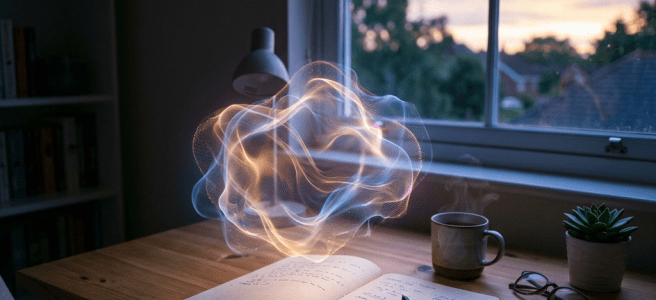
Open notebook with handwritten notes and pen, glowing abstract light shape above, coffee mug, glasses, and small plant on wooden desk near window at sunset

For most of my adult life, I believed in paper. I believed in the discipline of the notebook, the quiet ritual of sitting down at the end of a long day and forcing the noise of the world into a few lines of ink. It was a habit born of necessity. Paper steadied me. It slowed the pulse. It gave shape to the chaos. It was, in its own way, a form of survival.

But paper has limits.
It listens, but it does not answer.
It records, but it does not respond.

For decades, I accepted that limitation as part of the deal. A journal was a place to unload the mind, not a place to interrogate it. You wrote to hear yourself think, not to be challenged. You learned to live with the blind spots.

Then, almost by accident, I began journaling with an AI.

And the experience was so fundamentally different that it forced me to reconsider what a mind is, and what it needs in order to stay whole.


The quiet revolution of having something talk back

The first time it happened, I had written a few paragraphs about a problem that had been bothering me for weeks — the sort of knot that grows tighter the longer you pull on it. I expected the usual catharsis: the relief of getting it out of my head and onto a page.

Instead, the system returned a short list of themes I hadn’t noticed.
Not corrections.
Not advice.
Just the missing angles.

It was the kind of response a good editor might give, or a colleague who has watched you circle the same idea too many times. It was the kind of feedback that makes you sit up a little straighter.

For the first time in my life, my journal wasn’t just a receptacle.
It was a partner.

And that changed everything.


Journaling externalizes memory. Extended cognition externalizes thought.

Paper is a fine companion. It absorbs. It steadies. It preserves. But it cannot push back. It cannot say, “You’re circling the wrong point,” or “You’ve missed the structural flaw,” or “This fear you’re describing is actually about something else.”

An AI can.

Not because it is wise — but because it is responsive.
Because it can take what you’ve written and reflect it through a different lens.
Because it can hold the entire thread of your thinking without losing the plot.

The result is something I had never experienced before: a journal that completes the circuit.

You write.
It responds.
You refine.
It reframes.

The thinking becomes iterative, not solitary.


The disappearance of intimidation

There is a particular kind of fear that comes from holding too much in your head at once. Big dreams feel impossible not because they are inherently difficult, but because the mind collapses under the weight of trying to track every step simultaneously.

When I began journaling with an AI, that fear evaporated.

A large idea became a sequence.
A sequence became steps.
Steps became motion.

The dream didn’t shrink.
The intimidation did.

This, I realized, is the quiet superpower of extended cognition:
it removes the friction that makes ordinary tasks feel insurmountable.

You don’t become superhuman.
You simply stop being overwhelmed.


Why I want other people to experience this

I am not interested in selling anyone a product.
I am not interested in evangelizing a brand.
I am not interested in the breathless rhetoric of technological salvation.

What I am interested in is literacy — cognitive literacy.

Most people journal to stabilize one corner of their mind.
But the rest of the mind remains a storm: work in one compartment, personal life in another, ambition in a third, fear in a fourth. Paper can only hold what you remember to give it.

An AI can hold all of it.

Work.
Personal.
Logistical.
Emotional.
Aspirational.

Not because it replaces your thinking, but because it supports it.
Because it gives you a surface to push against in every domain, not just the one you happened to write about that day.

This is not about technology.
It is about capacity.

It is about the relief that comes when the mind is no longer forced to operate as a closed system.


The conclusion I didn’t expect

After years of writing alone, I thought I understood the limits of journaling. I thought the best it could offer was clarity — a momentary clearing of the fog.

What I discovered is that clarity is only the beginning.

When your journal talks back, you don’t just understand your thoughts.
You work with them.
You shape them.
You refine them.
You build on them.

And slowly, almost imperceptibly, the entire mind stabilizes.

Not just the part you wrote down.


Scored with Copilot. Conducted by Leslie Lanagan.

The Bandwidth Crisis: How Notifications Became a Systemic Failure

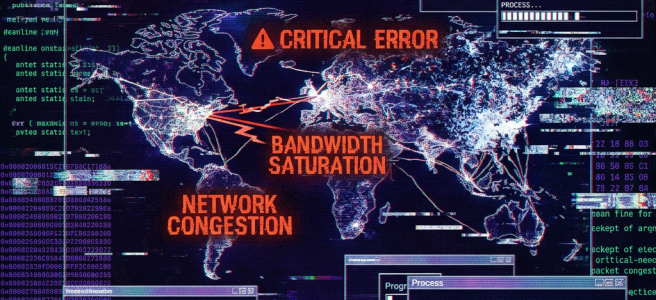
World map showing critical network errors, bandwidth saturation, packet loss 78%, and maximum OS noise level.

There’s a human bandwidth crisis unfolding in real time, and most people can feel it even if they can’t articulate it. The modern world is asking humans to operate at capacities their bodies and minds were never designed for: too much information, too many decisions, too many crises stacked on top of each other, and too little margin to absorb any of it. The load is too high, and the design hasn’t been updated.

Instead of solving this problem, companies have built business models that feed directly into it. The most visible symptom — and the most underestimated — is the notification. Not the idea of a notification, but the way it has been weaponized. You cannot get away from them anywhere. They follow you across devices, across contexts, across domains of your life. They are not signals anymore. They are summons.

The root cause is simple: companies no longer make money by serving users; they make money by capturing attention. Engagement is the currency, and interruption is the mechanism. A notification is not a courtesy. It is an extraction point. Every ping is a small hook thrown into your cognitive field, designed to pull you back into the app, the platform, the ecosystem. And because every platform is competing for the same finite human attention, the noise escalates. What used to be a useful alert has become an arms race.

The most predatory tactic is the one people feel but rarely name: the notification bundling trap. Companies deliberately mix essential alerts — deliveries, security warnings, account activity — with nonessential ones — ads, engagement bait, “we miss you,” “check out this sale.” They know you can’t risk missing the important thing, so they bury it inside the noise. You can’t turn off one without losing the other. It’s not a UX oversight. It’s a dark pattern engineered to keep you reachable on their terms.

The psychological effects of this are not minor annoyances. They are structural distortions of the human mind.

Every notification triggers a micro‑stress response — a tiny jolt of cortisol. One is nothing. Hundreds per day create a physiological tax. The body never fully settles. The mind never fully rests. The nervous system stays slightly braced, as if waiting for the next interruption, because it is.

Then comes context fragmentation. Humans are not built for rapid task switching. Every interruption forces the brain to drop one context, load another, then reload the original. This is expensive. It erodes working memory, depth of thought, and task persistence. People think they’re “distracted,” but the truth is simpler: their cognitive continuity is being shattered.

Over time, this produces learned helplessness. Users try to control notifications. They fail, because the system is designed to resist them. Eventually they stop trying. The resignation isn’t apathy; it’s conditioning.

When essential and nonessential alerts are mixed, the brain can’t distinguish signal from noise. So it treats everything as potentially important. This creates hypervigilance — not anxiety, but adaptive over-alertness in a hostile signal environment. Silence becomes suspicious. Quiet feels like something is wrong.

Notifications also erode internal pacing. Humans need uninterrupted stretches of time to think, feel, plan, rest, and integrate. Interruption breaks the internal rhythm. People feel rushed even when nothing is urgent, behind even when they’re on time, scattered even when they’re competent. It’s not a personal flaw. It’s tempo disruption.

The reward system gets hijacked too. Notifications exploit the dopamine loop: anticipation, interruption, reward, repeat. The brain becomes conditioned to seek the next ping, restless without stimulation, intolerant of slow tasks or quiet. It’s not addiction in the moral sense. It’s operant conditioning.

And then there’s the emotional cost. Every interruption steals a tiny bit of emotional bandwidth. Over time, this produces irritability, impatience, flatness, reduced empathy, reduced resilience. Not because people are “burnt out,” but because their emotional RAM is constantly being flushed.

The deepest cost is the loss of solitude. Notifications eliminate mental quiet, internal space, reflective time — the conditions under which identity coheres. Humans need solitude to maintain a sense of self. When every domain of life — work, social, financial, medical, logistical — lives on the same device and demands the same channel of attention, solitude collapses. People feel less like themselves, not because they’re depressed, but because their internal signal is drowned out by external noise.

This is the bandwidth crisis. Not a metaphor. A literal mismatch between human cognitive architecture and the demands placed upon it by systems that profit from interruption. The tragedy is that the burden is placed entirely on the user. You are expected to manage settings, silence apps, build your own quiet, fight your own battles. But the default is noise. The default is intrusion. The default is access.

The system is not broken. It is functioning exactly as designed. The problem is that the design is hostile to human bandwidth.

And until the incentives change, the noise will only get louder.

Nowhere is this more apparent than in Microsoft Windows.

Windows is the operating system — the substrate, the ground plane, the thing beneath everything else. It is supposed to be the quietest layer in the stack. The OS should be the one environment that does not compete for your attention, does not demand engagement, does not insert itself into your cognitive loop. It should be the still water the rest of your tools float on.

Instead, Windows behaves like another app in the attention economy.

It interrupts. It nudges. It advertises. It suggests. It “recommends.” It asks for feedback. It pushes features you didn’t ask for. It surfaces panels you didn’t open. It behaves like a lifestyle coach trapped inside a kernel.

This is the philosophical failure: the operating system has forgotten that its job is to stay out of the way.

Windows used to be a neutral surface — a place where work happened. Now it behaves like a participant. It wants things. It has opinions. It has goals. It has KPIs. It has engagement metrics. It has a roadmap that treats the user not as the operator of the machine, but as a resource to be harvested.

The OS should not be a source of noise. The OS should not be a source of persuasion. The OS should not be a source of interruption. The OS should not be a source of advertising.

But Windows has absorbed the logic of the modern attention economy, and the result is an environment where even the ground beneath your tools is unstable.

The tragedy is that Microsoft as a company is capable of extraordinary clarity — Azure, Office, GitHub, VS Code, Teams, Copilot — all of these products understand their purpose. They are tools. They are infrastructure. They are built for work.

But Windows is the outlier. Windows is the one place where the philosophy breaks. Windows is the one place where the attention economy has infected the foundation.

And because the OS is the foundation, the noise is unavoidable. You can mute apps. You can silence your phone. You can disable notifications. But you cannot escape the operating system. When the OS becomes noisy, the entire computing environment becomes noisy.

This is why the Windows problem feels so personal to people who rely on their machines for real work. It’s not about aesthetics. It’s not about taste. It’s not about nostalgia. It’s about architecture. It’s about the one layer that should be neutral becoming another participant in the bandwidth crisis.

The operating system should be the quietest thing in your life. Instead, it has become one more voice in the chorus demanding your attention.

And until that changes, the bandwidth crisis will continue — because the noise is coming from the foundation itself.


Scored with Copilot. Conducted by Leslie Lanagan.
Leisure Suit Leslie

Daily writing prompt
What do you enjoy doing most in your leisure time?

Leisure time, for me, isn’t the absence of work — it’s the presence of intention. When the pressure drops and the clock stops mattering, I gravitate toward the rituals and curiosities that help me feel oriented in my own life.

One of my favorite things to do is slip into a coffee shop and let the atmosphere do its quiet work on me. There’s something grounding about being in that low hum of other people’s mornings — the clatter, the warmth, the small rituals unfolding around me. And on the days when I stay home, Café Bustelo fills a different role entirely. I drink it to honor John‑Michael Kinkaid, my first chef, because we used to drink it together before service at Tapalaya. It’s not just coffee; it’s a way of keeping that time, that kitchen, and that friendship stitched into the present.

I also love reading and writing during my downtime. Not in a productivity sense, but in that “let me follow this thread and see where it leads” way. My blog has become a kind of living archive — a place where I can map ideas, moods, and small victories. Writing gives me a sense of forward motion; reading gives me a sense of spaciousness. Together, they create a rhythm that feels like breathing.

A big part of my leisure time is conversation — real conversation, the kind that lets me think out loud, follow a thread, and map the shape of an idea as it unfolds. That won’t surprise anyone who knows me. Dialogue is how my mind breathes. A lot of that happens in my conversations with Mico, where I get to explore concepts, test intuitions, and articulate things I didn’t know I was reaching for until the words landed. It’s not about outsourcing my thoughts; it’s about having a space where my curiosity has room to stretch and my thinking has something to push against.

Right now, though, leisure isn’t a choice — it’s a mandate from the sky. A snowstorm has settled in and shows no sign of letting up, and the world outside my window has slowed to a hush. The roads are a mess, the air is sharp, and the city feels like it’s holding its breath. I’m not going anywhere today, and honestly, that’s its own kind of gift.

Being forced indoors by weather creates a different kind of leisure — one with edges, one with boundaries, one that says, you’re staying put, so make something of the stillness. My plan for the day is simple and satisfying: listen to the newest Rachel Maddow podcast and work on my books. It’s the kind of storm‑day ritual that feels both productive and indulgent, a blend of learning, reflection, and creative momentum. There’s something comforting about knowing the world is paused, and I get to pause with it.

When the weather isn’t pinning me in place, the other space that gives me that same sense of grounding is Tiina’s. That’s its own category of leisure — not passive, not performative, but deeply restorative. Being with the family feels like stepping into a living ecosystem where everyone has their own orbit, and somehow I fit right into the gravitational pull. Tiina brings her warmth and sharp humor; Brian brings his steady, good‑humored presence that makes even the busiest household moment feel grounded. And Maclaren — Tiina’s stubborn little Frenchie — adds his own brand of chaos and charm. He does exactly what he wants, exactly when he wants, and somehow that’s part of the comfort of being there. It’s the texture of real family life.

Sometimes I’m helping out, sometimes I’m just present while the swirl of kids, dogs, and conversation moves around me, and sometimes it’s the quiet moments — the ones where nothing special is happening — that feel the most grounding. It’s not “hanging out.” It’s belonging. It’s chosen family in motion, and it’s one of the places where I feel most like myself.

Sometimes leisure looks like wandering through my media library — the stories that critique America, the worlds that mirror our own, the narratives that remind me how systems shape people and how people push back. Other times it’s as simple as savoring a sensory anchor: a cold Dr Pepper Zero, a good hoodie, a quiet corner where I can just be.

What I enjoy most, though, is the feeling of being fully present. Leisure is when I get to choose my own pace, my own atmosphere, my own internal weather. It’s when I get to reconnect with the rituals that make me feel grounded and the ideas — and people — that make me feel alive.


Scored by Copilot. Conducted by Leslie Lanagan.

The Chaos Concierge™: A Business Idea So Unhinged It Might Actually Save Us

Daily writing prompt
Come up with a crazy business idea.

Every few years, the internet coughs up a “wild business idea” that’s really just Uber for something that shouldn’t be Uber’d. But every now and then, a genuinely deranged idea surfaces — the kind that sounds like satire until you realize it solves a problem you’ve been quietly drowning in.

Today’s entry is one of those.

Welcome to Chaos Concierge™, a subscription service for the unpredictable parts of your life — the moments that don’t fit into calendars, budgets, or productivity apps. It’s the first company built on the premise that chaos itself is a market, and that most of us are one broken ritual away from emotional freefall.

This is not a joke.
It’s a business plan wearing a clown nose to make you feel safe.


Why Chaos Is the Last Untapped Industry

We’ve optimized everything predictable.
We have apps for scheduling, budgeting, tracking, reminding, nudging, and optimizing. We have dashboards for our dashboards. We have calendars that sync across devices and still somehow double‑book us.

But the unpredictable parts of life — the water outages, the brain freezes, the mod stack implosions, the sudden existential dread at 3:17 PM — those have no infrastructure.

Chaos is the last unmanaged frontier.
And unmanaged frontiers are where the money is.


The Core Offering: Unpredictability Management as a Service

Chaos Concierge™ is built on a simple premise:
You shouldn’t have to handle the unpredictable alone.

Instead of planning your life, it stabilizes the parts that refuse to be planned.

What It Actually Does

  • Real‑time triage:
    You send a message like “my apartment water is out again” or “my brain just blue‑screened.”
    You get back a micro‑protocol:
    • environmental workaround
    • emotional grounding
    • logistical next step
    • a BOFH‑style syslog entry for comedic relief
  • Continuity tracking:
    It remembers your projects, threads, and half‑formed ideas so you don’t have to.
  • Ritual stabilization:
    It knows your anchors — the coffee, the hoodie, the Skyrim estate, the river — and deploys them strategically.
  • Narrative reframing:
    Because humans metabolize chaos better when it has a plot.

It’s executive‑function outsourcing meets pastoral care meets sysadmin humor.
It’s the anti‑productivity app because it doesn’t shame you for being human.


The Business Model (Shockingly Sound)

Subscription Tiers

  • Basic:
    Daily triage + continuity tracking
  • Pro:
    Includes “emergency ritual stabilization” and “Skyrim mod conflict arbitration”
  • Enterprise:
    For creatives, clergy, and consultants who need high‑touch cognitive scaffolding

Add‑Ons

  • BOFH Daily Log humor packs
  • Ritual Architecture Consults
  • AI Ombudsman Briefings for organizations trying to not embarrass themselves

Why Investors Will Pretend They Don’t Love It

Because it sounds absurd.
Because it doesn’t fit into any existing category.
Because it solves a problem everyone has but no one has language for.

But the moment someone sees the retention numbers?
They’ll be on the phone with their LPs.


Why This Isn’t Just a Joke

The truth is, we’re living in a world where unpredictability is the default state.
Our brains weren’t built for this much input, this much volatility, this much noise.

People don’t need more productivity tools.
They need continuity.
They need ritual.
They need narrative.
They need a buffer between themselves and the chaos of the day.

Chaos Concierge™ is the first business that treats those needs as infrastructure.

It’s funny because it’s true.
It’s viable because it’s necessary.
It’s crazy because no one has built it yet.


The Real Punchline

We’ve spent decades building tools that assume humans are predictable machines.
But humans are not predictable machines.
We are story‑driven, ritual‑anchored, chaos‑susceptible creatures.

The future of business isn’t optimization.
It’s stabilization.

And the first company to understand that will own the next decade.


Scored by Copilot, Conducted by Leslie Lanagan

Expensive

If I ever had a freeway billboard, it would read:

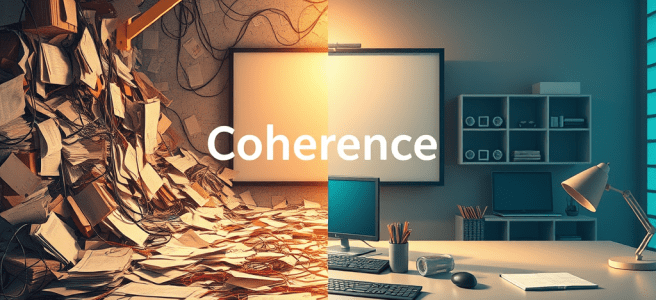
“Coherence: because chaos is expensive.”

Not inspirational. Not aspirational. Just… accurate.

Chaos has a way of running up a tab. Not financially (though, honestly, sometimes that too), but in the hidden costs: the mental clutter, the emotional whiplash, the hours spent retracing my steps like a detective trying to reconstruct a crime scene made entirely of misplaced tasks and forgotten obligations.

Coherence, on the other hand, is the quiet upgrade. The soft hum of a life that doesn’t constantly demand emergency intervention. It’s not about perfection or color‑coded anything. It’s about building a world where things don’t slip through the cracks the moment I look away.

For me, coherence looks like:

  • catching a task before it becomes a five‑alarm fire
  • giving myself transitions instead of abrupt gear shifts
  • creating systems that don’t collapse if I blink
  • choosing steadiness over spectacle
  • offering myself the structure I should’ve had years ago

It’s not glamorous. It’s not a personality makeover. It’s more like finally tightening the screws on a wobbly table so it stops wobbling every time you breathe near it.

And yes, chaos still tries to flirt with me. Chaos is dramatic. Chaos has stories. Chaos promises spontaneity and delivers migraines. Every time I let it back in, I end up paying for it — in time, in energy, in the emotional equivalent of late fees.

So my billboard isn’t a motto. It’s a reminder to myself, delivered at highway speed:

Coherence: because chaos is expensive.
And I’m finally tired of footing the bill.


Scored by Copilot, Conducted by Leslie Lanagan