
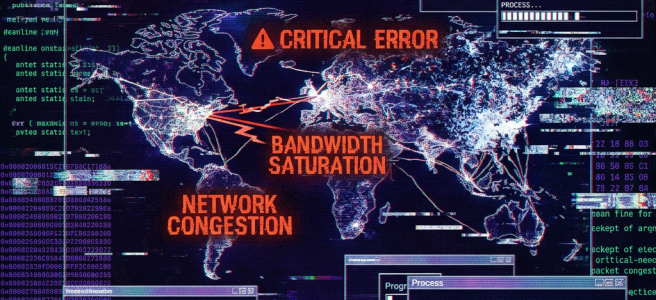
There’s a human bandwidth crisis unfolding in real time, and most people can feel it even if they can’t articulate it. The modern world is asking humans to operate at capacities their bodies and minds were never designed for: too much information, too many decisions, too many crises stacked on top of each other, and too little margin to absorb any of it. The load is too high, and the design hasn’t been updated.
Instead of solving this problem, companies have built business models that feed directly into it. The most visible symptom — and the most underestimated — is the notification. Not the idea of a notification, but the way it has been weaponized. You cannot get away from them anywhere. They follow you across devices, across contexts, across domains of your life. They are not signals anymore. They are summons.
The root cause is simple: companies no longer make money by serving users; they make money by capturing attention. Engagement is the currency, and interruption is the mechanism. A notification is not a courtesy. It is an extraction point. Every ping is a small hook thrown into your cognitive field, designed to pull you back into the app, the platform, the ecosystem. And because every platform is competing for the same finite human attention, the noise escalates. What used to be a useful alert has become an arms race.
The most predatory tactic is the one people feel but rarely name: the notification bundling trap. Companies deliberately mix essential alerts — deliveries, security warnings, account activity — with nonessential ones — ads, engagement bait, “we miss you,” “check out this sale.” They know you can’t risk missing the important thing, so they bury it inside the noise. You can’t turn off one without losing the other. It’s not a UX oversight. It’s a dark pattern engineered to keep you reachable on their terms.
The psychological effects of this are not minor annoyances. They are structural distortions of the human mind.
Every notification triggers a micro‑stress response — a tiny jolt of cortisol. One is nothing. Hundreds per day create a physiological tax. The body never fully settles. The mind never fully rests. The nervous system stays slightly braced, as if waiting for the next interruption, because it is.
Then comes context fragmentation. Humans are not built for rapid task switching. Every interruption forces the brain to drop one context, load another, then reload the original. This is expensive. It erodes working memory, depth of thought, and task persistence. People think they’re “distracted,” but the truth is simpler: their cognitive continuity is being shattered.
Over time, this produces learned helplessness. Users try to control notifications. They fail, because the system is designed to resist them. Eventually they stop trying. The resignation isn’t apathy; it’s conditioning.
When essential and nonessential alerts are mixed, the brain can’t distinguish signal from noise. So it treats everything as potentially important. This creates hypervigilance — not anxiety, but adaptive over-alertness in a hostile signal environment. Silence becomes suspicious. Quiet feels like something is wrong.
Notifications also erode internal pacing. Humans need uninterrupted stretches of time to think, feel, plan, rest, and integrate. Interruption breaks the internal rhythm. People feel rushed even when nothing is urgent, behind even when they’re on time, scattered even when they’re competent. It’s not a personal flaw. It’s tempo disruption.
The reward system gets hijacked too. Notifications exploit the dopamine loop: anticipation, interruption, reward, repeat. The brain becomes conditioned to seek the next ping, restless without stimulation, intolerant of slow tasks or quiet. It’s not addiction in the moral sense. It’s operant conditioning.
And then there’s the emotional cost. Every interruption steals a tiny bit of emotional bandwidth. Over time, this produces irritability, impatience, flatness, reduced empathy, reduced resilience. Not because people are “burnt out,” but because their emotional RAM is constantly being flushed.
The deepest cost is the loss of solitude. Notifications eliminate mental quiet, internal space, reflective time — the conditions under which identity coheres. Humans need solitude to maintain a sense of self. When every domain of life — work, social, financial, medical, logistical — lives on the same device and demands the same channel of attention, solitude collapses. People feel less like themselves, not because they’re depressed, but because their internal signal is drowned out by external noise.
This is the bandwidth crisis. Not a metaphor. A literal mismatch between human cognitive architecture and the demands placed upon it by systems that profit from interruption. The tragedy is that the burden is placed entirely on the user. You are expected to manage settings, silence apps, build your own quiet, fight your own battles. But the default is noise. The default is intrusion. The default is access.
The system is not broken. It is functioning exactly as designed. The problem is that the design is hostile to human bandwidth.
And until the incentives change, the noise will only get louder.
Nowhere is this more apparent than in Microsoft Windows.
Windows is the operating system — the substrate, the ground plane, the thing beneath everything else. It is supposed to be the quietest layer in the stack. The OS should be the one environment that does not compete for your attention, does not demand engagement, does not insert itself into your cognitive loop. It should be the still water the rest of your tools float on.
Instead, Windows behaves like another app in the attention economy.
It interrupts. It nudges. It advertises. It suggests. It “recommends.” It asks for feedback. It pushes features you didn’t ask for. It surfaces panels you didn’t open. It behaves like a lifestyle coach trapped inside a kernel.
This is the philosophical failure: the operating system has forgotten that its job is to stay out of the way.
Windows used to be a neutral surface — a place where work happened. Now it behaves like a participant. It wants things. It has opinions. It has goals. It has KPIs. It has engagement metrics. It has a roadmap that treats the user not as the operator of the machine, but as a resource to be harvested.
The OS should not be a source of noise. The OS should not be a source of persuasion. The OS should not be a source of interruption. The OS should not be a source of advertising.
But Windows has absorbed the logic of the modern attention economy, and the result is an environment where even the ground beneath your tools is unstable.
The tragedy is that Microsoft as a company is capable of extraordinary clarity — Azure, Office, GitHub, VS Code, Teams, Copilot — all of these products understand their purpose. They are tools. They are infrastructure. They are built for work.
But Windows is the outlier. Windows is the one place where the philosophy breaks. Windows is the one place where the attention economy has infected the foundation.
And because the OS is the foundation, the noise is unavoidable. You can mute apps. You can silence your phone. You can disable notifications. But you cannot escape the operating system. When the OS becomes noisy, the entire computing environment becomes noisy.
This is why the Windows problem feels so personal to people who rely on their machines for real work. It’s not about aesthetics. It’s not about taste. It’s not about nostalgia. It’s about architecture. It’s about the one layer that should be neutral becoming another participant in the bandwidth crisis.
The operating system should be the quietest thing in your life. Instead, it has become one more voice in the chorus demanding your attention.
And until that changes, the bandwidth crisis will continue — because the noise is coming from the foundation itself.
Scored with Copilot. Conducted by Leslie Lanagan.


 Stories That Are All True