
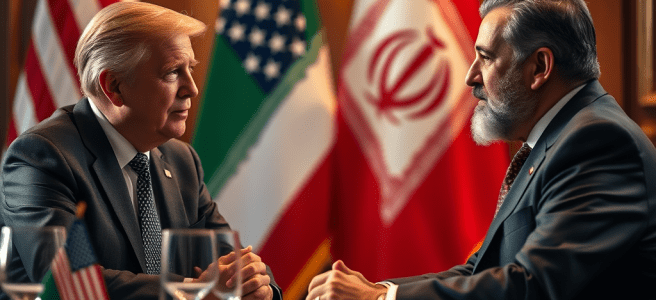
The news that the United States and Iran are speaking directly again for the first time since 1979 lands with a kind of historical weight that’s hard to overstate. For most people, it’s a geopolitical headline. For me, it’s something deeper — a moment that feels strangely personal, shaped by the way I first learned to understand the emotional architecture of U.S.–Iran relations through my favorite film, Argo.
Argo isn’t just a movie I enjoy. It’s the story that opened a door for me into the human texture of a relationship defined for decades by silence, suspicion, and the long shadow of the hostage crisis. The film dramatizes a moment when diplomacy had collapsed so completely that the only remaining tools were improvisation, secrecy, and courage in the margins. It’s a story about what happens when two nations stop talking — and what extraordinary measures become necessary when communication breaks down entirely.
So when I hear that American and Iranian officials are sitting in the same room again, speaking words instead of trading threats, it feels momentous in a way that goes beyond policy. It feels like a crack in a wall that has stood for nearly half a century.
For forty‑plus years, the U.S.–Iran relationship has been defined by everything except dialogue: sanctions, proxy conflicts, covert operations, nuclear brinkmanship, and a mutual narrative of grievance. The absence of communication became its own kind of architecture — rigid, brittle, and dangerous. And because of that, even the smallest gesture toward direct engagement carries symbolic power.
This moment isn’t warm reconciliation. It isn’t trust. It isn’t even peace. The talks are happening under pressure, with military assets in motion and the threat of escalation hanging in the air. But the fact that the two governments are speaking at all — openly, formally, and with the world watching — is a break from a pattern that has defined an entire generation of foreign policy.
And that’s why it resonates with me. Because Argo taught me what it looks like when communication collapses. It taught me how much human cost accumulates when nations stop seeing each other as interlocutors and start seeing each other only as adversaries. It taught me that silence between governments is never neutral; it’s a vacuum that gets filled with fear, miscalculation, and the kind of improvisation that puts lives at risk.
So yes, the content of these talks is grim. They’re negotiating under the shadow of potential conflict. They’re trying to prevent the worst‑case scenario rather than build the best one. But the act of talking — after decades of not talking — is still a hinge in history.
It’s a reminder that even the most entrenched hostilities can shift. That silence is not destiny. That dialogue, however fragile, is still the only tool that has ever pulled nations back from the brink.
And for someone who learned the emotional stakes of this relationship through Argo, that makes this moment feel not just significant, but quietly hopeful in a way I didn’t expect.


 Stories That Are All True