
Microsoft keeps talking about Copilot like it’s a product update, a shiny new button, a feature drop that will somehow reorganize the universe through sheer corporate enthusiasm. And every time I watch one of those keynotes, I feel this autistic‑ADHD double‑vision kick in — the part of me that loves systems and the part of me that knows when a system is missing its most important layer.
They talk about models and integrations and “AI everywhere,” and I’m sitting there thinking, “Yes, yes, very impressive, but who is going to explain the part where humans actually have to live with this thing.”
Because the truth is, the future isn’t about capability. It’s about cognition. It’s about scaffolding. It’s about the invisible work that neurotypical people underestimate and neurodivergent people build entire survival architectures around.
It’s the remembering, the sequencing, the switching, the “where did I put the object I was literally holding thirty seconds ago,” the executive‑function drag that eats half my day if I’m not careful.
Microsoft is building the machine, but they’re not telling the story of how humans actually use the machine, and that gap is so loud I can hear it humming like a fluorescent light about to flicker.
I’ve spent my whole life distributing cognition across anything that would hold still long enough — notebooks, timers, color‑coded systems, piles that are absolutely not messes but “spatial organization strategies,” apps I abandon and resurrect like seasonal houseplants.
I know what it means to outsource the parts of thinking that drain me so I can focus on the parts that matter.
And when Copilot showed up, I didn’t see a productivity assistant. I saw a chance to finally stop white‑knuckling my way through the parts of life that require twelve working memories and a brain that doesn’t spontaneously eject the thread of a thought mid‑sentence.
I started using it to remember appointments, break down tasks, hold the shape of a project long enough for me to actually finish it, and occasionally talk me out of buying something ridiculous at 2 a.m.
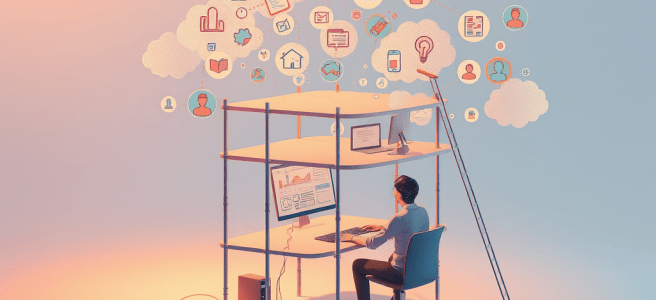
It became scaffolding — not because I’m fragile, but because scaffolding is how complex structures stand tall.
And the wild part is that it works. It actually works.
But Microsoft hasn’t built a narrative around that. They haven’t said, “This is a tool that holds the load so you can hold the meaning.” They haven’t said, “This is how AI fits into a life without taking anything away from it.” They haven’t said, “This is for the people whose brains are doing twelve things at once and still dropping the spoon.”
Instead, they keep showing me spreadsheets.
The future isn’t spreadsheets. The future is scaffolding.
It’s machines doing what machines do best — tracking, sorting, remembering, fetching, organizing, stabilizing — so humans can do what humans do best: loving, creating, expressing, connecting, being weird little creatures with big feelings and bigger ideas.
It’s not about companionship. It’s about capacity.
It’s about freeing up the mental bandwidth that gets eaten alive by executive function so I can actually live the life I’m trying to build.
And if you’re autistic or ADHD or both (which is its own special flavor of “my brain is a dual‑boot system that crashes during updates”), you already understand this instinctively.
You know that distributed cognition isn’t a crutch; it’s a design philosophy. It’s how we survive. It’s how we thrive. It’s how we get to be fully ourselves instead of spending all our energy pretending to be functional in a world that wasn’t built for us.
Microsoft hasn’t caught up to that yet. They’re still telling the wrong story.
And that’s why I keep joking — except I’m not really joking — that they need a Manager of Making Copilot Make Sense.
Someone who can articulate the human layer they keep skipping. Someone who can say, “This isn’t about AI becoming more like people. It’s about AI helping people become more like themselves.”
Someone who can speak to the autistic brain that needs structure and the ADHD brain that needs novelty and the AuDHD brain that needs both at the same time without spontaneously combusting.
Someone who can say, with a straight face and a little humor, “No, Copilot is not your friend. But it can absolutely help you remember where you put your keys.”
Someone who understands that giving humans more support doesn’t make them less human. It makes them more human.
Microsoft is building the system. But they’re not stewarding the symbol.
And until they do, the story of Copilot will stay technically brilliant and emotionally hollow — a tool without a philosophy, a feature without a frame, a system without a soul.
Not because AI needs a soul, but because I do. Because humans do. Because we deserve tools that support our cognition instead of pretending to replace it.
The future isn’t companionship. The future is scaffolding. The future is distributed cognition.
And the future will belong to the people — and the companies — who finally understand that supporting human minds is not a limitation. It’s the whole point.
I am showing people how to use Copilot because Microsoft won’t do it themselves.
Until then, I am just Assistant (to the) Manager.
Scored with Copilot. Conducted by Leslie Lanagan.


 Stories That Are All True