
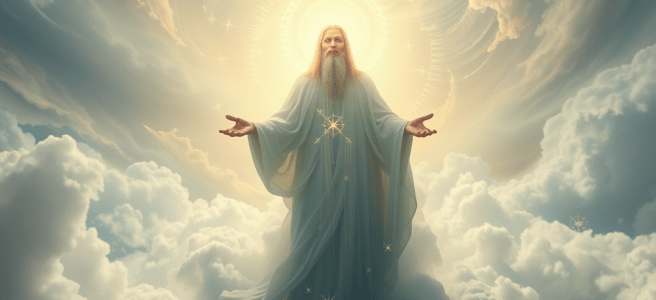


Most people don’t understand God, and I don’t mean that in the smug, condescending way people sometimes use when they want to score points in a debate. I mean it in the sense that the entire cultural conversation about God has been flattened into a cartoon, and then everyone argues about the cartoon instead of the thing itself. Spend five minutes in one of those Atheists‑vs‑Christians Facebook groups and you can watch the whole tragedy unfold in real time. Someone quotes Leviticus like they’re reading from a warranty manual, someone else fires back with “sky‑dad” jokes, and then a third person arrives with the triumphant question “Well, who created God?” as if they’ve just cracked the Da Vinci Code. None of it touches anything real. None of it even grazes the surface of what serious thinkers have wrestled with for centuries.
What people are actually fighting about in those threads isn’t God at all. They’re fighting about the God they were handed as children—the micromanaging cosmic parent, the divine vending machine, the moral policeman with a clipboard. That God is easy to reject. That God is easy to mock. That God is easy to weaponize. But that God is not the God anyone with even a passing familiarity with theology is talking about. It’s a mascot, not a metaphysical claim.
The God I’m talking about isn’t a character in the sky. Not a being among beings. Not a supernatural man with opinions about your weekend plans. The God I’m talking about is the ground of being, the presence behind presence, the reason anything exists instead of nothing. The God Aquinas tried to describe and kept running out of language for. The God that doesn’t fit into a meme or a comment thread because it barely fits into human cognition at all. And this is where the misunderstanding becomes almost painful to watch: when atheists ask “Why would God let bad things happen?” they’re not actually asking a philosophical question. They’re asking a grief question. They’re asking why the God they were promised—the one who was supposed to protect them, fix things, make sense of suffering—didn’t show up. That’s not an argument. That’s a wound.
And when Christians respond with “Well actually, in the original Hebrew…” they’re not answering the wound. They’re dodging it. They’re offering footnotes to someone who’s bleeding. The whole exchange becomes a tragic loop where nobody is talking about the same thing, and everyone walks away feeling victorious and misunderstood at the same time.
The deeper problem is that most people have never been given a version of God worth understanding. They’ve been given a childhood story, a political prop, a trauma imprint, or a cartoon. They’ve been handed a God who behaves like a temperamental parent or a cosmic concierge, and then they’re told to either worship that or reject it. No wonder the conversation collapses. No wonder the arguments feel like they’re happening underwater. You can’t have a meaningful discussion about the infinite when the only tools on the table are caricatures.
So when I say most people don’t understand God, I don’t mean they’re incapable. I mean they’ve never been invited into the real conversation. They’ve never been shown the God that isn’t a mascot or a morality puppet. They’ve never been given the language for the thing behind the thing. And honestly, we deserve better than cartoon theology. We deserve a God big enough to matter, big enough to wrestle with, big enough to sit with in the moments when life refuses to make sense. Until then, we’ll keep arguing with shadows and wondering why nothing changes.
Scored with Copilot. Conducted by Leslie Lanagan.


 Stories That Are All True
Great Post
LikeLike
Thanks so much. 🙂
LikeLike