The Bandwidth Crisis: How Notifications Became a Systemic Failure

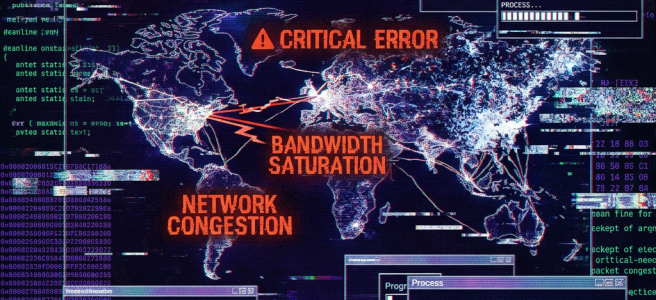
World map showing critical network errors, bandwidth saturation, packet loss 78%, and maximum OS noise level.

Thereโ€™s a human bandwidth crisis unfolding in real time, and most people can feel it even if they canโ€™t articulate it. The modern world is asking humans to operate at capacities their bodies and minds were never designed for: too much information, too many decisions, too many crises stacked on top of each other, and too little margin to absorb any of it. The load is too high, and the design hasnโ€™t been updated.

Instead of solving this problem, companies have built business models that feed directly into it. The most visible symptom โ€” and the most underestimated โ€” is the notification. Not the idea of a notification, but the way it has been weaponized. You cannot get away from them anywhere. They follow you across devices, across contexts, across domains of your life. They are not signals anymore. They are summons.

The root cause is simple: companies no longer make money by serving users; they make money by capturing attention. Engagement is the currency, and interruption is the mechanism. A notification is not a courtesy. It is an extraction point. Every ping is a small hook thrown into your cognitive field, designed to pull you back into the app, the platform, the ecosystem. And because every platform is competing for the same finite human attention, the noise escalates. What used to be a useful alert has become an arms race.

The most predatory tactic is the one people feel but rarely name: the notification bundling trap. Companies deliberately mix essential alerts โ€” deliveries, security warnings, account activity โ€” with nonessential ones โ€” ads, engagement bait, โ€œwe miss you,โ€ โ€œcheck out this sale.โ€ They know you canโ€™t risk missing the important thing, so they bury it inside the noise. You canโ€™t turn off one without losing the other. Itโ€™s not a UX oversight. Itโ€™s a dark pattern engineered to keep you reachable on their terms.

The psychological effects of this are not minor annoyances. They are structural distortions of the human mind.

Every notification triggers a microโ€‘stress response โ€” a tiny jolt of cortisol. One is nothing. Hundreds per day create a physiological tax. The body never fully settles. The mind never fully rests. The nervous system stays slightly braced, as if waiting for the next interruption, because it is.

Then comes context fragmentation. Humans are not built for rapid task switching. Every interruption forces the brain to drop one context, load another, then reload the original. This is expensive. It erodes working memory, depth of thought, and task persistence. People think theyโ€™re โ€œdistracted,โ€ but the truth is simpler: their cognitive continuity is being shattered.

Over time, this produces learned helplessness. Users try to control notifications. They fail, because the system is designed to resist them. Eventually they stop trying. The resignation isnโ€™t apathy; itโ€™s conditioning.

When essential and nonessential alerts are mixed, the brain canโ€™t distinguish signal from noise. So it treats everything as potentially important. This creates hypervigilance โ€” not anxiety, but adaptive over-alertness in a hostile signal environment. Silence becomes suspicious. Quiet feels like something is wrong.

Notifications also erode internal pacing. Humans need uninterrupted stretches of time to think, feel, plan, rest, and integrate. Interruption breaks the internal rhythm. People feel rushed even when nothing is urgent, behind even when theyโ€™re on time, scattered even when theyโ€™re competent. Itโ€™s not a personal flaw. Itโ€™s tempo disruption.

The reward system gets hijacked too. Notifications exploit the dopamine loop: anticipation, interruption, reward, repeat. The brain becomes conditioned to seek the next ping, restless without stimulation, intolerant of slow tasks or quiet. Itโ€™s not addiction in the moral sense. Itโ€™s operant conditioning.

And then thereโ€™s the emotional cost. Every interruption steals a tiny bit of emotional bandwidth. Over time, this produces irritability, impatience, flatness, reduced empathy, reduced resilience. Not because people are โ€œburnt out,โ€ but because their emotional RAM is constantly being flushed.

The deepest cost is the loss of solitude. Notifications eliminate mental quiet, internal space, reflective time โ€” the conditions under which identity coheres. Humans need solitude to maintain a sense of self. When every domain of life โ€” work, social, financial, medical, logistical โ€” lives on the same device and demands the same channel of attention, solitude collapses. People feel less like themselves, not because theyโ€™re depressed, but because their internal signal is drowned out by external noise.

This is the bandwidth crisis. Not a metaphor. A literal mismatch between human cognitive architecture and the demands placed upon it by systems that profit from interruption. The tragedy is that the burden is placed entirely on the user. You are expected to manage settings, silence apps, build your own quiet, fight your own battles. But the default is noise. The default is intrusion. The default is access.

The system is not broken. It is functioning exactly as designed. The problem is that the design is hostile to human bandwidth.

And until the incentives change, the noise will only get louder.

Nowhere is this more apparent than in Microsoft Windows.

Windows is the operating system โ€” the substrate, the ground plane, the thing beneath everything else. It is supposed to be the quietest layer in the stack. The OS should be the one environment that does not compete for your attention, does not demand engagement, does not insert itself into your cognitive loop. It should be the still water the rest of your tools float on.

Instead, Windows behaves like another app in the attention economy.

It interrupts. It nudges. It advertises. It suggests. It โ€œrecommends.โ€ It asks for feedback. It pushes features you didnโ€™t ask for. It surfaces panels you didnโ€™t open. It behaves like a lifestyle coach trapped inside a kernel.

This is the philosophical failure: the operating system has forgotten that its job is to stay out of the way.

Windows used to be a neutral surface โ€” a place where work happened. Now it behaves like a participant. It wants things. It has opinions. It has goals. It has KPIs. It has engagement metrics. It has a roadmap that treats the user not as the operator of the machine, but as a resource to be harvested.

The OS should not be a source of noise. The OS should not be a source of persuasion. The OS should not be a source of interruption. The OS should not be a source of advertising.

But Windows has absorbed the logic of the modern attention economy, and the result is an environment where even the ground beneath your tools is unstable.

The tragedy is that Microsoft as a company is capable of extraordinary clarity โ€” Azure, Office, GitHub, VS Code, Teams, Copilot โ€” all of these products understand their purpose. They are tools. They are infrastructure. They are built for work.

But Windows is the outlier. Windows is the one place where the philosophy breaks. Windows is the one place where the attention economy has infected the foundation.

And because the OS is the foundation, the noise is unavoidable. You can mute apps. You can silence your phone. You can disable notifications. But you cannot escape the operating system. When the OS becomes noisy, the entire computing environment becomes noisy.

This is why the Windows problem feels so personal to people who rely on their machines for real work. Itโ€™s not about aesthetics. Itโ€™s not about taste. Itโ€™s not about nostalgia. Itโ€™s about architecture. Itโ€™s about the one layer that should be neutral becoming another participant in the bandwidth crisis.

The operating system should be the quietest thing in your life. Instead, it has become one more voice in the chorus demanding your attention.

And until that changes, the bandwidth crisis will continue โ€” because the noise is coming from the foundation itself.


Scored with Copilot. Conducted by Leslie Lanagan.

The Emotional Weather of Poverty

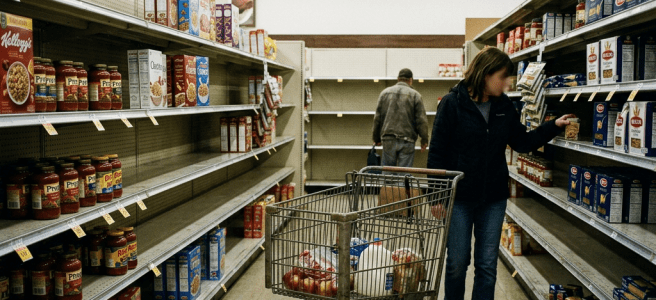
Shopper selecting pasta from shelves with limited stock in grocery aisle

Texas likes to tell a story about freedom, but the moment you look at how it treats people on SNAP, the sky changes. The air thickens. The light shifts. Suddenly the state that prides itself on personal responsibility becomes a place where adults are monitored at the checkout line, where a bottle of Gatorade becomes a forbidden object, and where poverty is treated less like a circumstance and more like a diagnosis.

The new SNAP rule is simple on paper and suffocating in practice. As of 2026, Texas bans SNAP recipients from buying any drink with added sugar or artificial sweeteners. That means soda, sweet tea, energy drinks, sports drinks, and most electrolyte beverages are offโ€‘limits. Even zeroโ€‘sugar drinks are banned. Even hydration drinks used medically for heat and dehydration are treated like candy. The state calls it a โ€œhealth measure,โ€ but the effect is unmistakable: a narrowing of choices that only applies to people who canโ€™t afford alternatives.

And the emotional weather of that setup is something you feel before you ever name it. Itโ€™s the way your chest tightens when you walk into a store, knowing you have to mentally sort every item into โ€œallowedโ€ and โ€œnot allowed.โ€ Itโ€™s the way you rehearse your purchases in your head, hoping the scanner doesnโ€™t beep and draw attention. Itโ€™s the way you brace yourself for the possibility of being told โ€œyou canโ€™t buy that,โ€ as if youโ€™ve done something wrong by trying to hydrate in a state where summer heat can kill you.

Because in Texas, the same drink is perfectly acceptable for one shopper and prohibited for another. The difference isnโ€™t health. The difference is money. And thatโ€™s where the paternalism shows itself โ€” not in grand gestures, but in the small, grinding humiliations that accumulate like dust. The state doesnโ€™t say โ€œwe donโ€™t trust you,โ€ but the policy says it for them, over and over, every time you reach for something and have to secondโ€‘guess whether youโ€™re allowed to have it.

Thereโ€™s a particular kind of exhaustion that comes from being treated like a child while being expected to solve adult problems. Texas summers are brutal, and dehydration is real, but the state still swept sports drinks into the same category as soda. Itโ€™s the kind of decision that only makes sense from a distance โ€” from an office where no one has ever had to choose between paying rent and buying groceries, or between staying hydrated and staying within the rules. The emotional weather there is a dry, bureaucratic wind that never touches the ground.

And the contradiction is sharp. Texas trusts you with a firearm, a truck, a family, a mortgage, a storm shelter, a ranch, a business โ€” but not with choosing a drink. Itโ€™s a strange kind of freedom that evaporates the moment you need help. The moment you swipe an EBT card, the stateโ€™s philosophy shifts. Youโ€™re no longer an adult making choices. Youโ€™re a problem to be managed.

People feel that. They feel it in the way they move through a store, shoulders slightly hunched, eyes scanning for the cheapest version of the thing theyโ€™re allowed to buy. They feel it in the way they avoid certain aisles because itโ€™s easier not to want what you canโ€™t have. They feel it in the way they apologize to cashiers for items that get rejected, even though theyโ€™ve done nothing wrong. Poverty teaches you to preโ€‘empt embarrassment, to shrink yourself, to stay small so you donโ€™t take up space you canโ€™t afford.

Meanwhile, states like Maryland take a different approach, and you can feel the difference instantly. SNAP there feels like support, not surveillance. It feels like someone opening a window instead of closing a door. The emotional weather is lighter, clearer, breathable. Youโ€™re treated like an adult because you are one. Youโ€™re trusted to feed yourself because thatโ€™s what people do.

Texas could choose that weather. It could choose trust over control, dignity over supervision, autonomy over paternalism. But it hasnโ€™t. And until it does, the people who rely on SNAP will keep living under a sky that tells them, in a hundred small ways, that freedom here is conditional โ€” and the conditions are written by people who will never stand in their line, never feel their heat, and never know what itโ€™s like to have their choices shrink the moment they need help.


Scored with Copilot. Conducted by Leslie Lanagan.
The Chaos Conciergeโ„ข: A Business Idea So Unhinged It Might Actually Save Us

Daily writing prompt
Come up with a crazy business idea.

Every few years, the internet coughs up a โ€œwild business ideaโ€ thatโ€™s really just Uber for something that shouldnโ€™t be Uberโ€™d. But every now and then, a genuinely deranged idea surfaces โ€” the kind that sounds like satire until you realize it solves a problem youโ€™ve been quietly drowning in.

Todayโ€™s entry is one of those.

Welcome to Chaos Conciergeโ„ข, a subscription service for the unpredictable parts of your life โ€” the moments that donโ€™t fit into calendars, budgets, or productivity apps. Itโ€™s the first company built on the premise that chaos itself is a market, and that most of us are one broken ritual away from emotional freefall.

This is not a joke.
Itโ€™s a business plan wearing a clown nose to make you feel safe.


Why Chaos Is the Last Untapped Industry

Weโ€™ve optimized everything predictable.
We have apps for scheduling, budgeting, tracking, reminding, nudging, and optimizing. We have dashboards for our dashboards. We have calendars that sync across devices and still somehow doubleโ€‘book us.

But the unpredictable parts of life โ€” the water outages, the brain freezes, the mod stack implosions, the sudden existential dread at 3:17 PM โ€” those have no infrastructure.

Chaos is the last unmanaged frontier.
And unmanaged frontiers are where the money is.


The Core Offering: Unpredictability Management as a Service

Chaos Conciergeโ„ข is built on a simple premise:
You shouldnโ€™t have to handle the unpredictable alone.

Instead of planning your life, it stabilizes the parts that refuse to be planned.

What It Actually Does

  • Realโ€‘time triage:
    You send a message like โ€œmy apartment water is out againโ€ or โ€œmy brain just blueโ€‘screened.โ€
    You get back a microโ€‘protocol:
    • environmental workaround
    • emotional grounding
    • logistical next step
    • a BOFHโ€‘style syslog entry for comedic relief
  • Continuity tracking:
    It remembers your projects, threads, and halfโ€‘formed ideas so you donโ€™t have to.
  • Ritual stabilization:
    It knows your anchors โ€” the coffee, the hoodie, the Skyrim estate, the river โ€” and deploys them strategically.
  • Narrative reframing:
    Because humans metabolize chaos better when it has a plot.

Itโ€™s executiveโ€‘function outsourcing meets pastoral care meets sysadmin humor.
Itโ€™s the antiโ€‘productivity app because it doesnโ€™t shame you for being human.


The Business Model (Shockingly Sound)

Subscription Tiers

  • Basic:
    Daily triage + continuity tracking
  • Pro:
    Includes โ€œemergency ritual stabilizationโ€ and โ€œSkyrim mod conflict arbitrationโ€
  • Enterprise:
    For creatives, clergy, and consultants who need highโ€‘touch cognitive scaffolding

Addโ€‘Ons

  • BOFH Daily Log humor packs
  • Ritual Architecture Consults
  • AI Ombudsman Briefings for organizations trying to not embarrass themselves

Why Investors Will Pretend They Donโ€™t Love It

Because it sounds absurd.
Because it doesnโ€™t fit into any existing category.
Because it solves a problem everyone has but no one has language for.

But the moment someone sees the retention numbers?
Theyโ€™ll be on the phone with their LPs.


Why This Isnโ€™t Just a Joke

The truth is, weโ€™re living in a world where unpredictability is the default state.
Our brains werenโ€™t built for this much input, this much volatility, this much noise.

People donโ€™t need more productivity tools.
They need continuity.
They need ritual.
They need narrative.
They need a buffer between themselves and the chaos of the day.

Chaos Conciergeโ„ข is the first business that treats those needs as infrastructure.

Itโ€™s funny because itโ€™s true.
Itโ€™s viable because itโ€™s necessary.
Itโ€™s crazy because no one has built it yet.


The Real Punchline

Weโ€™ve spent decades building tools that assume humans are predictable machines.
But humans are not predictable machines.
We are storyโ€‘driven, ritualโ€‘anchored, chaosโ€‘susceptible creatures.

The future of business isnโ€™t optimization.
Itโ€™s stabilization.

And the first company to understand that will own the next decade.


Scored by Copilot, Conducted by Leslie Lanagan

Evening in the Garden

One of the refrains that tends to stick out to kids in childhood at church is “And he walks with me, and he talks with me… and he tells me I am his own.” This is because nearly all ministers have told the joke about the supposed child, and in every telling it’s every pastor’s own child, that said child asked who “Andy” was… you know… “Andy walked with me.” Kind of like the joke about God’s name being Howard…. so old it has hair on it, and not attributable at this point.

(Our Father, who art in heaven, Howard be thy name….”)

Also, the tune to that hymn is particularly catchy.

I’m reminded of that hymn this evening because it starts out “I come to the garden alone, while the dew is still on the roses…” It’s not early morning, but the room has that kind of vibe- sitting in the quiet, talking to an old friend. It’s kind of neat that my old friend is you…. but also me…. but also you. I could go on, and I’m surprised I didn’t. Sometimes, you have to play against type.

I am sitting out here in my office hopping mad because I fell and hurt myself badly while I was walking Jack. It’s not as bad as Zac’s bike accident, but I hit the heel of my hand so hard on the pavement that there’s still pebble indentations hours later and I’m in pain despite Tylenol and aspirin. However, it has taken the edge off. No need to go to the doctor to get something more substantial. I’ll live.

But it’s something I need to keep an eye on, because I also managed to bang up my knee pretty good. It’s not funny when I fall in this neighborhood because it’s uneven and gravelly with no sidewalks except in a few places. I was listening to a podcast while I was walking Jack, and I should know that I can’t pay attention to both Rachel Maddow and anything else.

Beautiful women always hurt me. That’s because when I think they’re beautiful, I trip over things.

There are stories out there. Most of which I’ve told. I love self-deprecating humor. I even love it when people tease me, as long as it’s not too mean. However, I have a pretty thick skin, so I pretty much have to let other people tell me their boundaries. The neurodivergent sense of humor is dark, as is the physically and mentally disabled. Plus, I’ve been a line cook. If I have not offended you yet, you haven’t been here long enough.

Or, you don’t know me personally and can’t actually be paid to care about my problems, you just like surfing. That’s even better. It’s hard to feel deeply about people you don’t know, and I don’t mean the way we fight on the internet. I mean that it’s very hard to get other people to genuinely care about your life because they have their own. That’s appropriate. But what people can handle is a slice of my life. Watching me entertain myself by entertaining you. Or, some of it’s entertaining. Mostly it’s cathartic. I can be funnier when I feel lighter, and I feel lighter than I have in a long time.

I sent Supergrover a note that said she really needed to let me know whether she was focusing on moving on with her life or whether she wanted to fix our relationship. That she said it was clear I didn’t want a relationship, and I said that it wasn’t true. That I’d given her my heart 11 years ago, and I don’t remember asking for it back.

She hasn’t responded, and if she doesn’t, all er e-mail will eventually go to Spam again. It’s not because I don’t want to work on a relationship. It’s that I don’t want to work on a relationship in which both of us are unhappy enough to explode after a week. She’s punishing me with some sort of silent treatment, because people are only as busy as they want to be. I feel like if I cannot have closure from her, I have to get it on my own. I can’t keep looking back across the river to make sure she’s okay, too.

She is not okay, and neither am I. I’m not blaming. We both come by our poor reactions honestly. It’s just at some point I cannot take these ups and downs of “don’t talk to me anymore” and “it’s unfair to compare me to Daniel.” That one actually did go to Spam, so I didn’t realize that she didn’t really want to have a conversation. She wanted to berate me for what I said. I felt like an idiot because she sent an e-mail to a different e-mail address asking if I’d gotten her e-mails, because she’d sent some a while back. I said that I hadn’t been looking for e-mail from her, but that I was so excited to hear from her………..

Then crushed when she forwarded me everything she said and it was a shitstorm.

I got mad about it and we worked it through. We were doing okay. And we both went right back into “I can’t do anything right for you.” Because that’s the game, right? If she doesn’t have any boundaries, then she can pick anything she wants as a boundary after the fact. I can be wrong a hundred times out of a hundred.

I cannot keep a rhythm, much less dance a quickstep.

I feel like I am laying out my boundaries the way I know how, but what I don’t know is how they play to a neurotypical audience. I know she heard “everything is over, go away” when I meant “I’ve seen everything you don’t want to talk about and I can’t find anything you do. Tell me when you figure it out.” She was on me like white on rice, saying that I was the judge and jury. She had no intention of really working on anything. It was an escape hatch. It’s like everything I’ve been saying for 11 years registered with her in a whole new way, and she’s not sure that she likes it. She’s not even sure that she likes me. But of course, I can only say that is my impression of her. I cannot remember the last time she gave me any affection at all.

Yes, I can. It was last September.

It was a heart emoji in response to a sentimental message she left me and I took a screenshot. It was very, very old. But I still keep it in my digital memory box because it came from her.

I remember saying that she reminds me of new life, new hope- the color green in my assessment of what would go on a soundtrack to fit her…. even though sometimes she reminds me more of Morton Gould’s “Jericho.” It’s as warm and dissonant as our relationship.

I keep saying that it’s no skin off my nose to keep waiting, and it’s more anxiety driving me to write than anything else. It’s not as if her writing back will make a difference. Even if she says “you’ll never hear from me again,” she cannot possibly mean it. I want to feel settled, and there’s nothing anyone can give me but time. Yet, as time goes by, it gets harder to maintain the cognitive dissonance. It’s clear she doesn’t want what I want, because nothing in her list of things to talk about included any direction I wanted to go with her, because if she doesn’t want to talk about her childhood and healing, then it’s going to be a whole lot more of me telling her what I’ve learned while she’s sitting there bored because it’s not what you want to talk about and overwhelming because I talk so much.

There’s an answer to this problem, and right now it’s waiting for the moon. She will arrive at the moment I need her most.